Merits of lifelong learning
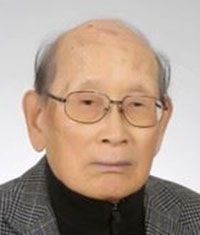
By Yi Woo-won
I admire and worship the inspirational epigram of Mahatma Gandhi: “Live as if you were to die tomorrow. Learn as if you were to live forever.” When I looked back over the past 90-odd years of my life, I realized by chance that I too had been learning as if I would live forever, trying to learn something or anything so eagerly and constantly every day, year after year.
Lifelong learning, as I understand it, is a self-motivated, ceaseless pursuit of knowledge. Simply put, it is a continuing practice of learning throughout your life after formal education for personal or professional interests. What I was mostly doing for nearly my entire lifetime was learning languages. It was simply the continued learning of the three foreign languages, Japanese, English and later Chinese that I had studied in high school. This was during the height of Korea's tumultuous history, including both World War II and the Korean War, when the education here, in general, was inadequate or below standard. There were no proper reference books in Korean for the study of English.
One day, I stumbled upon the idea of learning English on my own by studying English reference books translated into Japanese. But the Japanese I had learned was hardly sufficient to comprehend Japanese books. Therefore, I had to study both Japanese and English concurrently to learn English. The strategy was tough, boring and sluggish in the first several months, but after a few years of tenacity and diligence, I was able to reach the intermediate levels in both languages. In addition, to upgrade my proficiency in spoken English, I listened regularly to AFKN (American Forces Korea Network) news and some serial dramas on my makeshift transistor radio after the Korean War.
Consequently, I was lucky enough to be appointed as a liaison officer (or interpreter officer) of both English and Japanese during the Korean War. I was a senior in high school then and my English teacher was in the same recruitment corps. There were hundreds of Korean-Japanese volunteer soldiers in the war. Admittedly, I wasn't comfortable performing my duty because of my poor English, not Japanese, listening comprehension. I had never seen an American until I joined the war.
When I was a freshman in college after the war, I took two more courses, Chinese and German languages, for a term, enjoying thoroughly both classes. I thought German was much easier than I had anticipated and Chinese was just fabulous despite its myriad characters and complicated phonetic rules to remember. Chinese was the hardest language in the world. Considering my limited memory capacity, I opted for Chinese to learn because it seemed more realistic in terms of its geographical proximity and cultural similarity. I have been learning Chinese by myself ever since then, enjoying it better and anew every single day.
Indeed, lifelong language learning has been a long, time-consuming, wearisome and tedious journey. But I have had fun all along through “passion and perseverance.” And I still enjoy it with a sense of achievement and self-confidence. Now, after a little stretching in the morning every day, there is nothing like sitting at my computer table, surfing websites of three languages with a good cup of coffee.
In August 2016, while browsing China's Weibo on the internet, I encountered, with great interest and surprise, the graphic description of how Tae Yong-ho, a former high-ranking North Korean diplomat (who is now an elected member of South Korea's National Assembly) defected to Korea with his wife and two sons. It was the first and most detailed report of the defection in the media.
In the spring of 2008, I was vacationing in Japan with my family. We were traveling on the subway from Tokyo to Hakone, a hot spring resort. I was sitting next to a Japanese gentleman who appeared to be about my age. He was a kind and affable person. We talked to each other quite enjoyably for over an hour, even referring to our health. We realized we both had an irregular pulse. He was an emeritus professor at the prestigious Tokyo University.
Yi Woo-won (yiwoowon1988@gmail.com) lives in Waegwan, North Gyeongsang Province, and has been writing since 1986.