Partnership in era of 'New Washington Consensus'
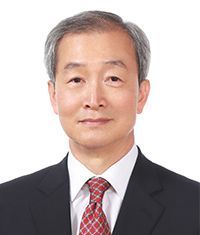
By Ahn Ho-young
In my many years of service as a diplomat, I experienced two tectonic changes in the international system. The first one was the end of the Cold War in the early 1990s. In the following 30 years or so, the “rules-based international order” spread beyond the borders of the free world. The second one is the ongoing challenges now buffeting the “rules-based international order” in many different parts of the world.
These changes in the international system have been reflected in the economic system as well. The so-called “Washington Consensus” was the prevailing economic belief during the post-Cold War period. People believed that small government, trade and financial liberalization, privatization and regulatory reform were the best package to develop the economy. Now, especially in light of the Global Recession of 2008, the COVID-19 pandemic and the Russian invasion of Ukraine, people are turning away from the Washington Consensus and touting the necessity of the bigger role to be played by the government. Some people began to talk about the emergence of the “New Washington Consensus.”
President Joe Biden has been at the center of such a change. He has consistently emphasized the bigger role that the government must play to rebuild manufacturing industries in the U.S., boost the middle class and thus maintain the U.S.' strength as a nation. His emphasis was reflected in many legislative achievements, including the Infrastructure Act, the Inflation Reduction Act (IRA) and the CHIPS and Science Act. What these laws share in common is the strengthened role of government, renewed focus on industrial policy and economic nationalism.
During the post-Cold War period, Korea took advantage of the economic tenets propagated by the Washington Consensus to develop its economy. One prominent indicator of Korea's economic achievements was the changes in its per capita GDP, which jumped from $6,600 in 1990 to $35,000 during that period.
I think that one factor which helped Korea greatly during this period was Korea's belief in the importance of public-private partnership (PPP). I once had an opportunity to participate in a meeting President Barack Obama held with Korean business leaders. One of the points I made at the meeting was my belief in PPP. I said that the definition of PPP for me was that the public sector must secure a level playing field so that the private sector could play to the best of its abilities in various chosen industries.
Toward the end of the meeting, President Obama took up the PPP point I had made. He said that, in his observation, Ambassador Ahn's definition of PPP seemed to be widely shared by public servants in Korea, and could explain why the Korean economy had been performing so successfully. It was back in 2014. If PPP was important then, it is even more important today in the era of the New Washington Consensus.
The U.S. adoption of the IRA and the CHIPS Act last year caused much concern in Seoul. In my observation, some of the concerns have been taken care of as of now. The condition of “manufactured in North America,” a condition to be met to benefit from the EV subsidy available through the IRA, has been attenuated thanks to the exception provided for rental and lease vehicles. The categorization of what constitutes minerals and components for EV batteries, as was set out in the U.S. Treasury Guidance, is not excessively burdensome for Korean industries. Korea and the U.S. now seem to consult diligently concerning the CHIPS Act subsidy requirements. I assume that the Korean government closely consulted industries to bring about all these developments.
I commend these efforts made by the Korean government. At the same time, it must heed the concerns I often hear that the Korean government is not sufficiently committed to protecting Korean industries from the strengthened industrial policies of the U.S. During my time in Washington, D.C., one of my frequent contacts at the White House left the government to work as a vice president for government relations at Google. When I visited her at her new office, I was impressed with the sheer number of people working for her at the division. It was so large that they had to work out of a huge building of its own. I also heard that Korean semiconductor and battery industry offices in D.C. have been strengthened recently.
These are examples of how the private sector is responding agilely to the new environment. The public sector must keep up, and renew its PPP efforts. This is not a time to leave Korean industries to their own wits. We live in a world where security and economic issues are becoming increasingly meshed together, which brought about the New Washington Consensus in the first place.
Ahn Ho-young is chair professor of North Korean Studies, Kyungnam University.