What are you?
By Shin Freedman
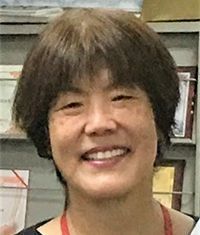
I visited an Indian Reservation in Arizona before the pandemic where I met an old woman who was a weaver. I was among a group of tourists who watched her hand-weaving a beautiful blanket. People took pictures of her. I did too. When the group of tourists moved away from her, I watched her some more. Then I sat down to rest and to look at her woven textiles. I heard a voice whispering softly: “What are you?” Surprised at the quiet voice, I did not respond right away. She asked me again, “What are you?” while her hands were steadily coordinating the wool threads and her eyes were attentive to the loom.
The question intrigued me because it was not as intrusive as what my ethnicity was, nor where was I from that people typically ask. This question was not as direct as “What is your name?” or “What do you do for a living?” Simply put, “What are you?” she asked. It took me a while to respond to her. I told her that I am Korean. This frail Native American woman nodded in acknowledgement while her hands were steady on the weaving machine, and she told me that she was Navajo. We had officially exchanged our introductions. She went about her weaving.
I often think of that exchange in Arizona. The beauty of this short exchange is that it was simple, elegant, non-invasive, non-aggressive and purposeful. I was not sure that my answer as being Korean fully explained my being. What am I? I am a former educator. I suppose I could go on explaining the multiple dimensions of my identity by adding more nouns. Her simple question puzzled me in such a way that I had to think about how I might answer her.
In the European Middle Ages, one's last name was given by their trade: Carpenter, Baker, Miller, Smith. Bakers baked bread, Millers milled grains, Carpenters built with wood, Carvers carved things and so on. In Korean society a long time ago, there used to be the Kims' village, or the Parks' village and everyone had the same name and similar professions. So, either by your name or your profession, it was easy to find out what you were.
A proper introduction of oneself matters and it is a learned skill set important in social situations. You cannot just impose your curiosity on others as if you were a child. These days most business communication courses include giving “elevator pitches” as part of the core curriculum. In the brief time, just enough for an elevator ride, you introduce yourself or your product. This name, elevator pitch, explains the duration of the speech. For job interviews or networking opportunities, an elevator pitch can be effective and useful.
In today's global business world, we are often asked to articulate who we are. Our name, occupation or profession does not represent us completely. Our nationality, ethnicity and credentials do not answer the question successfully. We humans are complex beings not easily definable by one or two attributes.
I am redrafting my own elevator pitch now to include I am a grandmother, wife, daughter, aunt, writer, author, teacher, educator, Korean-born and a retiree. By the way, what are you?
Shin Freedman (shinfreed@gmail.com) is the co-author of "Becoming a Library Leader: Seven Stages of Leadership Development."