More policy support needed for single mothers to save family
By Sara Salansky
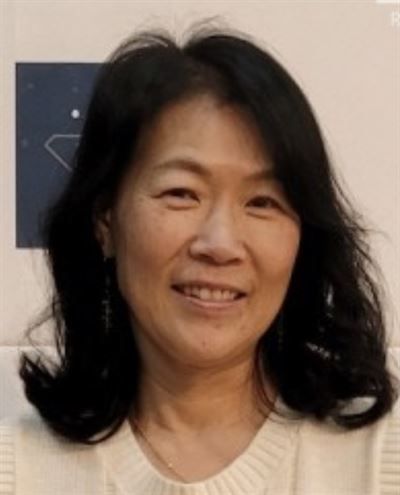
Sara Salansky
There are approximately 200,000 Korean adoptees who have been placed in multiple countries, and approximately 170,000 of them have been residing in the United States since the late 1950's, according to the Ministry of Health and Welfare.
As Korean adoptees with a nationality other than Korean, there are internal conflicts, pain and trauma that consist of the sense of abandonment ― abduction in some cases ― which brings about a loss of identity, acceptance, sense of belonging, and culture that exists within them for decades.
I do not claim to be an expert and these are what seem to rise to the top when researching the struggles Korean adoptees experience while simply existing in a foreign environment and not with their birth families.
Adoptees are ostracized because they are a product of a situation that wasn't respectable in Korean culture. These children lost the right to a normal Korean life the minute they were conceived… they never asked to be adopted, they were never given a choice to stay in their country of origin or be sent away, they were never given a chance to be included in a birth registry… those decisions were all made for them, and if they did stay in a situation where the single mother chose to keep them, that child is still considered lower born and would never be allowed to succeed like a child in a normal family unit of two birth parents.
What are the options for that single mother… or single mother to be? I would hope that the people of Korea would not want that woman to abort or have that child adopted. But what hope is there for that woman and that child? I would hope that the people of Korea would consider the rights of those two human beings.
I, as a Korean adoptee living in the United States, am writing this column to ask the Korean people and the government to change the narrative about adoptees. Think about what you can do to help that child not be aborted or adopted. Human equality has to be foremost. Single mothers need to be accepted in Korean society and allowed to raise their child with all the rights and benefits of every other family entity that has two parents.
The mother and child should not be punished because a man chose to not take responsibility for his actions. Shame is never on that man. Until the culture and government of Korea forces the man to be financially responsible, this family unit will always be in survival mode. And, Korea needs to keep that family entity together so the adoption cycle can be broken.
The Yoon Suk-yeol government needs to advocate for single mothers and make efforts to allow them to keep and raise their child by forcing the biological father to support them financially.
If the government were to enact a law enabling single mothers to collect paternity support for their child, then maybe, that man would think twice about his actions. And maybe the abortion rate would decrease as well.
Domestic adoptees and orphans are doomed socially. This is the unfortunate truth. They never get the respect and equality of other human beings in Korea who come from “normal” family units.
It's really quite unconscionable to me that I would have not had a successful life in Korea as I had in the United States. I couldn't have had a successful 20-year military career in Korea, like I had in the United States.
And, why is that? I'm just as human as the Korean standing next to me in the subway in a suit. I could be of value to Korean society as a human just as much as the Korean who is a nurse in a hospital. But, would I be able to do that without my “single mother” having to live in poverty to try and help me have a healthy life and be educated? Probably not.
Why is it that a single mother's subsidy is so low that she is forced to live with her parents because a man chose to change that woman's life? Why is it that a single mother only gets 250,000 won a month to subsidize her living and childcare expenses?
It's time to think about more policy support for single mothers to save a life, preserve a family and help humanity.
Sara Salansky is a Korean Adoptee, a Lieutenant Colonel (retired) who served 20 years in the United States Air Force and United States Air Force Reserves. Her mission throughout most of her life has been to serve the greater good.