Memorial Day: Reflection and renewal
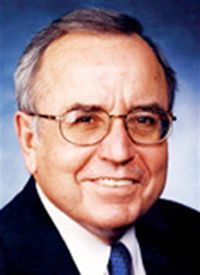
By Arthur I. Cyr
Memorial Day, celebrated in the U.S. on May 30, is cause for contemplation as well as ceremonies. Parades featuring people in uniform ― those currently serving, those who have served, and others who protect us ― should always be welcome. Military uniforms remind us of the roles of war in our history and our present.
From ancient times, parades have been vital to the reintegration of warriors into society. War is profoundly disruptive and disturbing as well as deadly. Even the rare man who finds combat invigorating and rewarding is in severe need of returning home after the killing ends.
Homer, chronicler of the Trojan War, is extremely sensitive to this. The great classic is divided into two parts: “The Iliad,” which focuses on the fighting and related associations involving Greeks and Trojans, and “The Odyssey,” which describes the very long voyage home of Greek leader Ulysses and his men. They traverse allegorical geographies, struggling to put the horrors behind them.
General George S. Patton Jr., a very great American combat leader, was extremely mindful of this dimension. A special ceremony in the Los Angeles Coliseum after the surrender of Nazi Germany featured Patton and General James Doolittle, who led the first air raid on Tokyo not long after Pearl Harbor.
Patton celebrated the accomplishments of his Third Army in the victorious drive across Europe. In honoring his troops, he stressed in particular the 40,000 who lost their lives. Patton made such statements regularly in the few months remaining of his own life.
In World War II, people liberated from Axis occupation welcomed Allied troops. Understandably, our media gave special emphasis to this dimension. The Korean War created very strong bonds between the U.S. and the people as well as a very effective military of South Korea. The first Gulf War liberated an oppressed population in Kuwait.
The Vietnam, Iraq and Afghanistan wars were different. During Vietnam, the Pentagon urged, sometimes ordered, personnel to practice public anonymity. Opposition to the war became hostility to our own military.
There was no collective welcome home. Many aging veterans of that war suffer without a Ulysses, troubled ― and troublesome, sometimes criminally.
The Afghanistan and Iraq wars controversy did not target our military. Visits to Washington, D.C. provide reminders of the visibility of the uniformed military, especially on public transportation. President Richard Nixon's decisive end of the military draft has been crucial in the change.
However, the often-rapid rotation of personnel back to overseas missions is unfair as well as counterproductive. Enormous psychological strains join physical danger and families suffer heavily.
The all-professional military is segregated from wider society. This segregation in turn facilitates frequent personnel rotation overseas, a problem that developed destructively during the Clinton administration.
The military remains a vital engine for equality and opportunity. General Colin Powell and many others demonstrate the point. Powell, from modest origins, achieved the most senior civilian and military posts in our government.
Powell noted he experienced discrimination in the South, but never on post. The U.S. military emphasizes merit. Memorial Day provides the opportunity to recognize the military's commitment to fairness.
Encourage veterans to take part in public life and run for office. We won the Cold War in part because members of the World War II generation also served in government. Every U.S. President from Harry Truman to George H.W. Bush was a veteran. Today, things are starkly different.
What we need I believe is the sort of sensible realism women and men who served bring to policy.
Arthur I. Cyr (acyr@carthage.edu) is the author of “After the Cold War” (NYU and Palgrave/Macmillan).