Mr. Lee's last class
By Kim Jin-heon
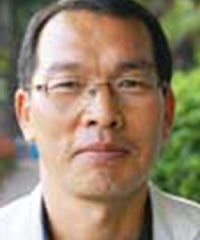
I retired on Feb. 28, but unexpectedly enticed by an earnest request from a vice principal, I became employed as a temporary teacher at Gwangyeoung High School in Gwangyang City, South Jeolla Province, where there were four teachers like me. Soon, over tea, each of us shared various episodes from our lives teaching. Mr. Lee, an ethics teacher, had an especially inspiring story.
In 2019 Mr. Lee stopped teaching at a middle school in Gwangyang City. Before his retirement, he planned his last class and sent invitations to his pupils, whom he had taught for over 37 years. More than 70 men and women participated in the class. Among them was one man who came from Shanghai, China, and others came from around Korea. Their ages at the time ranged from their 50s to their 20s
Mr. Lee prepared a teaching topic called, “Modern Interpretation of Taoism.” The topic, related to his philosophy as a teacher, had deeply influenced his life and his view of teaching. In the early 1980s, he began to teach students, but in those days, the ideology, “the score is the most important,” forced teachers to make students become exam machines. As a result, if they didn't adapt to the system, they would become frustrated.
Mr. Lee, as outgoing and communicative as a good singer, often showed his students fantastic songs during school field trips or school festivals and took photos with alienated students and sent the photos to them. By doing so, he tried to communicate with them somehow.
Whenever he counseled them, he listened sincerely to each of them and consoled them. His strategy was, “It's OK, even though they make mistakes, and it's natural to wait for them to stand up for themselves.”
Thanks to his continuous care, his students were able to share their life stories with him. For example, one student failed to get into a college in Seoul, and he walked 14 days from Seoul to Suncheon City while penniless to test his will power. The next year, he entered an educational college and became a teacher.
One pupil attended Mr. Lee's 60th birthday party and sang the same song that he had sung for her when she was in middle school.
Anyway, by including these people in his last class, Mr. Lee hoped to share with the middle school students the experiences that senior pupils had in their work places or in their homes, and to share the messages that he had taught them during their school days.
As the class began, after introducing his teaching procedures, he asked some of the juniors to express their inferiority complexes. Then he told them that most of these feelings were not caused by their incapacities but by modern society's ideologies. In other words, Korean society's mindsets around “competition” and “competence” caused them to get ranked.
Later, Mr. Lee pointed to the senior former students and said that all of them had been “losers” in their school days, but his concern had helped them stand up for themselves and succeed in their lives. Then, he asked some of them to explain how they had overcome their failures and become successful in life.
They said that they were able to succeed in their lives by recognizing things through their own trial and error processes and by living with self-care and taking things slow. The senior students' answers persuaded the junior students to follow the same values. This method was also the essence of Taoism, which is what had encouraged Mr. Lee to connect to his pupils in the first place. At that moment, the teacher's eyes became filled with tears.
The writer (shinykim60@hanmail.net), a retired teacher, published a book titled, "Flower is Flower."