Roh Tae-woo, accidental president
By Kyung Moon Hwang
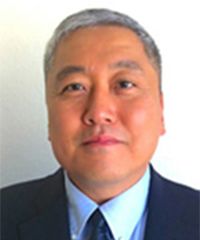
Not to disrespect the newly departed, but the first thing that comes to mind when considering former President Roh Tae-woo's place in history is that he seems to have been thrust into significance by forces far beyond his will or skill.
Later historians will uncover more to the story, but for the moment, it appears that Roh's public life, even during his presidency, unfolded rather than developed. He rode the waves of history instead of steering the ship, so to speak, and without a doubt, his career ran contrary to the “great man in history” view of the past.
This is not to deny that Roh, in his own way, was a historically significant personage. By definition, as someone who won the South Korean presidency through a democratic election, he was indeed a major figure.
But his path to prominence was paved by several factors that put him in the right place at the right time, including his education, regional background, military career and other personal ties. What brought all these factors together was indeed a singular man, but this man was Chun Doo-hwan.
Notwithstanding the ongoing debate surrounding his autonomy in the decision to issue the June 29 Declaration of 1987, Roh Tae-woo has been known first and foremost as Chun's right-hand man, and he might never be able to shake off this impression. But the facts clearly indicate that Chun was more responsible for the major moments in Roh's life than Roh himself.
Roh met Chun when they both enrolled in the 11th class of the Korea Military Academy (KMA) in the early 1950s amid the Korean War. After graduation, as army officers, they used their common regional background of North Gyeongsang Province ― the same as that of Park Chung-hee ― to rise further in the South Korean military. Immediately following Park's coup d'etat of 1961, they helped mobilize KMA cadets to take to the streets in a show of intimidating support.
This attachment to Park, who ruled the country from 1961 to 1963 through a military junta before being elected president in 1963, only grew thereafter. Roh, again following Chun's lead, joined the Hanahoe secret society, which served as an institutional base for Park's control over the military, and hence of Park's control over the state itself. Until the 1990s, this group continued to facilitate the intervention of military figures in the political arena.
During the Yusin dictatorship of the 1970s, Roh followed Chun in directing the Hanahoe as it became more intricately connected to Park's personal security apparatus, headed by Cha Ji-cheol. Cha would fall victim to this intimate association with the government's repression system when he was assassinated, along with Park, in October 1979 by Kim Jae-gyu, director of the Korean Central Intelligence Agency (KCIA).
But this shocking event did not weaken the Hanahoe society or the Chun-Roh duo. General Chun, with General Roh providing indispensable military backing, undertook his own coup in December 1979, just as Park had done in 1961. In film footage, shot in color to underscore the triumphalist, ceremonial momentousness of their actions, a smiling Roh can be seen gathering with Chun and the rest of the new military clique for a commemorative photo.
With good reason, Chun has normally been cast as the dominant villain in the events that suppressed the Seoul Spring democracy movement of 1980, but once again Roh was at his side, helping and learning as he became swept up by events. Their military junta ordered the brutal suppression of the Gwangju Uprising, resulting in a massacre that would forever stain their place in history.
Within Chun's regime, Roh took various ministerial posts while also leading the Seoul Olympic Committee. Chun then named Roh as his successor in the planned indirect presidential election of 1987, which further provoked the mass demonstrations that finally toppled the military dictatorship.
Roh might or might not have made the decision to concede in late June, but he got the credit for the formal “June 29 Declaration,” announcing a new constitutional system and a direct presidential election.
And once again, in full actualization of his life pattern, Roh, running as the ruling party's presidential candidate in 1987, was just about handed the victory due to the split opposition. Thus, Chun's original plan, within the dictatorship of the Fifth Republic, to turn over the presidency to his protege was realized after all.
Roh's half decade as the Sixth Republic's first president, from 1988 to 1993, might have been the only period in his adult life when he escaped the dominant shadow of his friend and mentor. President Roh's major accomplishments came in the realm of foreign relations, but he benefited immeasurably from the collapse of the Soviet Union and the further opening of China, which became the basis of Roh's famed “Nordpolitik” initiatives.
He did little, however, to strengthen the democratic foundation of the new South Korea, either politically or economically, and one has to wonder whether Chun, in the new order, would have done more or less the same things as Roh.
As it turned out, like Chun before him, Roh amassed an astronomical slush fund as president, for which ― along with the December 1979 coup and the Gwangju massacre ― he was tried and convicted in the mid-1990s.
Fittingly, Roh remained attached to Chun, as the two, holding hands in common guilt, appeared in court as co-defendants. But soon, like Chun, Roh won a pardon for his crimes when the country was hit by the Asian financial crisis in 1997. The events turned in his favor a final time.
Kyung Moon Hwang (khwang3@gmail.com) is Korea Foundation professor at the Australian National University in Canberra.