Korea assumes chairmanship of IAEA board of governors
By Lee Sang-hyun
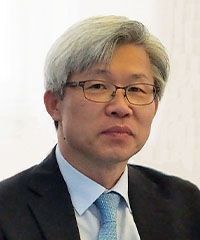
South Korea was recently appointed as the next chair of the International Atomic Energy Agency's (IAEA) Board of Governors. The term lasts one year from September 2021 to September 2022, and Shin Chae-hyun, the South Korean ambassador to Austria and permanent representative of international organizations in Vienna, will serve as the chair.
This is a remarkable feat and the first time South Korea has earned the honor since joining as a founding member of the IAEA in 1957. This also represents another example of the recognition South Korea has received from the international community for its capabilities and contributions on the global stage in the field of peaceful use of nuclear energy and non-proliferation of nuclear weapons.
When atomic bombs were used for the first time in human history in 1945, nations began to ponder the question of how to constrain the destructive power of nuclear weapons while encouraging the use of nuclear energy for peaceful purposes. As a result of this, the IAEA and Treaty on the Non-Proliferation of Nuclear Weapons (NPT) were created as two pillars to prevent a further global proliferation of nuclear weapons. The IAEA was established with the aim of promoting the peaceful use of nuclear energy and inhibiting any use for military purposes. The NPT focuses on preventing the proliferation of nuclear weapons.
The IAEA is a top-tier international organization that is relatively well-known to the South Korean public due to the issue of verifying North Korea's nuclear development. The organization is deeply engaged in verifying both Iran and North Korea's nuclear programs, and has recently been called upon to alleviate concerns in the international community through the objective and scientific verification of issues related to discharging contaminated water, which is also known as treated water, into the ocean from the Fukushima nuclear power plant in Japan.
Moreover, although it is not widely known, the IAEA remains committed to enhancing the good of humankind through nuclear technologies such as breakthroughs in healthcare, medical treatment utilizing radiation, and state-of-the-art advancements in agricultural and food technology.
South Korea is an exemplary case that has made splendid achievements in the peaceful use of nuclear energy, growing into the world's sixth-largest nuclear-powered country in terms of power plant capacity while simultaneously complying with international non-proliferation norms by joining the IAEA. South Korea has received benefits through technological cooperation from the IAEA since the organization's inception, but has been increasing its contributions to developing nations in this field since transitioning to a pure donor country in 2010.
At present, South Korea ranks 11th in terms of contributions to the IAEA, and has publicly pledged its extrabudgetary contribution to the IAEA Nuclear Security Training and Demonstration Center and to Zoonotic Disease Integrated Action (ZODIAC), an initiative to better respond to animal-borne diseases including COVID-19 by using nuclear derived technology.
The board is a core decision-making body within the IAEA and plays a pivotal role, and I hope the South Korean government will be able to make the most of the opportunity presented by board chairmanship. First and foremost, we expect that South Korea will be more involved in international community discussions on non-proliferation and verification, one of the IAEA's key agenda items.
Accordingly, we should take this opportunity to expand the pool of professionals in this field within South Korea. If South Korea can achieve the political conditions needed to resolve the North Korean nuclear issue in the future, this capacity will be of great help in playing a leading role on the technological side, including the verification of nuclear programs.
Furthermore, South Korea could make use of this occasion to improve inter-agency coordination regarding IAEA policy. Discussions in the IAEA are linked to work in nuclear power-related government ministries and institutions such as the Ministry of Science and ICT, the Ministry of Trade, Industry and Energy, and the Nuclear Safety and Security Commission.
Accordingly, as the ministry that oversees foreign policy, the Ministry of Foreign Affairs should carry out an overarching role, build a network of tight-knit cooperation, and remain engaged in discussions with the IAEA. In addition, I hope that South Korea's chairmanship in the IAEA will serve as a positive impetus for strengthening nuclear non-proliferation policy communities within our society.
Finally, it is important that both the South Korean government and private sector continue to support and remain interested in the IAEA chairmanship, as it is significant that we do a good job and solidify the international community's support for peace and stability on the Korean Peninsula.
Lee Sang-hyun is the president of the Sejong Institute and the Korea Nuclear Policy Society.