2021 P4G Seoul Summit and Korea's challenges ahead
By Yoo Yeon-chul
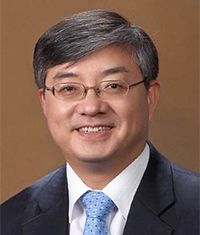
Much has changed since Korea first announced in September 2019 its decision to host the Partnering for Green Growth and Global Goals (P4G) Seoul Summit. At that time, one of the most important and complicated environmental issues for the Korean public was fine dust. Today, you will see and hear terms such as “climate change” and “sustainable development” via all kinds of media sources, ranging from broadcast television to social media platforms.
One of the most outstanding changes is how businesses are promoting not only their products, but also the image of their companies themselves on TV commercials through environment-related themes. In two years, everything has shifted toward the eco-friendly. Renewable energy and electric vehicles are the talk of the market. The environment and climate change have become trendy agenda points in Korea. The growth of interest in the environment and climate change concerns is quite a development from less than two years ago.
Behind this transformation, tremendous efforts have been made by different stakeholders. In July 2020, Korea announced the Korean New Deal as a national strategy, with a stimulus package to overcome the economic difficulties resulting from the COVID-19 pandemic. The Korean New Deal encompasses the “Digital New Deal” and “Green New Deal,” which provide the basis for pursuing an inclusive green recovery from the pandemic.
In October 2020, we committed to 2050 carbon neutrality, laying the foundation for seeking long-term climate goals. Earlier this year, Korea decided to end public financing for coal-fired power plants abroad. We are also preparing for an ambitious Nationally Determined Contribution (NDC): Korea's national plan for the reduction of greenhouse gas emissions by the 26th UN Climate Change Conference of the Parties (COP26) in Glasgow later this year.
With these heavy-duty policies lying ahead, Korea hosted its first multilateral summit on the environment in May of this year. At the 2021 P4G 2030 Seoul Summit, 67 leaders from six continents and 21 international organizations shared their visions and commitments towards the theme and goal of, “Inclusive Green Recovery toward Carbon Neutrality.” More than 230 representatives from the government sector, businesses, international organizations, civil society and even the future generation took part in the 10 Special Sessions held during Green Future Week, May 24 to 29, ahead of the summit, as well as the five thematic sessions on May 31, to engage and exchange their views and pledges on how to address climate change and achieve the U.N.'s Sustainable Development Goals.
At the summit, Korea reaffirmed the commitments it has made throughout the past year and added that we are planning to increase our share of green official development assistance (ODA) to the average Organization for Economic Cooperation and Development (OECD) level, while announcing financial contributions to both the P4G and the Global Green Growth Institute (GGGI). Korea also made sure that the summit program addressed marine pollution and plastic-related issues.
The Seoul Declaration brought together the leaders' commitment towards an inclusive green recovery and carbon neutrality. It included diverse issues, ranging from coal financing, biodiversity, marine pollution and Environmental, Social, Governance (ESG) principles, to the future of the younger generations. We were very conscious of the need to touch on key elements and issues, while trying to bring on board as many countries as possible in the process.
As a result, Korea was able to gather political support from a wide range of countries and international organizations to support the Seoul Declaration. It was not by coincidence that both the U.S. and China endorsed it.
Korea also established a “troika system” within the P4G framework, which refers to a sustainable and predictable mechanism where the past, current and future summit hosts can collaborate. With Colombia's announcement that it will host the next summit in 2023, Korea, as current chair of the P4G, will continue to work with Denmark, host of the inaugural P4G Summit in 2018, as well as with Colombia, to contribute toward our global goals.
The summit brought together on-the-ground results as well. Coca-Cola announced that it would reduce 25 percent of its greenhouse gas (GHG) emissions by 2030, while SK Global Chemical committed to reuse 100 percent of the plastic it produces. A number of Korean companies, such as Hyundai and Kia, joined the RE100 initiative of global corporations committed to 100% renewable energy, and all 243 local government offices of Korea ― for the first time in the world ― set 2050 carbon neutral goals.
The 2021 P4G Seoul Summit certainly elevated Korea's status as a player in the climate change and sustainable development arena. One foreign delegation that participated at the summit described the program as an “environmental Olympics.” The summit and its results were welcomed by the international community most probably because they showed that Korea was making efforts to meet their expectations.
The P4G Seoul Summit, however, is only the beginning. After this year's series of climate-related summits, we have the G20 and COP26 meetings ahead of us. The trend of the world is clear. From green recovery measures to long-term climate policies, governments, businesses and civil society organizations are all making concrete efforts. Korea is also on the right track.
But leadership in climate action is more difficult to achieve in reality. The first challenge will be presenting an ambitious NDC to the world before the COP26 meeting in October. Without an ambitious NDC plan, all the efforts that we have made since July 2019 may simply become words without actions behind them.
The second challenge will be designing a strategy to bridge the gap between the developing and developed worlds by becoming an honest broker that both sides can trust. Taking on this role is easier said than done, but Korea has the tools. We have the ODA outreach. The GGGI and the Green Climate Fund (GCF) are assets that can be of support.
Eco-friendly technologies and digitization are both Korea's strengths. More importantly, the P4G way of bringing together marketable public-private partnerships could very well be an exciting way not only to tackle our global goals but also to pursue a sustainable future for Korea.
The global trend of bringing together the political will and efforts of governments to address climate change needs no emphasis. Korea, through the 2021 P4G Seoul Summit, has presented to the world that we can also be an important contributing member of the international community in response to climate change. I hope that we will be able to showcase what climate action really means.
Amb. Yoo was the executive director of P4G Seoul Summit Preparatory Office and is currently the Ministry of Foreign Affairs' ambassador for climate change. He also previously served as Korea's ambassador to Kuwait.