How to enhance peaceful nuclear cooperation between Korea, US
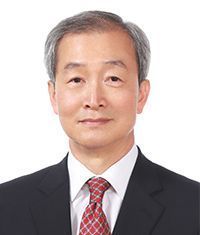
By Ahn Ho-young
Wrapping up their summit on May 21, Presidents Moon Jae-in and Joe Biden came up with a joint statement, which contained a commitment “to develop cooperation in overseas nuclear markets, including joint participation in nuclear power plant projects.” The commitment came as a pleasant surprise to many observers in Korea and the U.S., including me.
I was reminded in particular of the amendment of the Korea-U.S. Peaceful Nuclear Cooperation Agreement, known in the U.S. as a “123 Agreement,” which was completed during my time as ambassador to the U.S. The negotiations for the amendment started in October of 2010 and they were eventually concluded in April of 2015, making them possibly the longest running negotiations between the two countries ever.
There were good reasons why these negotiations took so long. When the existing agreement had entered into force in 1974, Korea did not have any nuclear reactors. In the intervening 40 years, Korea built more than 20 reactors, which provide 30 percent of its electricity. Besides the growing number of reactors, there were significant advancements in technology.
A consortium of Korean companies developed the APR-1400 model, a new-generation, safe and efficient reactor. (The APR-1400 in fact received a design certificate from the U.S. Nuclear Regulatory Commission in 2019. According to Dr. Jung Geun-mo, the pioneer among Korean nuclear scientists, it is the only non-U.S. design thus recognized so far.)
The advent of this new reactor made it possible for Korea to win a $20-billion contract to build four nuclear reactors in the United Arab Emirates (UAE). All of these developments engendered expectations in Korea for amending the Korea-U.S. nuclear agreement. With Korea now a major nuclear industry power, it needed to have access to the full nuclear cycle, including the enrichment of uranium fuel and the reprocessing of spent fuels. Otherwise, the development of the Korean nuclear industry would be constrained.
I understood these expectations. At the same time, I knew that there were different and strong perspectives on the issue in Washington. After the conclusion of the 123 Agreement, in which the UAE gave up on the enrichment of uranium and reprocessing of spent fuel, Washington labeled that agreement as the “Gold Standard,” and a large number of people expected to use it as a standard template for future 123 Agreements. The huge gap between Seoul and Washington looked from time to time to be too wide to be bridged.
In the end, a number of compromises were reached in April of 2015. One of the key components of this deal was the agreement to set up a high-level bilateral commission, to be headed by the Korean vice foreign minister and the U.S. deputy secretary of energy, which would oversee the issue of spent fuel management and the assurance of a stable fuel supply.
For the breakthrough, I thought we were lucky to have top-notch negotiators: Ambassador Park Ro-byug, the Korean special representative to the talks, and Ambassador Thomas Countryman, the U.S. assistant secretary of state for international security and nonproliferation. We were also lucky to take full advantage of other positive factors in the U.S.
One such factor was that many actors in Washington, ranging from the government, to the U.S. Congress, to business leaders in particular, understood the importance of the nuclear industry and the potential Korea held as a partner in such an important industry for the U.S.
Appreciation of Korea as a partner grew hugely, thanks to Korea's successful bidding for the four reactors in the UAE. In our first meeting, Marvin Fertel, the CEO of the Nuclear Energy Institute, congratulated me on Korea's successful UAE bid and cited the project's benefits for the U.S. industry as well, which would create thousands of jobs in the U.S.
Another important factor was that these Washington actors understood as well that Korea was a “like-minded” country to the U.S., an ally sharing the same values and committed to the same set of rules and institutions. All of these factors worked positively to overcome the daunting challenges. The agreement received legislative approval in both countries, and went into effect on Nov. 26, 2015.
These factors underlying the successful amendment of the 123 Agreement offer useful clues to understanding the motivation of the aforementioned joint statement and, more importantly, how we can move ahead to enhance peaceful nuclear cooperation between our two countries further.
President Biden is holding onto important themes without distraction: fighting the pandemic and climate change, promoting economic recovery, and restoring relations with allies. Korea-U.S. nuclear cooperation in fact dovetails very well with all of Biden's important themes.
At the same time, these are all important themes for Korea as well, and sharing them makes me believe that we must not lose the momentum to implement this timely commitment. Suggestions have already been made by some observers to form a binational, multi-stakeholder group to implement the commitment. Having observed Korea's successful bidding for UAE reactor projects and the 2015 amendment of the agreement, I agree that forming such a group will be a smart and timely starting point.
Ahn Ho-young (hyahn78@mofa.or.kr) is the president of the University of North Korean Studies. He served as Korean ambassador to the United States and first vice foreign minister.