Taiwan can help build a resilient and inclusive global health system
By Chen Shih-chung
The threat that emerging infectious diseases pose to global health and the economy, trade and tourism never ceases. Pandemics can spread rapidly around the world due to international aviation and transport. As of March 2021, a novel form of pneumonia that first emerged in Wuhan, China, at the end of 2019, and has since been classified as the coronavirus disease 2019 (COVID-19), has caused more than 126 million infection cases and more than 2.7 million deaths worldwide.
The virus has had an enormous medical, economic and social impact around the world, and significantly threatened global efforts to achieve the United Nations Sustainable Development Goals.
Due to its proximity to China, Taiwan had been expected to be one of the countries most severely affected by the epidemic. But given its experience of fighting the 2003 SARS outbreak, Taiwan did not ignore the alarms, piecing together evolving official and unofficial accounts, to form a picture of the emerging disease that implied a scope and severity worse than the global public perception suggested at the time.
Authorities used this information to launch enhanced monitoring on Dec. 31, 2019, and have tirelessly implemented public health containment measures since Taiwan's first case was detected on Jan. 21, 2020. As of April 22, 2021, there had been 1,086 confirmed cases, including 11 deaths, in Taiwan. Life and work have continued much as normal for the majority of the population. Taiwan has contained COVID-19 ever since the beginning of the pandemic, including a record 253 days without any cases of domestic transmission, between April and December 2020.
After dealing with severe acute respiratory syndrome (SARS), Taiwan established a nationwide infectious disease healthcare network that is led and overseen by infectious disease experts across six regions. More than 100 secondary response hospitals are included in the network, and all 22 special municipalities, counties and cities have designated their primary response hospitals. The network also provides the legal authority for transferring patients with highly contagious diseases to designated facilities, based on public health and clinical need.
This network has proven instrumental in protecting health systems and health professionals from being overwhelmed, and allowed most non-COVID-19 health services to continue to operate without disruption during the pandemic. To date, there have been only two hospital-associated COVID-19 outbreaks in Taiwan. Both were well managed, resulting in a total of 11 infections and zero deaths of health professionals.
By introducing public health control measures early and effectively, Taiwan also mitigated the economic impact of COVID-19. To maintain essential international, social, economic and trade activities, Taiwan implemented flexible adjustments for related quarantine measures for vessels and aircraft so that fisheries, offshore wind farms and air transport industries could continue operations.
In stark contrast with the global economic contraction, Taiwan's GDP growth for 2020 was approximately 3.11 percent, with even higher growth of 4.94 percent in the fourth quarter. Furthermore, public trust and cooperation with the government's response have been key to containing COVID-19 successfully. In formulating disease control regulations, the government has adhered to the principles of reasonable response, minimum damage and gradual adoption.
It has worked hard to maintain the balance between people's right to know and personal privacy and freedom, actively responding to people's wishes by upholding the principle of fairness at the same time as prioritizing the protection of disadvantaged groups, including migrant workers.
Throughout this pandemic, Taiwan has demonstrated an emphasis on the right to health and its associated protections, as well as strong opposition to human rights abuses. Indeed, at no point has Taiwan restricted people's right to free expression, assembly or participation in public life.
Although COVID-19 has hit all countries hard, its impact has been harshest among already vulnerable and high-risk communities, as well as those lacking quality health care services and those unable to handle the adverse consequences of anti-pandemic containment measures.
As a responsible member of the international community, Taiwan will do its utmost to work with the World Health Organization (WHO) and global health leaders to ensure that all people enjoy living and working conditions that are conducive to good health. We will also monitor health inequities to advocate more effectively for universal access to quality health services.
Thanks to its robust health system, rigorous testing strategies, information transparency, and public-private partnerships, Taiwan's response to COVID-19 has been one of the world's success stories. This pandemic has proven yet again that Taiwan cannot remain outside of the global health network. Taiwan plays an indispensable role in global monitoring and early warning systems that detect the threat of emerging infectious diseases, and the Taiwan Model has proven consistently capable of containing COVID-19.
The pandemic has also highlighted Taiwan's capacity to research, develop, produce and supply therapies and associated tools quickly (including two COVID-19 vaccines that are presently in Phase 2 trials). Being able to participate in and contribute to international COVID-19 supply chain systems comprehensively, as well as global diagnostics, vaccine and therapeutics platforms, will allow Taiwan to work with the rest of the world.
We urge WHO and related parties to acknowledge Taiwan's longstanding contributions to the international community in the areas of public health, disease prevention and the human right to health, and to include Taiwan in WHO and its meetings, mechanisms and activities. Taiwan will continue to work with the rest of the world to ensure that all enjoy the fundamental human right to health, as stipulated in the WHO Constitution. Echoing the mantra of the United Nations' 2030 Sustainable Development Goals, no one should be left behind.
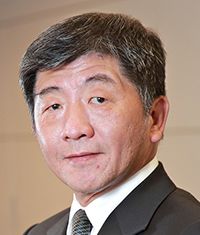
Chen Shih-chung is the minister of health and welfare of the Republic of China (Taiwan).