In remembrance of my parents
By Choe Chong-dae
I have been reminiscing about the achievements of a person who lived in simpler times doing something very unique. My father was such a person. Choe Nam-ju (1905-80) was a pioneer of Korean archeology and devoted his life to the preservation, excavation and research of cultural relics from the ancient Silla Kingdom, which had its throne in Gyeongju.
He took part in the excavation of the Golden Crown in “Seobong Tomb” with the late Swedish King Gustaf VI Adolf in 1926. He was the only Korean on the Japanese academic research team to survey the ancient Buddhist remains on Namsan (South Mountain) in Gyeongju during the Japanese colonial period (1910-1945).
Notably, in 1938 he explored Daewang-am ― “Great King Rock” ― an island off the east coast of Korea that was presumed to be King Munmu's burial place. This research eventually resulted in the discovery of King Munmu's underwater tomb in 1968.
After Korea's liberation from Japan in 1945, he discovered numerous priceless ancient Silla artifacts, including an inscribed stone monument on the fortress wall of Namsan Mountain and an inscribed stone tablet of King Heungdeok in 1957. They were valuable discoveries crucial to determining the accurate chronology of the neglected history of the Silla Kingdom. Furthermore, being aware of the significance of preserving cultural heritage in good condition, he built a pavilion to house the monument of the tomb of King Muyeol and erected a memorial for the tomb of King Seoktalhae in Gyeongju at his own expense.
My father's lifelong dedication to the preservation of Silla cultural remains would most likely have been impossible if it were not for my mother's outstanding help.
My mother, Lee Won-im (1920-98), was a wise wife who kept the family intact. My mother raised her six children well. She paid particular attention to our education and helped her husband with full sincerity so he could dedicate his energy to the preservation of Silla cultural heritage and to find the right career path as a “cultural envoy.”
During the 1960s and 1970s, there were a number of young girls and boys who wandered from their homes, but were found alive in Gyeongju. Acutely aware of the need to protect and educate them, she organized the Committee of Crime Prevention for women and girls at Gyeongju Police Station, and also organized the Mothers Association of Gyeongju City. She served as chairperson of the two organizations. Thus, she played a pioneering role in establishing the “House of Love” and providing these children with a sense of loving community and support.
Transcending nationality, racism and religion, many guests such as archeologists, artists, historians, diplomats and politicians from home and abroad, visited my old home in Gyeongju to familiarize themselves with Korean culture and customs. They even stayed there. Thanks to my mother's warm hospitality, our old house was called “Silla University” or “Cradle of Korean Cultural study” by foreign researchers because they learned many distinctive things there.
She left behind some impressive poetry portraying her life and Korea's independence from Japanese colonialism. Her writing on Korea's independence was inspired by her cousin Lee Won-dae. He was an independence fighter who became a patriotic member of "Uiyeoldan", an armed resistance group in China fighting against Japanese colonial rule.
She is still remembered as a true mother of Korea by many people.
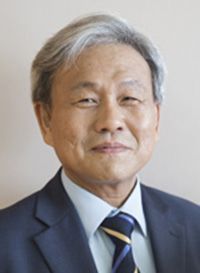
Choe Chong-dae is a guest columnist of The Korea Times. He is president of Dae-kwang International Co., and director of the Korean-Swedish Association. He can be reached at choecd@naver.com