Populism ruins future economy
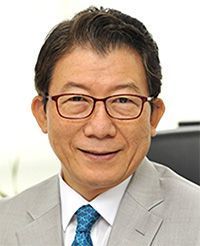
By Dr. Jeffrey I. Kim
The word populism is considered one of the most contested terms among scholars and political scientists. Paul Targgart, professor of Sussex, the U.K., has said, “Populism is one of the most widely used but poorly understood political concepts of our time.”
Nevertheless, the definitions below are worth considering:
(1) Populism is an ideology which presents “the people” as a morally good force and contrasts them against the elite” who are portrayed as corrupt and self-serving.
(2) Populism is based on the principle of popular sovereignty, which is an integral element of democracy and it is neither undemocratic nor anti-democratic.
(3) Populism is a political ideology which appeals to ordinary people who feel that their concerns are disregarded by established elite groups.
The word, “political populism” can be traced to as far back as the power struggle between the two political factions “populares” (favoring the people) and “optimates” (referring to senators and large land owners) in Ancient Rome. Since then, many different types of political populism have emerged and disappeared.
Today, political populism is being practiced in many parts of the world regardless of whether the country is a liberal democracy or not.
Francis Fukuyama, a political economist and professor of Stanford University, has recently argued that the rise of new forms of populist nationalism threatens the liberal international order that has been the foundation for global peace and prosperity after World War II. He also pointed out that populist policies are popular in the short run but not sustainable in the long run.
Fukuyama also noted that during his presidential election campaign, Donald Trump stressed economic populism, threatening to withdraw from the Trans-Pacific Partnership (TPP) and tear up the North American Free Trade Agreement (NAFTA).
Fukuyama also said that when accepting the Republican nominations in 2016, Trump acted like a classic charismatic at rallies with his core supporters.
Dani Rodrik, former professor of Princeton University, has pointed out that without separation of powers ― an independent judiciary and a free media, namely, in the absence of the rule of law and basic civil liberties, populist regimes can prolong their rule by manipulating the media and the judiciary at will. Hence the damage that political populism can do is limitless.
South Korea is now undergoing an extreme version of political populism which allows a majority to ride roughshod over the rights of minorities. In May 2017, President Moon Jae-in came to power on a wave of populism.
The Korean economy had suffered for several years from low GDP growth, high unemployment, and increasing income inequality. Moreover, President Moon's party won a landslide victory in the 2020 general election.
Out of 300 seats, the ruling party and its satellite parties together won 180 seats (60 percent). This is the highest number by any party since 1960. Hence, the ruling liberal alliance can get an absolute majority.
For three years after his inauguration in May 2017, President Moon had enjoyed high levels in his approval rating. It went up to as high as 71 percent in early May 2020. Then it dropped to the 37 percent level because many people lost much of their confidence in President Moon's political leadership.
Now the Moon government is making desperate efforts to tackle five difficult issues ― fighting the COVID-19 pandemic, strengthening national defense with its allies, reducing youth unemployment, keeping soaring housing prices in check, and mobilizing financial resources for emergency relief funds.
Of these tasks, the provision of emergency relief funds is the hottest subject at the national level. Politicians, particularly members of the ruling Democratic Party of Korea (DPK) should be careful not to map out polices solely based on populism
Financial resources are always limited in supply. Politicians and the President may want to give cash aid to the people to boost consumption right before the mayoral by-elections scheduled for April 7 in two cities ― Seoul and Busan.
However, there will be a moral laxity problem on the part of voters and ruling party members as well. Voters know the cash they receive will not change their consumption habit because the amount will be small and be a transitory income. If the ruling party members try to offer voters as much cash as possible, our future economy will be ruined.
Dr. Jeffrey I. Kim (ickim@skku.ac.kr), former foreign investment ombudsman, is a professor emeritus at Sungkyunkwan University. He earned a Ph.D. in economics at the University of Chicago and taught at the University of Colorado, Boulder, and the American University, Washington, D.C. The views expressed in the above article are the author's own and do not reflect the editorial direction of The Korea Times.