Compliments to Korean restaurants
By Chang Se-moon
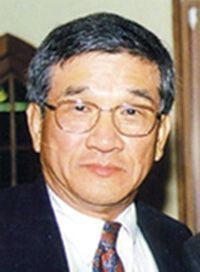
I recently had occasions to entertain American families with to-go meals from local Korean restaurants: once from Arirang and another from Mahdang, both north of Washington DC. I was not quite sure if they would like Korean food, what types of food or flavors they might prefer, or even if they would have a taste for its usual spicy tastes and textures.
Bibimbap, the Korean pancake called pajeon, and japchae are some of the most popular Korean dishes among non-Koreans who visit Korean restaurants. My decision was to serve alternative Korean food options to see how, and if, my American friends would enjoy the cuisine.
First on the menu were two safe entries: LA galbi and Korean bulgogi. I was a bit unsure about the next two, thinking they could be “tricky” to someone's taste. One was pork belly, called samgyeopsal, with lettuce and spicy sauces. The second was grilled mackerel with soybean soup, called doenjang jjige.
To my pleasant surprise, all four dishes were very popular, including the pork belly and grilled mackerel. Interestingly, contrary to Koreans and Korean Americans who eat pork belly and grilled mackerel as complements to rice, my American friends barely touched the rice and ate the pork belly and grilled mackerel as the main dishes. They even treated the soybean soup as a soup unrelated to the rice.
These enjoyable dinners led me to ponder the food from our homeland in ways that I had never considered.
Voluntarily, or involuntarily, in recent years, I have been to many different kinds of restaurants. Among my dining pleasures have been classic American, Tex-Mex, Chinese, Japanese, Thai, Ethiopian, and, of course, Korean. It took a while, but I finally realized that Korean restaurants were the premier dining experience.
My conclusion is based, not on being a Korean American, but on my repeated observations during many visits to all these restaurants. Here are the reasons.
First, Korean food is the only one in which side dishes are served at no extra charge. In addition to that feature, Korean restaurants welcome requests for additional servings of one or more of the same side dishes, again, at no extra charge. In my experience, I do not recall any American or other restaurant providing side dishes free of charge.
Any nationality who dines in a Korean restaurant typically loves kimchi. Korean restaurants will continue to serve kimchi refills while you are eating inside the restaurant. In addition to kimchi, there are multiple side dishes that often vary from one Korean restaurant to the next. Regardless of the types of side dishes, I have never experienced any reluctance to offer additional portions of these side dishes.
Secondly, the share of a beverage (ice tea, soft drink, or coffee) in a meal cost is not insignificant when the taxes and tip are added. In Korean restaurants, good barley tea is provided at no charge. Your meal expenses are for the food only.
I still remember visiting a famous lobster restaurant in Kennebunkport, Maine (U.S.). Kennebunkport, you may recall, was often featured in the news because former President George H. W. Bush had his family home compound there. It was a picturesque small town on the Maine coast. When I asked for a refill of my coffee, the waitress told me that I should pay for the refill. I was more surprised than disappointed.
As for tipping service workers, there is no difference between Korean restaurants and other kinds of restaurants. I am aware that some Koreans living in America refuse to tip at Korean restaurants. This is not an acceptable behavior.
In America, the wages of the wait staff are set below the minimum wage with the expectation that tips are to provide the difference. Tipping in America is estimated to cost around $40 billion a year, which is a significant share of the economy.
The restaurant sector has been hit especially hard by the COVID-19 pandemic. The pandemic has caused an added burden on Korean restaurants, which often struggle on a smaller financial margin, due partly to the multiple side dishes. With to-go business requirements, the side dishes must be separately prepared and packed, usually in small plastic containers. Not only has the labor increased, but the cost of the carry-out containers is an increase in operating expenses.
If you appreciate the free side dishes of Korean food, you may consider giving a generous tip to the smiling waitstaff, even when you order a to-go meal.
Hopefully with new vaccines, we may all be able to visit our local Korean restaurants regularly again. When you do, pause and take your time, as you sip your barley tea, to savor the numerous no-cost side dish additions to your meal. Keep in mind that both of these delights are part of a service at no extra charge, only in Korean restaurants.
As quoted in various countries, “eat hearty,” “eat up,” “Guten Appetit,” “bon appetit,” and “please eat more,” as Koreans often say.
Chang Se-moon (changsemoon@yahoo.com) is the director of the Gulf Coast Center for Impact Studies.