The ups and downs of seesawing in Joseon Korea

Adults look on as neighborhood children demonstrate their skill in the early 20th century. Robert Neff Collection.
By Robert Neff
During the holidays of the past, Korean girls often gathered together in their courtyards ― dressed in their finest ― and took turns on the seesaw.
Not the Western-type of seesawing where children sit on opposite ends of the board and passively lift one another into the air but the dynamic Korean-style known as neoltttwigi.
Instead of sitting down, Korean girls stood at the end of the board and alternately jumped up and down, propelling one another to fairly impressive heights. For many, the exhilaration was not so much from the height itself but what the height provided.
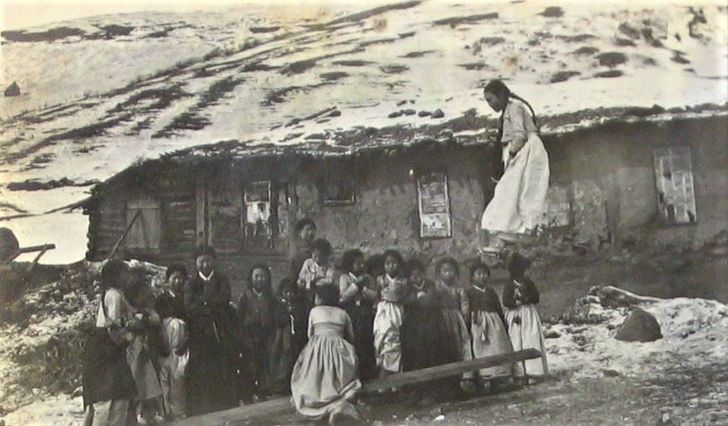
Korean children at the French mining concession in northern Korea, circa 1920-30. Courtesy of Justine Tweed.
Women, especially the young and unmarried, were generally secluded from the public ― particularly from men. The seesaw provided the best jumpers with the opportunity to gaze on the world outside the family compound and, probably equally thrilling, being seen by the denizens of the forbidden outside world ― unmarried teenagers and young men.
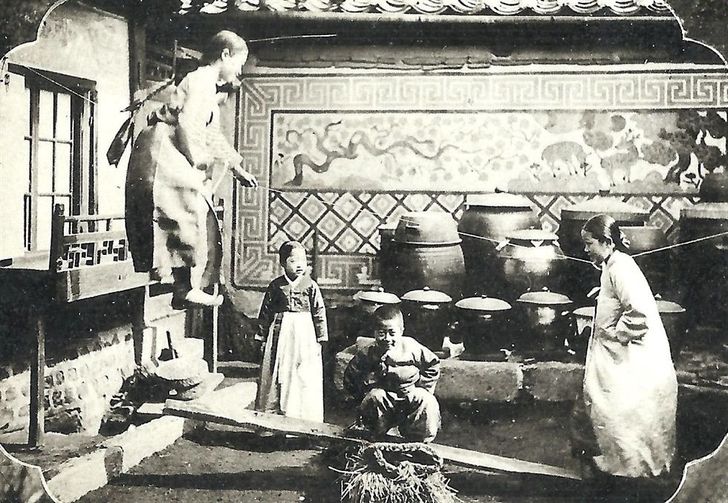
Young girls engaged in seesawing. Note the safety cord. Circa 1920s. Robert Neff Collection.
Of course, seesawing in this manner required skill and there was the obvious danger of falling off. But not all the dangers were immediate. According to wives' tales, girls needed to seesaw; those who didn't risked suffering from splinters (pains?) in their feet later that year. Girls who were poor at seesawing were, according to the tales, also plagued with difficult births.
Apparently ― judging from some of the images ― safety measures were later taken by stretching a thin cord in the air, parallel to the seesaw, so that the girls could steady themselves.