Trip to rural coastal town
By Choe Chong-dae
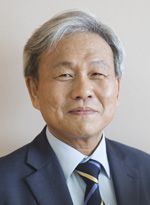
My family and I just returned to Seoul from a summer vacation at a small rural fishing village on Jindo and the nearby towns of Haenam, Yeongam and Wando in South Jeolla Province. The towns and villages in the region share picturesque traditional charms, incredible beauty and a rich rural marine cultural heritage.
Jindo, Korea's third-largest island after Jeju and Geoje, is also identified with the Korean breed of dog named after it, the Jindo. It is renowned and valued for its loyalty, watchfulness and intelligence.
What inspired me most in Jindo was the site of the Battle of Myeongnyang where the Korean hero Admiral Yi Sun-sin (1545-98), thwarted a Japanese invasion in 1597. With a fleet of only 13 ships, Admiral Yi triumphed over the Japanese invaders, disabling or destroying many of their 133 warships without losing any of his own in the waters of the Myeongnyang Strait off Jindo. His remarkable leadership, outstanding tactics and expert knowledge of the geographical features and unpredictable currents of the straits off Jindo led to Korea's victory.
The Myeongnyang Strait, called Uldokmok, means “Sea Passage with Roaring Currents.” Because the straits are narrow and the current very strong, it was hard for many ships to pass through them simultaneously. Despite being vastly outnumbered, Admiral Yi wisely utilized the terrain and tidal currents to his advantage.
Standing at the site of the Battle of Myeongnyang, I was transported back to the time of the 1592-98 Japanese invasions, also known as the Imjin War, and the echo of Korea's shouts of victory. Admiral Yi Sun-sin is Korea's foremost maritime hero. He is revered at home and abroad for his great naval victories.
I have read records including “The Man Who Transforms Korea, Yi Sun-shin,” published by Voluntary Agency Network of Korea (VANK), that the Battle of Myeongnyang and the Battle of Hansan deserve to be compared with the world's greatest naval battles such as the battle of Salamis won by the Greek Admiral Themistocles against Persia in 480 B.C, the battle of Calais won by the British Admiral Lord Howard against the Spanish Armada in 1588 and the Battle of Trafalgar won by British Admiral Lord Nelson against French-Spanish allies in 1805.
Jin Lin (1543-1607), general and naval commander of the Ming Dynasty of China, is reported to have acclaimed Admiral Yi by stating "his merit is to display his skills to handle all things of heaven and earth.” Wakisaka Yasharu, a Japanese admiral who participated in the Hideyoshi invasions, stated that “the person I truly fear is Yi Sun-sin, the person I hate the most is Yi, the person I like the most is Yi Sun-sin, the person I admire the most is Yi.”
One must mention the Jingbirok, a book written by Ryu Seong-ryong, who served as prime minister of Joseon during the war. It depicts the turbulent history of Korea and how it survived the seven-year-long crisis of Japanese invasions. If it were not for patriotism of Admiral Yi, Korea would have been lost in the late 16th century. The site of the Battle of Myeongnyang reminds the nation to avoid the mistakes of the past and to value courage and integrity.
Choe Chong-dae is a guest columnist of The Korea Times. He is president of Dae-kwang International Co., and director of the Korean-Swedish Association. He can be reached at choecd@naver.com