Korean trade unions grow despite limitations
By Min Hyeon-jong
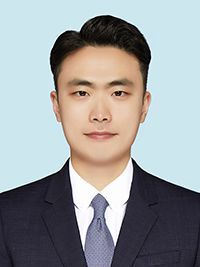
Justice Party Rep. Ryu Ho-jeong is less known for her career as an IT worker founding a trade union in Smilegate than her recent dress worn at the conservative National Assembly. Nevertheless, Ryu is only one of many activists founding trade unions during the Moon Jae-in administration.
By the end of 2019, about 2.3 million people had joined trade unions, a surge from about 1.9 million in 2016. In 2018, for the first time in South Korean history, participants of the more radical Korean Confederation of Trade Unions (KCTU) surpassed moderate Federation of Korean Trade Unions (FKTU). Trade unions are becoming more important than they have been at any other time.
Workers in IT firms have been founding trade unions to protect their “work-and-life balance.” Although President Moon imposed a 52-hour workweek cap on workplaces, some employers in Pangyo simply dismissed it, instead compelling their workers to enter “crunch mode” where they work until the assigned project is over. Throughout 2018, workers in Naver, Nexon, Kakao, and AhnLab founded trade unions.
Workers in the service industry are joining trade unions to protect human dignity. Victim of the much-publicized “nut rage incident” in 2014, Korean Air Chief Flight Attendant Park Chang-jin founded a new trade union under KCTU in 2018. On May 1, 2019, riders of Baedal Minjok, South Korea's most popular online delivery platform, formed a trade union, calling for improvements of work safety, holiday allowance, and collective bargaining.
Recently, artists and athletes are founding trade unions due to matters of life and death. As the case of the triathlete Choi Sook-hyun manifested, individual reports to public authorities could not prevent physical and psychological abuse. The formation of trade unions for city-affiliated athletes is progressing rapidly including those at Uijeongbu City Sports Council.
Posing a challenge to trade unions and the KCTU, however, is that most workers are contracted. This compels them to struggle against a complex mechanism. First, they need to convene workers to form trade unions, which is difficult since not many of them tend to work in the same company for long periods of time. Second, they need to be endorsed with legal status as employees of the company, not free-lancers or contractors. Third, they tend to face conflict among workers and other trade unions within the firm, sometimes based on differing working status.
Nonetheless, the trend in which workers are joining trade unions and KCTU takes the lead is unlikely to reverse. In spite of technical difficulties, an increasing number of contracted workers are forming trade unions and joining the KCTU. Among new trade unions joining the KCTU in 2019, 35 percent were non-regular employees, 38.1 percent were regular employees, and the remaining 27 percent a mixture of work clasifications.
Moon administration was inaugurated in the context of a widening income gap and worsening labor rights. Accordingly, Moon promised a minimum hourly wage of 10,000 won, governance with trade unions, and full ratification of the International Labor Organization (ILO). We are curious to see how the Blue House will resolve issues related to workers, especially when international society has its eyes fixed on how the so-far successful Korean model of fighting the pandemic will unfold.
Min Hyeon-jong is a research associate at the Sejong Institute.