Thoughts on North Korean issue
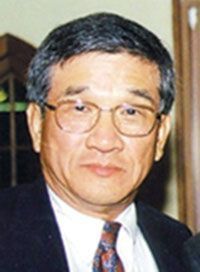
By Chang Se-moon
On June 19, Mrs. Cindy Warmbier and the Human Rights in North Korea organization hosted a zoom presentation of how her family had been handling the death of their son, Otto.
Readers may recall that Otto Warmbier, a bright, handsome, and talented 22-year-old University of Virginia student, died on June 19, 2017, from injuries suffered while detained in North Korea.
More than 100 people all over the world, who are concerned about human rights violations in North Korea, participated in the zoom meeting, including myself.
Their legal pursuit may end up becoming more detrimental to North Korea than many U.N. sanctions because of the possible loss of most, if not all, financial assets that North Korea has been hiding in other countries.
Importantly, she said that the official designation of North Korea as “a state sponsor of terrorism” was necessary to legally pursue North Korea to be financially liable. Groups in South Korea who pursue the same approach may need to know this.
Mrs. Warmbier at one point stated, “I honestly never thought an evil such as North Korea existed.” Well, the reality is that an evil such as North Korea not only exists, but has existed for more than 70 years, treating hundreds of thousands of innocent people as they treated Otto Warmbier.
Today, I want to be practical. I will make a proposal that may or may not work. Recent provocations by North Korea clearly prove that past efforts have not worked.
The reality is that the North Korean people will continue to support their leaders, thinking that the U.S. and South Korea are about to destroy them. South Korean people will continue to support their leaders, rationalizing that the failure is entirely the fault of the North.
Let us look around to see where we are. The North Korean economy is in shambles. North Korea has nuclear weapons. They are willing to use them to get whatever they want from South Korea.
The only deterrent is the security blanket of the United States. South Korea has seen its economy flourish but neglected its national defense to the extent that no one now feels safe enough to ignore military threats from North Korea.
With so much at stake, it is incredible that the leaders of North Korea, South Korea, and the U.S. were unable to find a way to solve the escalating crisis during their widely publicized meetings, called summits.
Hopefully, leaders of the three countries will get their senses back and, somehow, communicate in such way to start a new round of negotiations. If they do it, this is what I suggest.
Keep in mind that there is deep distrust among the parties, and too much risk for failure, to pursue an all or nothing approach. This has been proven without a shred of doubt through recent provocations by the North Koreans who have acted like cranky children over so many empty promises made by South Korean leaders.
The key to success, I feel, is to make the entire negotiation process public so that everyone under the sun knows what the deal is and everyone knows who wants peace and growth and who does not. The negotiation should be based on clearly stated step-by-step procedures of country-specific obligations.
If North Korea says that it will never give up its nuclear weapons, no matter what, as many experts will have us to believe, make enough concessions to the North so that the people in North Korea understand just how much they are losing by not following through with the negotiations.
The step-by-step procedures will have to be in detail and painfully patient, with no rush for any quick solutions. The two Koreas have been separated for more than 70 years. Too many things have changed to hope for a quick solution.
The wide-open process has another great advantage in that it will attract the attention of everyone at stake. The attention, especially of those in the two Koreas, will be on peace, not on hate. If you think my idea is too naive even for consideration, well, think about how all other approaches have worked to date.
Some of you might ask how people in North Korea can hear the message. My educated guess is that they will hear it. Tens of thousands of North Koreans work outside the country to earn precious foreign currency for their “Great Leader.”
Many North Korean diplomats are spread throughout the world including the United Nations. Many North Koreans cross the Yalu River back and forth every day to survive. I have no doubt that they hear.
Clearly, unforgiving economic sanctions, swine flu, and now COVID-19 are squeezing the North Korean economy toward a near collapse. I seriously doubt that the status of the North Korean leaders is as secure as they might think it is.
Chang Se-moon (changsemoon@yahoo.com) is the director of the Gulf Coast Center for Impact Studies.