Tales from the past: Joseon's Caligula
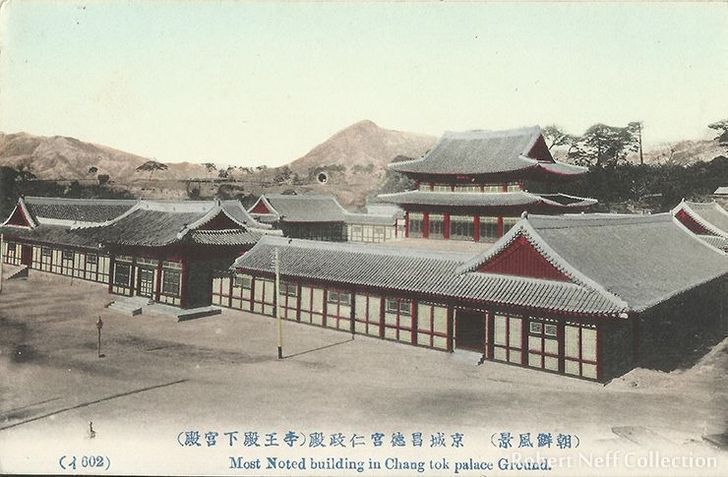
Changdeok Palace. Robert Neff Collection
By Robert Neff
When Crown Prince Yi Yung ascended to the throne in January 1494 and became known as King Yeongsangun, he apparently was unaware of his how his mother had died. His initial rule is described as being wise and beneficial to the people ― especially the poor ― with an emphasis on strengthening the country. Yet, despite his enlightened beginning, there was a deep darkness in him that was apparent to those who knew him best.
Court officials began resigning and returning to their country homes in an effort to protect themselves. Homer Hulbert, an early narrator of Korean history, gives the example of one official:
“Some time before the last king's death, while he was walking in the palace grounds with his son, a tame deer had come and rubbed its nose on his arm. The youth in wanton cruelty had brutally kicked the animal and was sharply reprimanded for it by his father. Now that he had become king he sent for the harmless beast and drove a spear through it with his own hand.”
Some, like the king's old tutor, Jo Sa-seo, “whom he had learned to hate when a boy, because the faithful instructor had tried to curb his wild excesses,” were unable to escape his revenge and were beheaded. But the worst was to come.
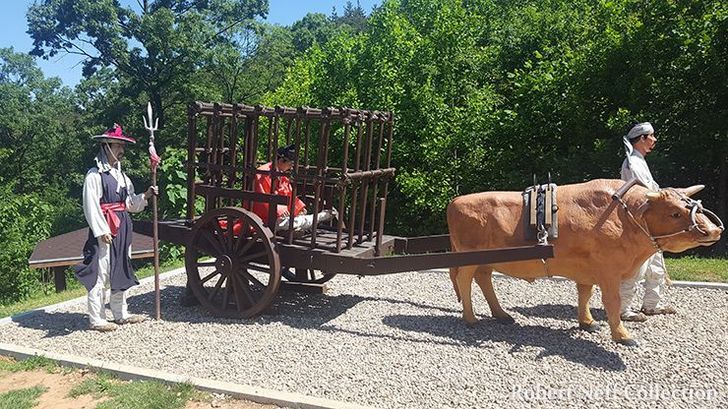
The deposed king being taken to his exile on Gyodongdo. June 2020. Robert Neff Collection
At some point, when Yeongsangun was presented with his mother's bloody handkerchief and told of her dying wish, he began a campaign of revenge.
“All those who recorded the facts, all the messengers who carried the hateful commands” for her execution ― several hundred people ― were all decapitated and dismembered.”
Hulbert goes on to add, “He also dug up the bodies of those who had been implicated but had died in the interval, broke their bones in pieces and flung them into the river or ground them to powder and scattered them to the winds.”
Scholars and court officials were silenced for fear of being executed or banished ― their families shared their fates. He even made his officials wear tags upon which was written: “The mouth is the avenue to misery. The tongue is a sword which may pierce the body. Watch the mouth and guard well the tongue; so that thou dwell in safety.”
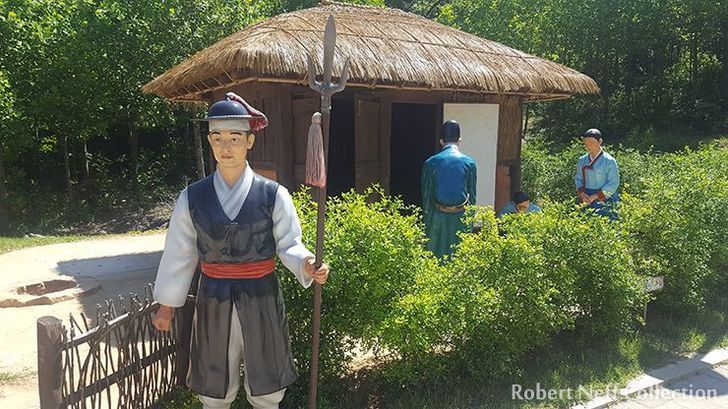
His place of exile on Gyodongdo. June 2020. Robert Neff Collection
According to Hulbert, “As the years passed the reign of terror did not abate. Debauchery, oppression and theft were the daily practices of the court and the people were ground to the very lowest point.”
He confiscated land in the Paju and Goyang areas so he could stock the area with animals and use the areas as his private hunting grounds. Hunting was not his only pleasure.
His excesses were legion and reminiscent of Caligula. Places of learning and temples were transformed into personal brothels filled with unwilling women brought in by agents from all across the peninsula. Even Huwon (the Secret Garden of the palace) was said to be the site of outrageous orgies.

The bare necessities on Gyodongdo. June 2020. Robert Neff Collection
He allegedly held a great feast and had each of the wives of his guests wear upon her breast the name of her husband. Those who caught his attention were “dishonored” and their husbands were given positions of power. He also enticed the wife of an uncle and bragged about it. The woman committed suicide.
Some women purportedly went to extreme matters to make themselves unappealing to escape the lecherous monarch. It is said that in the final year of his reign, the beautiful young wife of a minor official was summoned to the palace. Many bemoaned her fate but the young woman stoically dressed in finest and presented herself to the king. As he drew near, he was suddenly overwhelmed by a horrible rotting stench coming from his intended victim. Disgusted, he sent her away.
According to the tale, the woman knew that at some point she would be summoned to the palace so she always kept two slices of rotting meat readily accessible. When the summons came and she was getting dressed, she slipped the meat under her arms and it was this horrible reek that had repelled the king.
There were other tales. Although he was a young man, the king apparently worried about his virility and was under the impression that if he kept snakes under his bed they would keep him “vigorous and strong.” As there were no snakes in Korea, he sent a boat to India and had some brought back ― unfortunately, some of these snakes escaped and now the descendants of these serpents live in Korea's mountains.
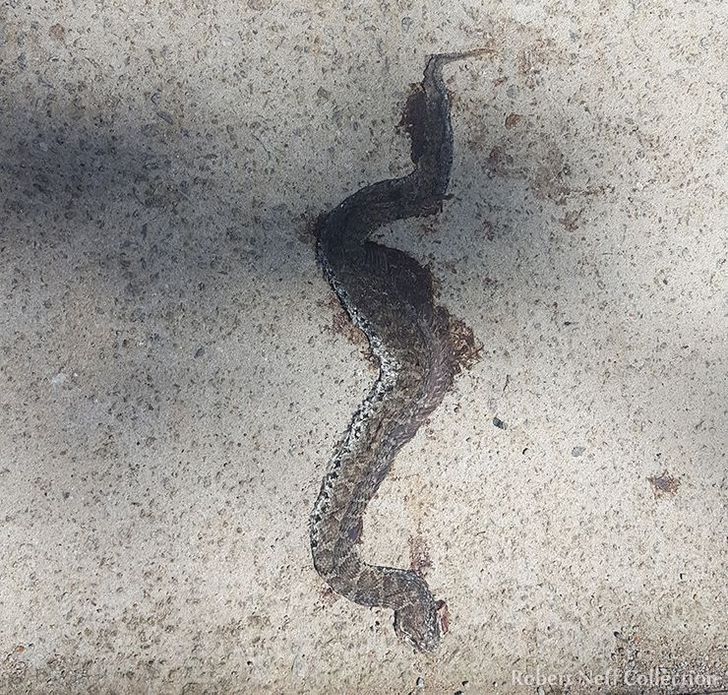
A dead snake on the path to Yeongsangun's exile on Gyodongdo. June 2020. Robert Neff Collection
His reign was fortunately short. On September 2, 1506, he was deposed by his half-brother, demoted and exiled to Gyodongdo, a small island near Ganghwa. His favorite consort was beheaded and his young sons were executed by sayak (poison).
Within two months of his exile, he was dead. The cause of his death is unknown. Perhaps he died of tuberculosis or maybe the cause was more Machiavellian.
Yeongsangun has been described as the most ruthless tyrant in Joseon's history but, as we have seen, some of the tales ― such as the snakes ― are merely to vilify and humiliate him. History is written by the victors.