No more shrimp sandwiches, please
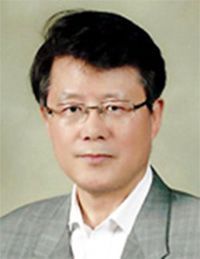
By Choi Sung-jin
Few nations in the world may yearn more for international recognition than Korea. That explains in part why Koreans are proud of Tottenham Hotspur forward Son Heung-min much more than Argentinians are boastful of Lionel Messi, and the Portuguese are of Cristiano Ronaldo.
On the flip side, Koreans are one of the world's most self-deprecating people, habitually saying their country is small and weak. It must be due to their tumultuous modern history, marred by foreign interventions, colonial rule and a fratricidal war.
Most Koreans realize, however, that Korea ― South Korea, of course ― has become a small but influential country. It is the world's 11th-largest economy and the seventh largest military power. As such, it was not wide off the mark for U.S. President Donald Trump ― out of his usual character ― to express his intention last Saturday to invite Korea to what has now been dubbed the “G11” meeting in September.
Ironically, Korea can ill afford to enjoy its long-awaited rise in national status.
If Trump sends an official invitation, it will be neither because he respects Korea and its exemplary response to the COVID-19 pandemic, nor because he likes President Moon Jae-in personally. It is mainly because Washington wants to include Korea in its net encircling China. Russia used to be a frequent member of the G8. Still, the other two invitees ― India and Australia ― are key players in the U.S.' Indo-Pacific Strategy to contain China.
Beijing is not just sitting and watching Washington haul in Seoul to its side, either. In an interview with China Central Television, May 24, Chinese Ambassador to Korea Xing Haiming said he believed Seoul would “understand and support Beijing's enactment of a new national security law in Hong Kong.” Last Friday, new interceptor missiles were brought onto a U.S. THAAD missile defense base in Korea in an overnight operation. China's Foreign Ministry wasted no time reiterating Beijing's “resolute opposition” to the U.S. missile shield.
The COVID-19 pandemic has turned the long-simmering rivalry between the G2 into a full-blown Cold War, in which they compete for almost everything. And nowhere else is their war-of-nerves tenser than in East Asia, including the Korean Peninsula.
Already, some all too familiar headlines are reappearing in local media, saying Seoul is “sandwiched between Washington and Beijing” and comparing it to a “shrimp that gets hurt in a fight of whales.” Editorials and columns say in unison that the Seoul government should “pursue a well-balanced diplomacy by putting the national interest ahead of all else.”
Nothing's wrong with that. It's far easier said than done, however. At stake is how. So far, Korea has maintained a strategic ambiguity by resorting to the U.S. for national security while depending on China for economic prosperity. That won't work much longer if Washington and Beijing demand Seoul to choose one or the other.
In the not so distant future, Korea could become like a little boy stressed by his parents often asking, “Who do you like better, mom or dad?” The best answer, of course, is “I love you both,” but it would satisfy neither. How about “I like neither of you” as an alternative reply, then ― accompanied by logical reasons and justifiable demands for rectification?
There seems to be no better time for Korea to do so than now. COVID-19 has starkly revealed the limitations of the G2. China opened up the “pandemic's box” because of its authoritarian rule, undue secrecy, and empty self-propaganda. America's incoherent and disorderly response to it under an unprecedentedly incompetent and irresponsible leader came as a greater shock to most, including Koreans.
The fatigue and discontent from the prolonged pandemic, coming on top of extreme inequity of wealth and deep-rooted racial discrimination, is splitting American society into shreds. The era of the G2, or G0, will likely continue, however. China, albeit embittered and emboldened by the U.S., can hardly challenge the latter, militarily and economically.
A middle power like Korea cannot go anywhere near those superpowers in physical terms. The nation's weapons should be spiritual ― the moral high ground and ethical superiority ― namely the principles of openness, transparency, democracy and the protection of people and Earth.
The efficient, systematic dealing with an infectious disease may not change, let alone upgrade, this country abruptly. However, the experience of coping with COVID-19, still ongoing, has taught Koreans at least two lessons.
One is what they should do to preserve their land and the entire planet on which all people could coexist, if not co-prosper. The other is their newfound confidence in themselves and their country to persuade the rest of the world to move in this direction.
This is no time for states, let alone global leaders, to point fingers at one another while clamping down on domestic dissent out of greed and hegemonic ambition, but to seek worldwide cooperation to preserve the environment from the climate crisis and plastic garbage.
The process should start at home ― a shift of priority from short-term growth at any price to valuing all living beings and their safety and long-term sustainable growth.
For instance, the nation ought to shed off its stigma as a “climate villain” as soon as possible. Based on a plausible strategy and agreeable principles, Korea should be able to gather like-minded middle powers and move with them.
For now, all this may be close to a dream. However, any change is better than living a life of subordination, always studying the faces of surrounding powers and their unjustifiable ambitions. And nothing can change without taking the first step. Korea should no longer remain a sandwiched nation or a shrimp. President Moon has just accepted Trump's invitation over the telephone. I hope it is the first step in the right direction.
Choi Sung-jin (choisj1955@naver.com) is a Korea Times columnist.