Nostalgia for spinning mills
By Choe Chong-dae
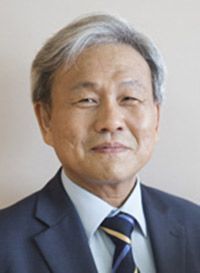
Having been engaged in the cotton business since the 1980s, I feel nostalgic for Korea's textile and spinning mills.
During Korea's poverty-stricken 1960s and 1970s, a massive number of young female workers toiled day and night to assist in the operations of textile and spinning mills that manufactured yarn and fabrics in cities such as Busan, Daegu, Jeonju, Gwangju and Seoul. During that time, the female workers at textile mills played a significant role in accomplishing the “Miracle of the Han River,” Korea's rapid and successful industrialization. Comparable to the toils of Korean nurses sent to West Germany to serve as guest workers five decades ago, the female textile employees devoted themselves to securing Korea's economic development despite unfavorable workplace conditions.
Recently, I have been deeply impressed by the illustrious career of Kim Mi-ae, a lawyer-turned-lawmaker elected in the April 15 general election.
She introduced herself proudly as having worked at a textile and spinning mill in Busan while a teenager from a poor family. After leaving the mill, she passed the state-run bar examination and served as a lawyer. She adopted three children despite being unmarried. Finally, she won in the general election for a race in Busan last month and was featured widely in the media. Her victory has offered hope and encouragement to young female employees currently working at textile mills as well as at other manufacturing facilities.
Remarkably, during the 1960s, 1970s and 1980s, Korea's textile apparel-related industry was one of the leading industries to earn foreign exchange. When the industry was at its peak, exports of cotton textile goods played a pivotal role in Korea's initial industrialization.
However, in more recent decades, it has subsequently been sluggish with the advent of other industries such as automotives, electronics and information technology. It has seen a remarkable decline in the number of operations and employees due to increasing labor costs as well as the government's complicated regulations. Consequently, the majority of textile mills were forced to move production lines overseas for a more favorable business environment. Furthermore, some mills had to permanently shut down in the aftermath of the Asian financial crisis in the late 1990s.
It is difficult to mention the textile industry without thinking of cotton, the basic raw material that is imported entirely from abroad. It has been used extensively in spinning yarn and thread to be woven into diverse fabrics for garments, which have a significant impact on the daily life of all people.
Purchasing cotton at a competitive price has been a very sensitive and difficult task because its price fluctuates daily in accordance with the New York Cotton Exchange Futures Market. Every cotton contract, even those involving far-distant-future shipments, is first concluded by telephone confirmation without a deposit. Although the value of cotton may increase or decrease after the verbal confirmation, the contracted price and relevant terms should be honored and unchanged.
In the past, there have been many interesting stories about purchasing cotton in Korea. Although this story may be apocryphal, it is said a leading spinning company executive frequently consulted a fortune teller on when was the best time to buy cotton at the most attractive price, instead of discussing with his company staff.
Cotton reminds me of the spinning wheel. When I was a teenager in the 1960s, I frequently noticed women busily working on the traditional spinning wheel and loom as they wove fabric in rural towns. I remember the repertoire of the song “Song of the Weaving Loom'' that was filled with the joy and sorrow of a typical woman's life.
I urge the government to loosen regulatory restrictions and foster a more business-friendly environment, not only for the textile industry but also for other industries. Let's bring those overseas mills home and encourage reshoring to create many new jobs in Korea.
Choe Chong-dae is a guest columnist of The Korea Times. He is president of Dae-kwang International Co., and director of the Korean-Swedish Association. He can be reached at choecd@naver.com