G20 leaders' commitments fall far short of expectations
By Kavaljit Singh
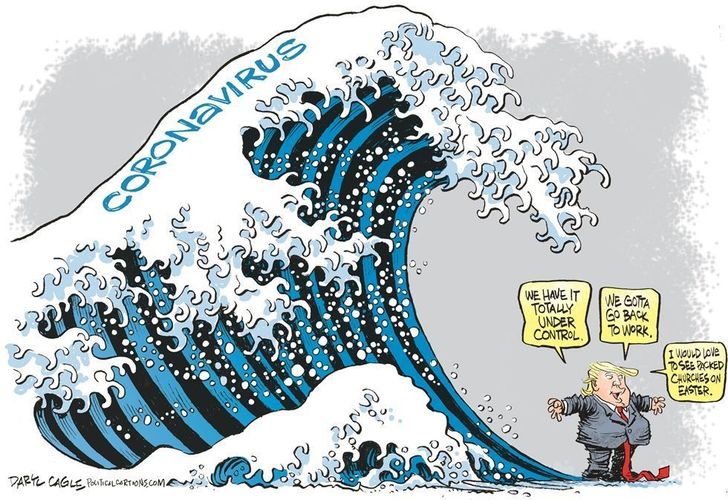
The first-ever extraordinary virtual G20 leaders' summit took place March 26. The summit was convened by Saudi Arabia, the current G20 chair, to develop collective global solutions in the fight against the coronavirus (COVID-19) pandemic.
Singularly focused on the need to develop a global response to the pandemic, the summit did not discuss the Saudi G20 presidency agenda titled “Realizing Opportunities of the 21st Century for All” or previous commitments made by the G20.
Surprisingly, the much-anticipated animosity between the U.S. and China over the origins of the coronavirus or the ongoing oil price war between Saudi Arabia and Russia did not disrupt the proceedings at the summit.
The G20 countries together represent more than 85 percent of global GDP. Close to 90 percent of the COVID-19 cases and deaths have occurred in G20 countries. So high expectations for this summit were raised to tackle the global pandemic. Many were expecting a quick, coordinated and synchronized global economic policy response from the G20, similar to that in the aftermath of the 2008 global financial crisis.
Where is the beef?
After their two-hour video conference, G20 leaders released a statement on COVID-19 that fell far short of expectations. The three-page statement is long on aspirations and intentions but short on concrete plans.
For instance, the statement devotes several paragraphs to protecting lives and enhancing health measures globally, but it does not delineate specific health measures (funds, targets, and timelines) that would constitute a health policy response to contain the spread of the deadly COVID-19.
In the statement, the G20 leaders committed to do “whatever it takes” and called for “global action, solidarity and international cooperation” to fight the coronavirus. This is indeed welcome, but they did not outline action plans along with timelines for their implementation.
The statement calls upon the G20 finance ministers and central bank governors “to coordinate on a regular basis to develop a G20 action plan.” However, no time framework was provided as to this action plan would be ready.
The big headline from the virtual summit was the injection of over $4.8 trillion into the global economy to manage the economic fallout from the coronavirus pandemic. The statement said: “We are injecting over $4.8 trillion into the global economy, as part of targeted fiscal policies, economic measures and guarantee schemes to counteract the social, economic and financial impacts of the pandemic.”
But make no mistake, this commitment was not in addition to already undertaken fiscal measures. The amount stated in the commitment includes money already allocated or planned to be allocated, such as the $2 trillion stimulus in the U.S. alone. No new global funds from the G20 to fight COVID-19.
Some major shortcomings
First, Why have the G20 leaders not made the World Health Organization (WHO) a permanent invitee to all of their summits? The WHO has the mandate to protect public health and is currently coordinating international health efforts to fight the pandemic. If the OECD, APEC, the IMF and the World Bank can be permanent invitees to the G20, why can't the WHO?
Second, G20 leaders should have substantially enhanced the overall budget of the WHO, which is facing immense financial stress, rather than only closing the financing gap of its Strategic Preparedness and Response Plan.
Third, no commitment was made by the U.S. at the summit to extend dollar swap lines to several emerging markets and developing economies that are also facing a dollar funding squeeze due to rapid capital outflows.
Fourth, G20 leaders offered no debt relief to poor countries experiencing acute financial difficulties in battling the coronavirus pandemic. This is despite the fact that the IMF and the World Bank issued a joint statement just a day before the leaders' summit calling on “all official bilateral creditors to suspend debt payments from IDA countries that request forbearance.”
Fifth, the G20 leaders' statement makes no reference to support the proposals made by the IMF to double its emergency financing capacity and a sizeable SDR (Special Drawing Right) allocation to enhance financial assistance to poor and developing countries. The IMF leadership cannot do so without the backing of its largest shareholders, especially the U.S.
Sixth, while the statement says, “we commit to do whatever it takes and to use all available policy tools to … maintain market stability,” it falls short of recommending specific policy tools and regulations (such as capital controls and a ban on short-selling) that are vital in maintaining market stability.
Finally, the G20 leaders' statement does not call upon member countries to pause their ongoing trade and oil price wars and unilateral sanctions that obstruct international cooperation to fight the coronavirus. Even the call for the removal of export controls on medical supplies was vague.
Kavaljit Singh (
kavaljit.singh@gmail.com
) is director of Madhyam, a policy research think-tank, based in New Delhi.