Challenges of global citizenship education
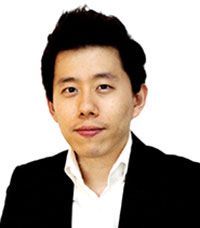
By Chang Kim
Global citizenship education (GCE) is not a new concept. According to international discussions, GCE is education that cultivates people who are interested in various global issues beyond race, culture and religion, and who actively seek to solve them.
Governments and educators around the world continue to show interest in GCE, as it has an agenda that is also addressed as a key target of the U.N. Sustainable Development Goals.
The rapid progress of globalization has played a major role in bringing GCE to global attention. With the advancement of technology, the world is getting flatter, and the boundaries between nations are being broken down. As a result, the exchange of human and physical resources between countries is more active than ever, and consequently, the interconnectedness and dependence between nations is deepening.
Under these circumstances, the importance of the GCE need not be emphasized again. But we sometimes make the mistake of narrowly interpreting GCE as “international exchange through the acquisition of English.” Even today, some educators seem to think that international exchange through the acquisition of English is a major goal for GCE.
However, within the framework of the school curriculum, the direction that GCE should pursue is education on values. GCE should be focused on helping people to critically reflect on the world around them and build their own values through an understanding of universal human values; peace, human rights, diversity, democracy and tolerance. Courses such as “English conversation” or “global business manners” should be offered as a complement to this core education.
In order to achieve such GCE goals, rather than education for acquiring superficial knowledge or content, process-based education requires participants to solve problems through communication and cooperation with others in a given context. This is why the open-minded, critical thinking and empathy of different points of view is emphasized above all in GCE.
In South Korea, interest in fostering global leaders has increased since former Foreign Minister Ban Ki-moon became U.N. secretary-general in 2007. In addition, as the expectation for Korea's role in the international community increases, the role of GCE will become more noticeable in the future.
However, if we look into the country's education system, there seems to be no place for GCE. It is questionable whether Korean students can grow as global citizens under the current education system.
Above all, the college entrance exam with multiple-choice questions is a strong obstacle to GCE blossoming in South Korea. It is also realistically impossible to modify the current university admissions system for the introduction of GCE.
Therefore, a gradual change is needed in the long-term. GCE emphasizes participation in the real world over rote learning. It is necessary to focus on participatory education rather than on lecture-style education.
Participatory education can be introduced in many ways, but I would like to encourage international cooperative projects that promote learning in the context of GCE. After entering into an agreement with a foreign school, students from both schools would work together on a joint GCE project.
The topic of this GCE project could be peace, human rights, diversity, democracy, and tolerance. Skype is a great resource for international collaboration. In such a learning process, students naturally have the opportunity to learn the other's perspectives and culture, and learn to respect each other's differences.
If the achievements of such international collaboration projects can be given any additional points under the current university entrance examination system, it will make a great contribution to attracting the attention of parents and students.
Of course, the successful implementation of such international collaboration projects requires a commitment to GCE and a learning environment appropriate for it.
The significance of GCE will surely increase as the exchanges between countries expand, but unfortunately, Korean society's interest in and support for this is still very small. In addition, under the current university entrance examination system, it is very difficult for students to form the values needed as global citizens.
It is difficult to immediately boost the local prevalence of GCE philosophy in this situation. However, if GCE receives even slightly more public attention than it does now, its position could be distinctly different. Along with social interest in GCE, I hope Korean students will find more opportunities and roles as global citizens all around the world.
Chang Kim (changkim.phd@gmail.com) is a research fellow at the Cairns Institute, Australia. He serves as an executive director of the Korean Association of Human Resource Development in South Korea. He tweets at twitter.com/ChangKIM_PhD.