Don't panic about coronavirus
By Dr. Jeffrey I. Kim
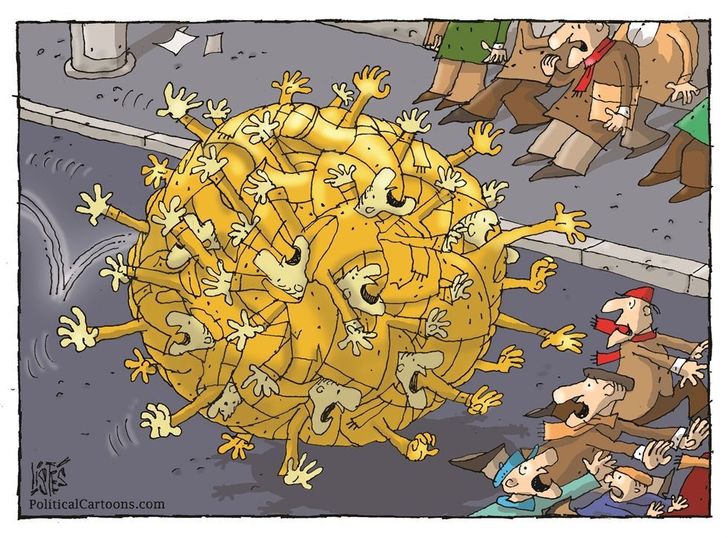
The entire world is under attack from the novel coronavirus. The World Health Organization (WHO) named the new virus as COVID-19. The number of the patients is still rising but no one knows exactly when this rampant plague will be subdued.
The new coronavirus outbreak originated in Wuhan, the capital of China's central Hubei Province, in December 2019. Wuhan is the ninth largest city in China with a population of over 11 million.
The city has been a traditional manufacturing hub for decades. It was designated as a “Creative City” by UNESCO in the field of design. It used to be a very popular place which so many people from many different countries visited for commercial business. Now the city has been under lockdown since Jan. 23 to prevent any further spread of the virus.
The WHO reported that the virus has spread to 104 countries and territories, including the U.S., Italy, France, Germany, Iran, Japan and South Korea. Among these infected countries, South Korea has suddenly become the center for world attention because of the spiking number of coronavirus patients and rising death toll. The Korea Centers for Disease Control and Prevention (KCDC) reported 7,478 patients and 53 deaths Monday.
Most of the confirmed patients are residents of Daegu, the country's fourth-largest city. Many Koreans were shocked to discover that about 60 percent of the patients were members of the Shincheonji Church of Jesus. There are 300,000 members of the Shincheonji Church in Korea and the church has branches in China.
The church leaders and some followers used to visit their branch in Wuhan. Shincheonji followers believe that Lee Man-hee, the founder, is the second coming or the returned Jesus Christ.
More than 100 countries including the U.S., Japan and Australia are enforcing an entry ban or other restrictions on travelers from South Korea.
Nevertheless, South Korea is putting an entry ban on travelers only from Wuhan and other areas in Hubei Province. This is because the Korean government has decided that putting a ban on travelers from all of China will do South Korea more harm than good.
With strong support by the U.S., China joined the World Trade organization (WTO) in 2001. The Chinese economy began to take off in 2003. Its exports grew at a rate of more than 25 percent per year during 2003-2007, with the economy growing by more than 10 percent in some years. In 1990, China's exports accounted for only 2 percent of the world's total but in 2017 it jumped to 14 percent.
With such a dramatic economic performance, China has earned a reputation of being the “world's factory.” Initially it was considered “China's pride” in that the rest of the world could enjoy lower prices for years but recently it has turned into “China's shame” in that the country has caused very high unemployment in the rest of the world.
South Korea's trade and economic growth have become too heavily dependent on China. As of 2017, its five main export destinations are China (25.1 percent), the U.S. (12.2 percent), Vietnam (8.2 percent), Hong Kong (6.9 percent), and Japan (4.7 percent). Its five main import sources are China (20.5 percent), Japan (11.5 percent), the U.S. (10.5 percent), Germany (4.2 percent), and Saudi Arabia (4.1 percent).
With such a heavy trade reliance on China, Korea cannot have much leverage in dealing with Beijing on plague prevention.
But people should not panic about the current coronavirus crisis. Although the Korean government has not taken appropriate preventive measures, things could get better down the road.
The WHO highly appreciated Korea's information transparency and immediate disclosure including the real time reporting of new patients and death toll. It also recognized the Korean quarantine system as being much better than many other countries.
The 2002-03 severe acute respiratory syndrome (SARS), originated in Guangdong Province, China, and the 2015 Middle East respiratory syndrome (MERS), which plagued South Korea, have all passed away with relatively low mortalities.
Scientists say vaccines for COVID-19 are not available yet but they could be available within a year. We live in the digital era and people the world over can easily share new information with one another.
Doctors say we should drink lots of water. Try not to keep your body cold and eat a little hot spicy food. China and South Korea should always remember, “Nothing comes for free.” But don't panic about the epidemic. We can win the war on the virus through science-based measures.
Dr. Jeffrey I. Kim (ickim@skku.ac.kr), former foreign investment ombudsman, is a professor emeritus at Sungkyunkwan University. He earned a Ph.D. in economics at the University of Chicago and taught at the University of Colorado, Boulder, and the American University, Washington, D.C.