INTERVIEW A stitch in time: preserving traditional Korean embroidery
By Hwang Jae-ho
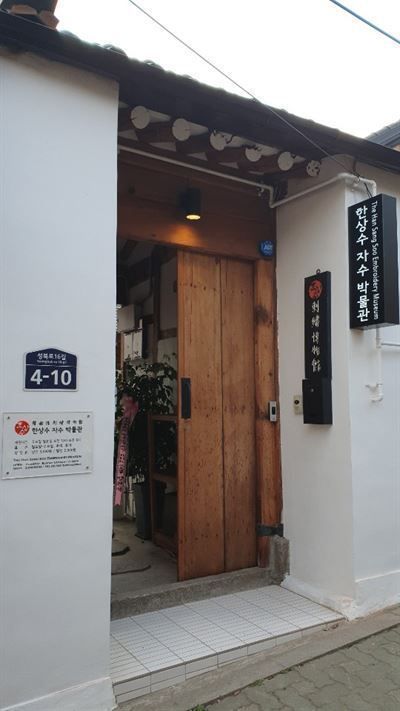
The Han Sang Soo Embroidery Museum. Courtesy of Kim Young-ran
Greeting the New Year, as Korea's biggest holiday approaches, suddenly I was interested in “our own” culture. Visiting the Han Sang Soo Embroidery Museum in Seongbuk-dong was surprising serendipity. I personally did not pay much attention to the embroidery art, except for purchasing gifts for foreign friends. Dr. Kim Young-ran is the eldest daughter of the late Han Sang-soo, a human cultural asset of traditional Korean embroidery. In the first week of January, I interviewed Dr. Kim, who is the director of Han Sang Soo Embroidery Museum.
Q. How would you put the meanings of embroidery?
A. The word embroidery (Jasoo) is derived from a combination of Chinese words ― “ja” for piercing and “soo” for being colorful. As we thread a needle and make stitches one by one, a delicate pattern appears and it ends with drawing beautiful colors in fabric. The harmony of color shines each other vividly while containing a meaningful symbol. This is the true aesthetic value of embroidery. Thus, the mastery of embroidery, with one thread to another thread, is a skill (技藝) of patience as well as a mark of innumerable repeated strenuousness. In ancient times, Jasoo, together with paintings and calligraphic works, performed a high standard of art as a must-do culture for the training and cultivation of virtues for royal and noble women.
Q. What is the origin of Korean embroidery?
The origin of Korean embroidery tracks back as far as the late Paleolithic Age. Three bone needles were found in caves (45,000 B.C.) in the current Liaodong area, with only 0.05mm-0.3mm of needle ears. During the Goguryo Dynasty, realistic expressions which reflected the inner world of the spirit were emphasized. Accordingly, the “long and short stitch,” which embroidered along with the fabric's pattern, has become popular. In the Joseon Dynasty, embroidery gorgeously embellished the desire to be auspicious despite the frugal Confucian society. After the modernization period, Korea's massive Western cultures flew inward, and especially under Japanese colonization, we were influenced by Japanese embroideries. Therefore, the parallel stitch was once in fashion. After Korea's independence from Japan, many folding screens and frames with abstract designs appeared with the couching stitch.
Q. What is the current status of embroidery in China?
A. Jasoo was one of the ancient Chinese handicrafts. It began with the production and development of silk fabrics. Various embroidery crafts were formed according to different regions and peoples. Today, though mechanized production is replacing the traditional handicrafts, the tradition still inherits and develops as the cultural heritage. Jasoo not only appears on costumes and domestic life items, but also vividly presents China's unique artistic images by blending paintings and calligraphy. In addition, through training in embroidery techniques, dyeing processes, innovative products and designing each nation's characters, it is also effective for working at home and escaping from poverty.
Q. Would you introduce Ms. Han Sang-soo, the embroidery master of human cultural assets?
A. The Korean government has enacted the Cultural Properties Protection Act since 1962, continuing the reputation of craft technology with great artistic or academic preservation value. In 1984, master Han Sang-soo (1932-2016) was registered as an artisan in the 80th Important Intangible Cultural Asset.

Master Han Sang-soo and Dr. Kim Young-ran. Courtesy of Kim Young-ran
The master introduced the beauty of traditional Korean embroidery by collecting the embroidery artifacts scattered across the country. It was then held at Jogyesa Temple to recreate about 100 Buddhist artifacts from the Joseon Dynasty, restoring traditional Korean art. As for embroidery, the master once said: “People often simply call embroideries beautiful, but I'm not just embroidering to be patient or to forget about the world's concerns. You can't make stitches one by one if you're either stressed or bearing a grudge. The embroidery can only be completed when you're full with hope and having a passion about it”. She always emphasized that the art must come from joy and passion.
Q. What is the museum aiming for?
A. Han Sang Soo Embroidery Museum was established at Bukchon Hanok Village in 2005 to preserve, collect, display and exchange related domestic and foreign materials after Ms. Han was designated as the Embroidery Master, an intangible cultural treasure in 1984. It was once closed in 2012, but reopened in Seongbuk-dong in 2019 to preserve the major works related to the history of Korean embroidery, after master Han's will. We are here to promote the succession of traditional technology and the artistic value of Korean embroidery craft art. We also annually plan special exhibitions by themes.
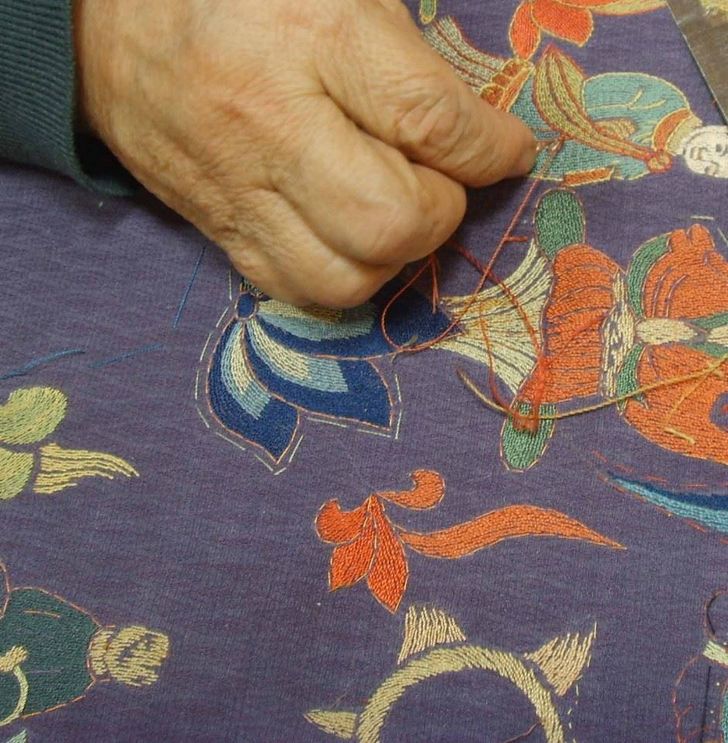
The origin of Korean embroidery tracks back as far as the late Paleolithic Age. Courtesy of Kim Young-ran
Q. Are there any other comments you would like to add?
A. The tradition and modernity are inseparable. Our ancestors' tradition is deeply melded into our lives and we are building our own future on that. Therefore, the tradition is not about continuing, but about living.
Hwang Jae-ho is director of the Global Security Cooperation Center, Hankuk University of Foreign Studies, Seoul. Ko Sung-hwah, a researcher at the center, assisted Professor Hwang with the article.