Ice skating in Korea: Cashing in on 'The Western Foot Show'
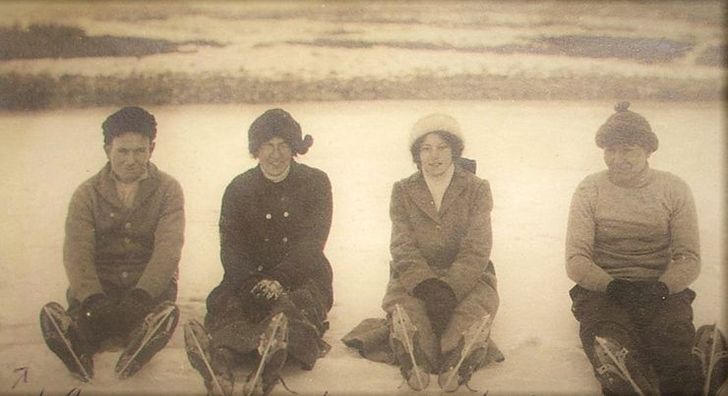
An American miner and the daughters of the Salvation Army commander at OCMC in 1913. Courtesy of Rick Linstead
By Robert Neff
Following George C. Foulk's ice skating escapades in early 1886, skating soon became quite popular in Seoul. In the beginning, at least for the Korean population, it was mainly a spectator sport.
In the early 1890s, many in the Western community ice skated wherever they could ― usually on frozen rice paddies and, for the more daring, on the streams and rivers near the city.
Koreans in large numbers gathered to watch the “Western foot show” or “art of ice” and it didn't take long before some enterprising entrepreneurs started charging for seating. Food vendors also took advantage of the crowds and sold their Korean candies, roasted acorns and other warm snacks.
A newspaper later described the crowds as viewing the skaters with “respectful though not always silent enjoyment.”
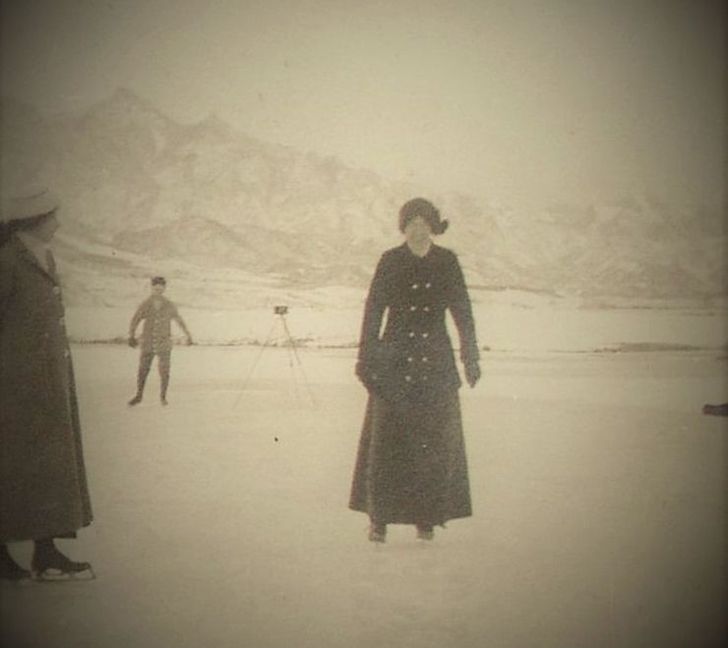
One of the Salvation Army commander's daughters skating at the OCMC in 1913. Courtesy of Rick Linstead
Apparently, one of the crowd's favorite skaters was Horace N. Allen, a tall, conservative American missionary-turned diplomat who would dazzle them with his prowess on the ice and amuse them when his hat was blown off by an errant gust of wind, exposing “his balding dome and red hair.”
The common people were not the only ones who enjoyed watching ice skaters. At the beginning of 1895, the Korean queen asked Lillias Underwood, an American missionary doctor, to arrange a skating party at the palace for the first of February.
The night before the event, it snowed quite heavily and then the temperature suddenly dropped. It was one of the coldest days Seoul had experienced in several years. Yet, despite the chill, the party was well attended and quite popular.
The Korean Repository wrote: “The ice on the pond was in good condition and the feeling was general that hearty thanks were due to their Majesties for the gracious invitation. The summerhouse on the island was warmed and a light collation was served.”
Skating was also popular in other places on the peninsula.
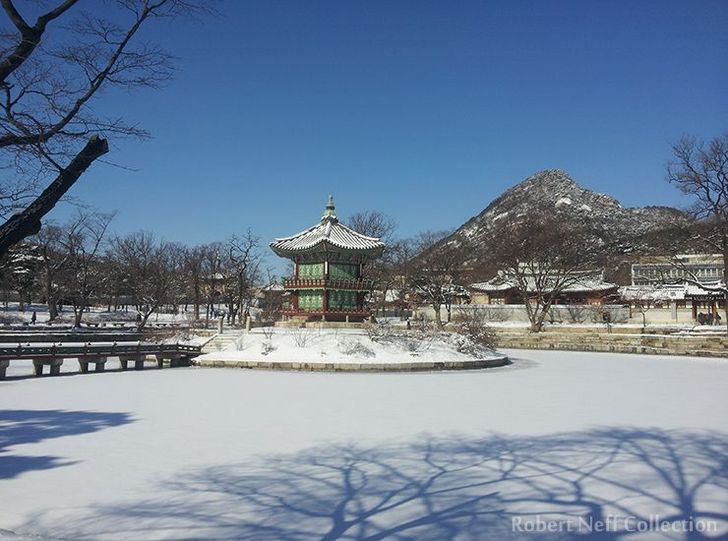
Hwangwonjeong Pavilion and Geoncheonggung at Gyeongbok Palace, circa 2012. Robert Neff Collection
At the Oriental Consolidated Mining Company (OCMC), an American-owned gold mining concession at Unsan in northern Korea, the miners often skated on whatever frozen ponds they could find. Later, an ice skating rink was built and home movies from the early 1930s show miners, their families and even their pets whizzing around on the ice.
Of course, ice skating was not without its dangers.
In March 1897, Ahrendts, a German employee of the Korean Customs Service at Gensan (Wonsan in North Korea), was skating on the frozen bay when he suddenly broke through the ice. His supervisor, James F. Oiesen, wrote:
“Mr. Ahrendts was in deep water and it was cold, but the Koreans came to his rescue and fished him out with a bamboo pole. Mr. Ahrendts' rare presence of mind and calmness of judgment was most commendable at that critical moment. He could speak no Korean, and there was only one Korean who knew any English. He was in the water 10 or 12 minutes before they effected his rescue.”
Oiesen then added: “The Gensan Sea bathing is very delightful but most people prefer the warm season for it.”
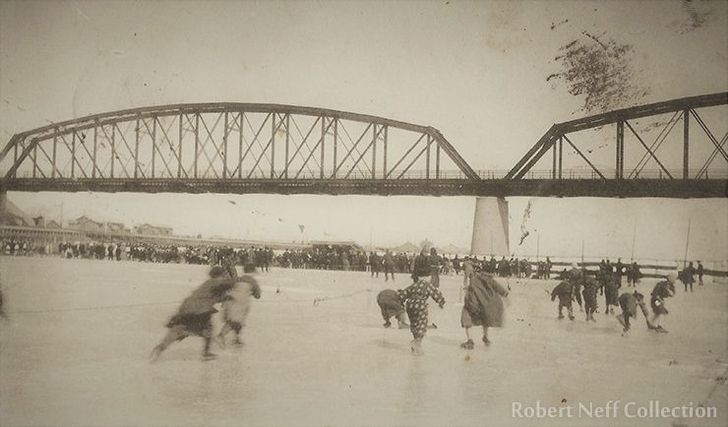
Ice skating on the Yalu River, circa 1915-1920s. Robert Neff Collection
Robert Neff is a historian and columnist for The Korea Times. He can be reached at robertneff103@gmail.com.