UNSC pushing back on N. Korea's nuclear threats
By John J. Metzler
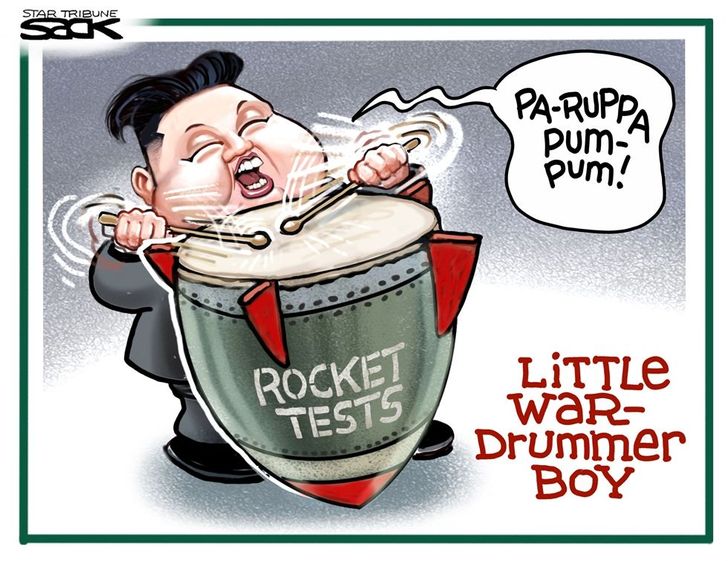
UNITED NATIONS ― While North Korean leader Kim Jong-un is huffing and puffing about arbitrary deadlines to diplomatic negotiations with the United States concerning his country's nuclear and ballistic missile proliferation, the U.N. Security Council met last week to deliver a unified call for peace and disarmament on the divided Korean Peninsula.
The urgent briefing was held against the dangerous backdrop of renewed missile tests and ominous threats by the quaintly titled, Democratic People's Republic of Korea. Pyongyang's “new policy” states that it won't discuss denuclearization until Washington's “hostile policy” is reversed by the end of the year by loosening or phasing out the tough U.N. economic sanctions.
Pyongyang warned ominously of a “Christmas present” for the U.S.
Assistant Secretary General Khaled Khiari told the Council, “There have been troubling developments related to the nuclear weapon and ballistic missiles programs of the Democratic People's Republic of Korea, DPRK, in recent months … the launch of two missiles on 28 November marked the thirteenth time the DPRK has launched ballistic missiles or other projectiles this year.”
U.S. Ambassador to the U.N. Kelly Craft warned, “The DPRK has threatened to take a new path in the coming weeks and has used its public statements to hint at a resumption of serious provocations … Let me be clear, the United States and the Security Council have a goal, not a deadline.”
She added, “Missile and nuclear testing will not bring the DPRK greater security. It will not bring the DPRK or the region greater stability.”
Nonetheless Ambassador Craft didn't close the door to North Korea; rather she underscored previous negotiations between President Donald Trump and Kim Jong-un on the issue and added, “The United States is prepared to be flexible on how we approach this matter. We recognize the need for a balanced agreement and parallel actions that address the concerns of all parties.”
U.K. Ambassador Karen Pierce intoned, “International peace and security is under threat, owing to the unabated development of ballistic missile and nuclear weapons technology by North Korea.” She added, “Despite concerted and good faith efforts by the U.S. to negotiate a solution, this year has seen 13 sets of illegal ballistic missile tests.”
The U.S.-chaired briefing addressed North Korea's triangular dilemma; Pyongyang's nuclear and missile testing has triggered a series of U.N. economic sanctions, which in turn, according to the Pyongyang communists, deepen the North's humanitarian disaster.
Ambassador Pierce stressed, “The sanctions regime imposed by the Council will remain in place until North Korea takes concrete steps towards denuclearization.” Poland and Belgium agreed sanctions must be maintained. German Ambassador Christoph Heusgen stated that “it is a myth” that economic sanctions are at the root of North Korea's humanitarian crisis.
The U.N.'s Khiari stated plainly, “International humanitarian operations in the DPRK remain critical for over 10 million people, or around 40 percent of the population.” Regarding misinformation on economic sanctions he stated, “measures imposed by the Security Council are not intended to negatively affect or restrict food aid and humanitarian assistance.”
While U.N. food programs remain notably underfunded by international donors, there's a gloomy lack of transparency as to the actual distribution of supplies and medicine inside North Korea.
Though the Council showed a rare unity concerning the North's expanding nuclear and ballistic missile proliferation, criticism was far more circumspect when it came to the economic sanctions on North Korea or censuring the regime's human rights transgressions. Both China and Russia spoke about tempering the tough sanctions.
Britain, Belgium, France and Germany particularly chastised the DPRK's human rights record.
South Korea's envoy Cho Hyun stated optimistically, “We must seize this opportunity to break out of the trap of the security dilemma and the lingering fear of war, and make peace lasting on the Korean Peninsula. This will not be achieved by the projection of animosity and mistrust … It will be achieved with restraint, courage and faith in the future.”
Fair enough. But Pyongyang's renewed missile provocations have disrupted what the ambassador calls a “delicate path of dialogue.” The disruptions have not come from Seoul, Washington nor Tokyo. They originate from the North, Kim's fiefdom.
Tensions are rising as North Korea tests new missiles and possibly provokes a dangerous new confrontation with the U.S. Kim may be wishfully betting that Trump facing impeachment and an election campaign will politically cave in.
North Korea continues to push neutrons for its military over nutrition for its people. Isn't it long overdue that the North's planned brinksmanship be defused before it again threatens East Asia and the U.S.?
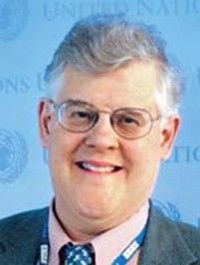
John J. Metzler (jjmcolumn@earthlink.net) is a United Nations correspondent covering diplomatic and defense issues. He is the author of “Divided Dynamism ― the Diplomacy of Separated Nations: Germany, Korea, China.”