Cannibalism and kindness: When Joseon crops fail

Farmers resting in the field, circa 1900s. Robert Neff Collection.
By Robert Neff
To the Joseon farmer, the first moon of the year was a tool of divination.
One can imagine in 1902 that they looked to the sky in trepidation. If the moon appeared red, it was an indication there would be a drought ― as had been the previous year. If it was dark, there would be a famine. If the moon was pale and white, it symbolized too much rain and flooding. But, if the moon was a golden yellow, it would mean a good harvest.
I don't know what color the moon was that night but I am guessing it was a deep dark red. The start of 1902 was marred by extreme cold, drought (carried over from the previous year) and, subsequently, famine.
No matter how many bokjori the people purchased, the New Year only greeted them with starvation ― especially in the countryside.
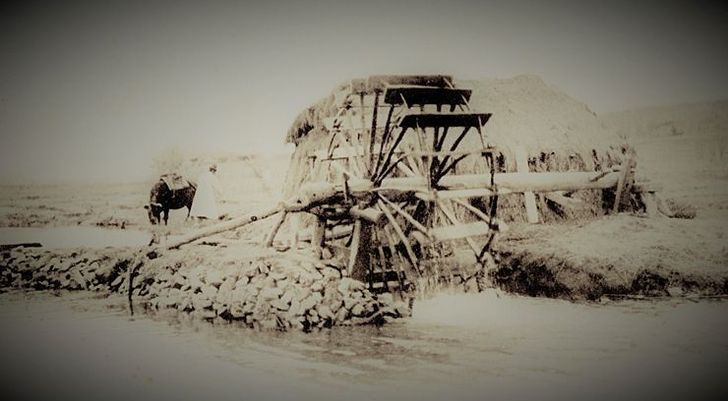
A waterwheel, circa 1900s. Courtesy of Diane Nars Collection.
One farmer, who rented a small plot of land, was only able to harvest seven bags of unhulled rice the previous year due to the drought. Of that rice, he was forced to give two bags to his landlord as rent. Once his remaining five bags were hulled, he was left with only 45 mal (one mal equals 18 liters) to feed himself, his wife and their four children.
According to a missionary who interviewed the farmer, a grown man eating only twice a day consumed three mal of rice a month. Even with the small income his wife made by weaving and his small bean crop (two mal) from another plot of land, it would be very hard for them to survive until the next harvest ― and, they still had to pay their taxes. These had to be paid regardless of the dire straits of the people.
Many would not survive.
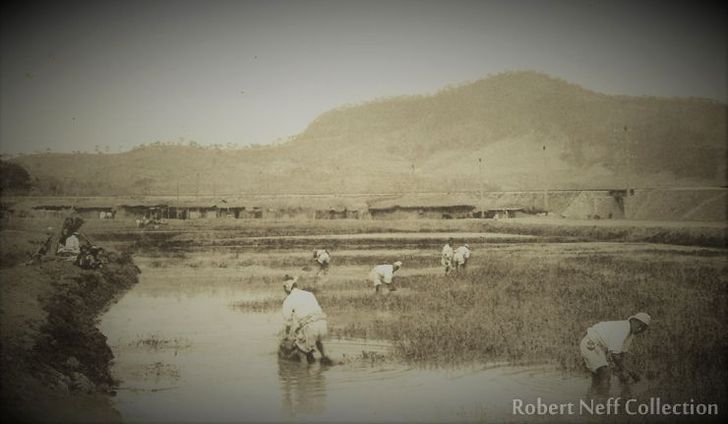
Farmers planting rice, circa 1910s. Robert Neff Collection.
People abandoned their villages and roamed the countryside looking for food. Along the paths and roads, they pulled up dried grasses and dug for roots from which they made a weak broth ― a feeble attempt to stave off hunger.
Royal tomb keepers (whose job it was to protect the trees around the royal burial sites) reported finding emaciated corpses beneath the trees ― desperate victims who succumbed before they were able to scrape the bark off the trees. Many people just gave up or were too weak to go on and sat by the road ― dazed and numb to what was going on around them ― waiting to die.
The missionary reported that “the sights and sounds along the road are so painful that only the most determined man would care to travel on them.”
Some resorted to unspeakable acts. Fathers, unable to bear the hungry cries of their children, abandoned their starving families, forcing them to fend for themselves. Unsurprisingly, cannibalism reared its ugly head. One family, unable to endure it any longer, “fed off the bodies of two of the small children.”
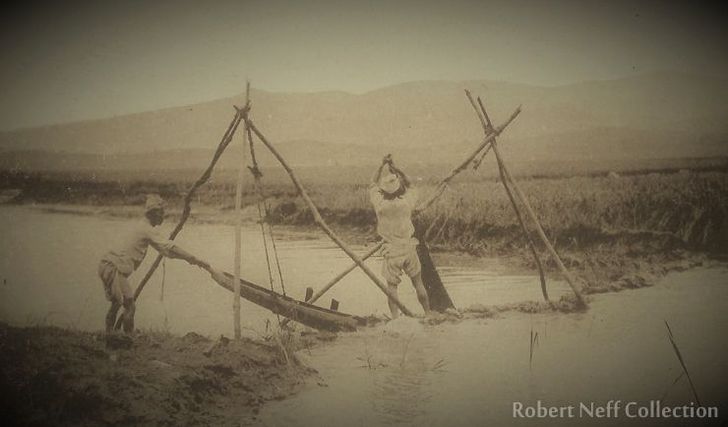
Farmers irrigating their fields, circa 1910s. Robert Neff Collection.
There were also acts of incredible kindness ― especially in Suwon. Two wealthy landowners, Chang and Yeom, sold immense tracts of their land and used the proceeds to buy imported rice (from Southeast Asia). They distributed this to more than 150 households in the Suwon district. They even paid off households' taxes. Their kindness kept the families fed for four months until the barley crop was ready in the spring.
They were not the only ones. In other provinces, wealthy people used their own money to buy large quantities of imported rice (50-300 bags) and distributed it to their neighbors.
The generosity of these men should have inspired their government officials to emulate their acts, but not everyone was moved. Some profited off the misery of the people.
The governor of Hwanghae, instead of reducing taxes, increased them, gaining him an excess of 50,000,000 cash and 50,000 bags of grain. He promptly fled to Seoul with his ill-gained wealth. His deprivations were so severe that in one district nearly 40 percent of the population had fled.
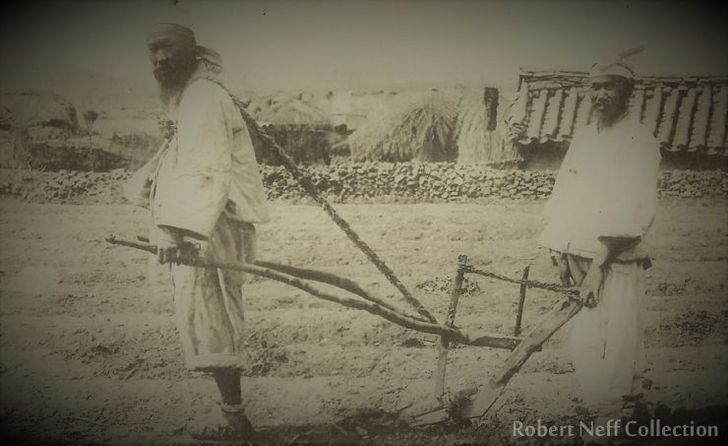
Farmers plowing their field, circa 1900s. Robert Neff Collection.
Not all government officials were bad. One magistrate asked the central government for a loan of 1,000 bags of rice. His request was apparently approved but it is not clear if he ever repaid the loan.
Emperor Gojong was also governed by compassion. He had 300 bags of imported rice distributed to the poor in Seoul. A shelter was set up for the destitute that included a type of soup kitchen and about 150 people were fed daily on rice soup.
A government official, Lee Yong-ik, was responsible for large quantities of rice imported from Southeastern Asia and sold to the public until the spring when the barley crop was harvested. Without Lee's foresight, the toll on the country would surely have been worse.