Demons, destruction, fear: Wonju - a century ago under the Japanese

“You can see that most of the houses are thatched; but they are nearly all large for Korean homes.” Looking east from the Morris residence, circa 1924.
By Robert Neff
In the early 20th century, Wonju was a relatively thriving city in an impoverished province. Potato and corn fields were common and the people lived simple and quiet lives.
But this changed in 1907 when the Korean army garrison in the city, led by Min Kung-ho, revolted against the increased Japanese influence on the peninsula. He and his army took to the mountains and for a short period wreaked havoc on the Japanese military. The Japanese responded by destroying village after village.
Later that year, Frederick A. McKenzie, a Canadian journalist, visited the city and found “practically all the women and children and better-class families had disappeared. The shops were shut and barricaded by their owners before leaving, but many of them had been forced open and looted.”
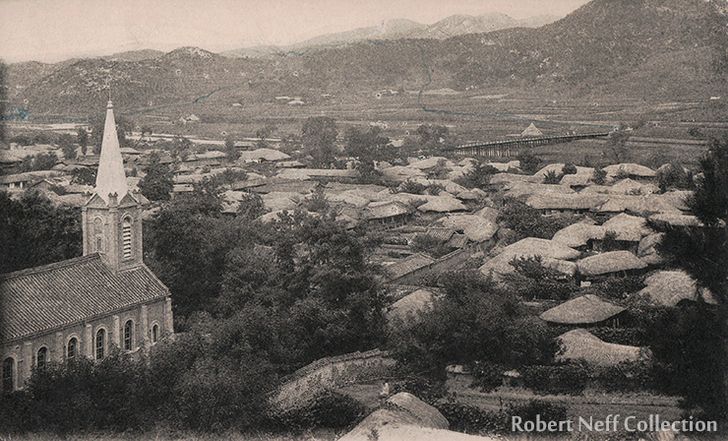
“In the valley across the river the people are planting many apple trees. They look unpruned and poorly cared for but I expect we will have lots of apples here some day. Will be mighty thankful when that day arrives.” Wonju and the Catholic church, circa 1924.
Eventually, the rebellions throughout the country were ― for the most part ― put down and an uneasy peace reigned through the presence of large numbers of Japanese soldiers and the willingness of the authorities to use them.
In 1916, Rev. Charles Morris, a Methodist missionary, moved to Wonju with his wife, Louis, and their two daughters. It is through the Morris family's pictures, postcards and correspondences that we are able to glean a view of what it was like to live in Wonju during the Japanese occupation.
When Morris arrived, the city consisted mainly of “mud huts” and crude buildings. For the handful of Westerners living in the city, there were few amenities.
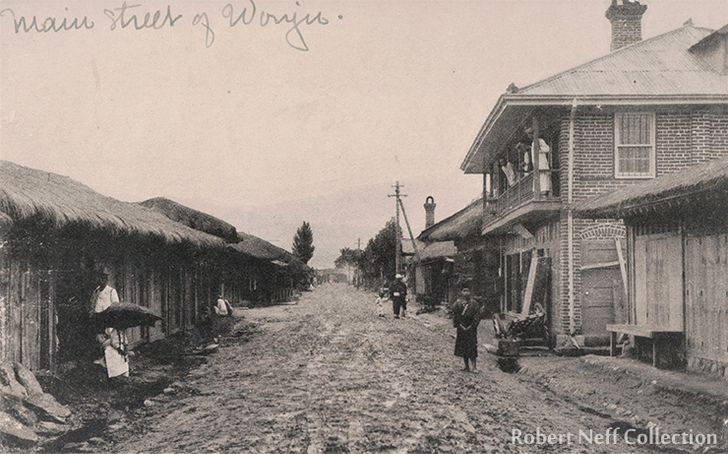
“This is our Main Street. Looks as if it had been taken on a muddy, rainy day. There is this one two story brick building and all the rest are thatched Korean houses. That is most of them are. There are some tiled buildings. Will try to find a picture of this same street on a fair day. Will look quite different, for they have a large market here.” Circa 1924.
One of the first things Morris did was build a large three-story brick residence ― it still stands on the campus of Yonsei Medical College.
The house was a marvel of modern technology and Western living. It had indoor plumbing ― of sorts.
The house was built over a well and pipes ran from it to the third floor where a large bath was set up. On special occasions, one of the male servants would go into the basement and manually pump the water up to the third floor. It wasn't a very effective method and so most of the time bathing was done in an old tub in the kitchen filled with hot water poured in by pots and pans.
The Japanese maintained a large garrison in the former governor's residence and their presence was felt everywhere.
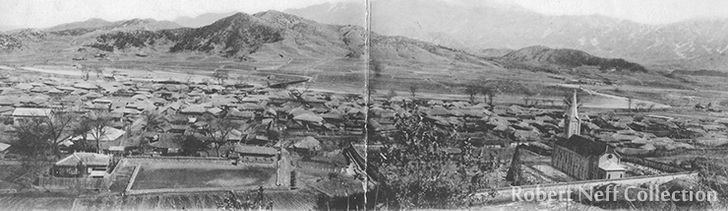
A panorama view of Wonju, circa 1924.
Although the Japanese authorities treated the Morris family well, Muriel, the youngest daughter, was afraid of the swaggering soldiers. An officer visited her family one day when she was very young and offered to give her a horseback ride but she balked at his invitation.
“He was all dressed up with his samurai sword strapped to his side, and he wanted to take me for a ride,” Muriel wrote.” Japanese liked children and I was very little, but I was scared to death. I was afraid of horses, in the first place, even though it was a beautiful horse. My dad gave me that look that told me 'you better do it, Muriel,' so I did, and I rode all around our yard in front of this Japanese soldier.”
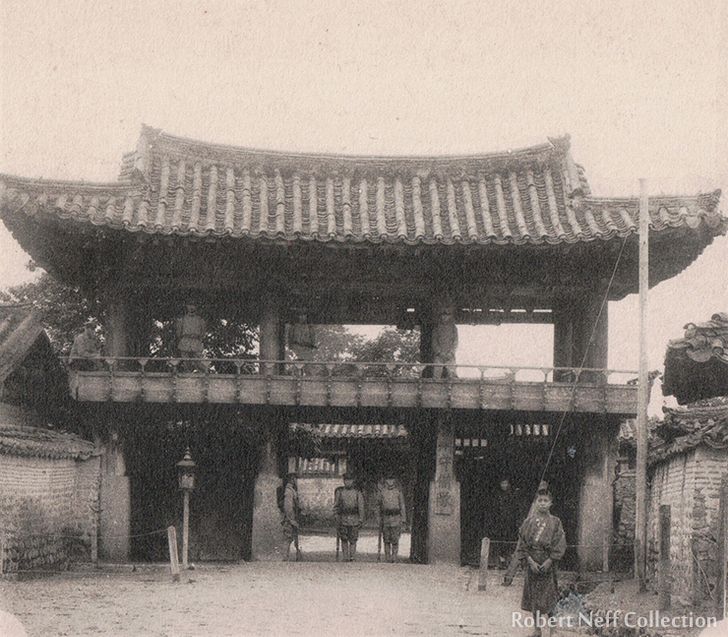
The main entrance to Gamyoung (Governors' complex) used as a Japanese garrison, circa 1924.
According to Muriel, the Japanese soldiers were very abusive to the Korean residents ― “kicking them around [and] yelling orders at them” ― and no one could travel without a pass issued by the Japanese commander.
Thus, it is unsurprising some superstitious Koreans drew pictures of Japanese authorities to scare away the demons during epidemics. For many of the common Korean people, there was no scarier demon than the Japanese.
I am indebted to Jan Downing ― the granddaughter of Charles Morris ― for providing me with copies of the postcards, pictures and memoirs of her family.
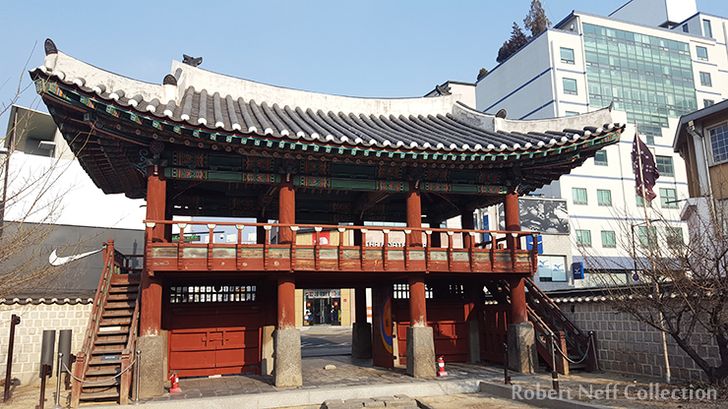
The present view (rear) of the entrance, 2019.
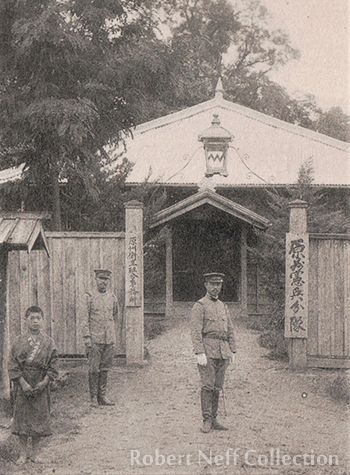
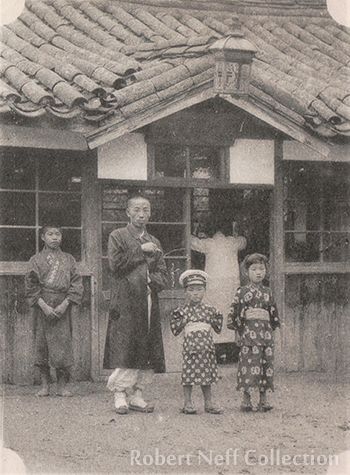
“Headquarters of the Gendarme,” circa 1924.
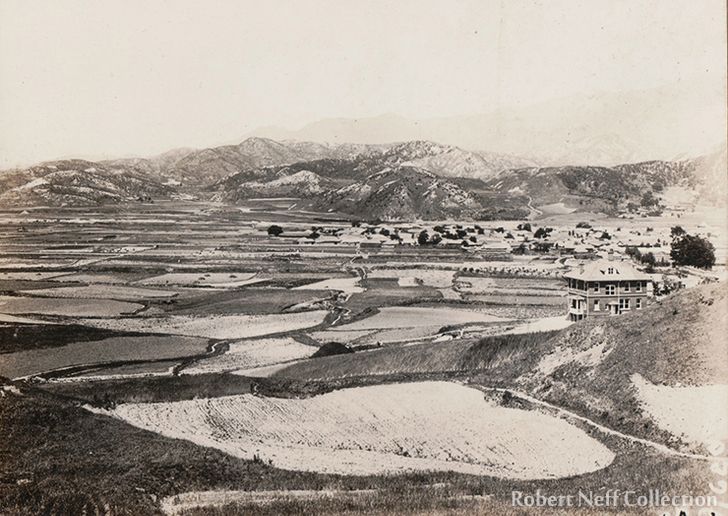
The Morris residence and the surrounding countryside, circa 1919.
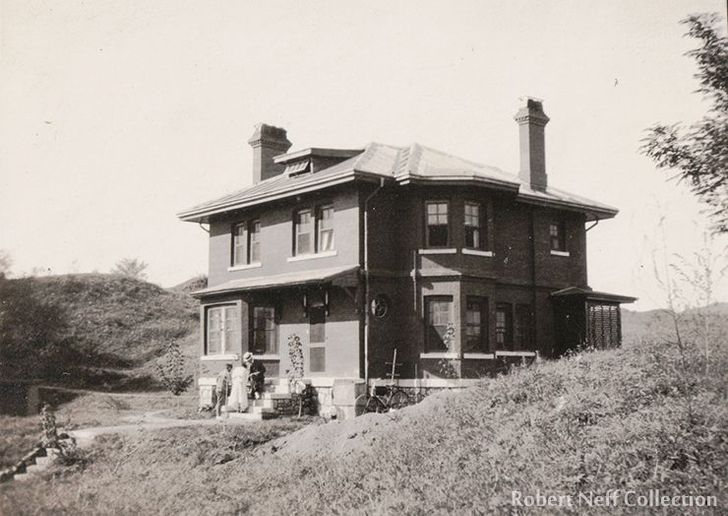
The Morris residence, circa 1919.
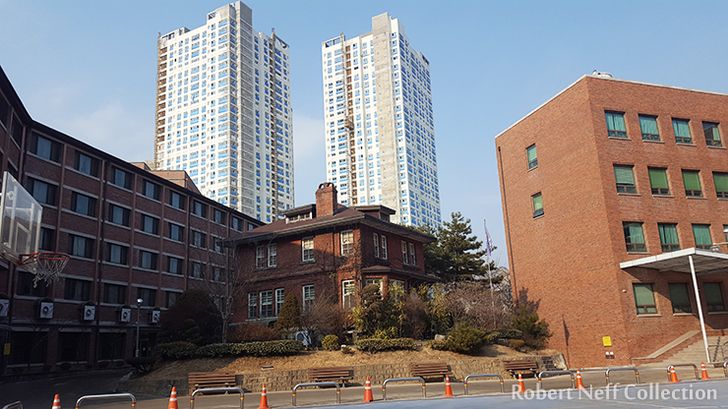
The Morris residence surrounded by the campus, 2019.
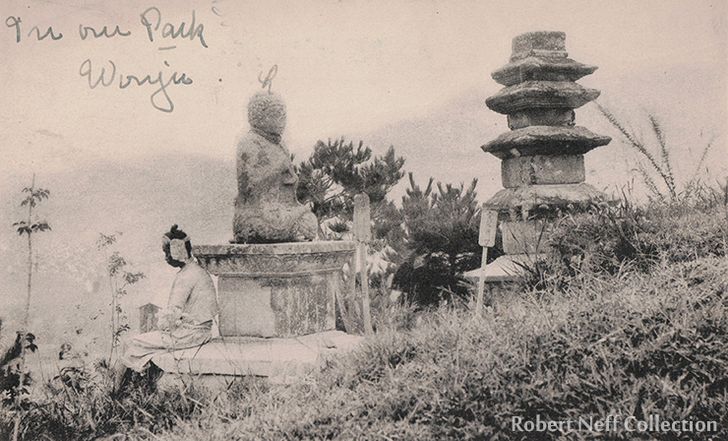
“We have a park running on several low hills north of the city. Here and there are idols and shrines like this. There are a few low pine trees. It is quite picturesque. It is to the north of our place and makes a pretty view with the higher mountains beyond. This is Buddha you see. There used to be an immense monastery here and these look like the remnants of the park. Many are headless and broken otherwise.” Circa 1924.