Youth unemployment: crisis to opportunity
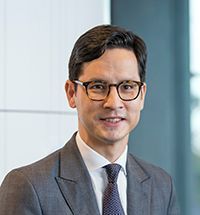
By Daniel Kim
In June 2017, President Moon Jae-In described Korea's youth unemployment as a potential “national disaster” and warned a generation of young Koreans could become a “lost generation.” In March this year, the official rate of Korea's youth unemployment increased to 10.8 percent and Busan recorded a higher rate of 12.4 percent.
There are many structural and societal factors that are contributing to Korea's soaring youth unemployment ― job opportunities have declined in recent years.
Students and parents share a near universal goal of admission into one of the top-tier universities in order to secure a gold-collar job such as a doctor or white-collar employment at one of Korea's large conglomerates. Demand for prime university positions far outstrips supply.
There is also a huge salary gap between large conglomerates compared to small- and medium-sized enterprises. Young jobseekers either stay unemployed for longer, hoping to secure a higher paying job, or return to university to obtain another degree to boost their credentials. The uncomfortable truth is that another academic qualification is unlikely to improve their job readiness.
In Australia, industry is increasingly looking beyond qualifications and focusing on employability, namely the practical skills that will enable new recruits to be effective from day one. As a result, some bachelor of engineering graduates from Australia's top tier universities undertake a short course in (say) project management to enhance their job readiness.
Vocational education and training (VET) has become a catalyst which has enabled many Australians to secure meaningful work for the first time, upgrade into a better job or access pathways to university.
In 2018, 17,385 Korean students undertook VET courses in Australia to develop new practical skills and apply them in a real-world context as part of an internship. Eighty-two percent of international VET graduates secured employment in Australia or undertook further study and the median annual salary after training in Australia was A$41,700 (34 million won). This compares favorably to the average starting salaries at Samsung Electronics (37 million won), Kakao (31 million won) and KEPCO (30 million won).
These quality outcomes achieved in Australia are indicative of the incredible opportunity that awaits Korea if society and industry constructively challenge their own perceptions of VET. It should no longer be regarded as a lesser pursuit than university but rather a critical enabler to boost young Korean's employability in the domestic and global job market.
Song Jin-mi's story inspired me recently. She initially traveled to Australia for a course on “beauty” but through a journey of assisted self-discovery, she identified her true passion, completed a Certificate III in Heavy Commercial Vehicle Mechanical Technology at TAFE Queensland and is currently employed at a leading automotive brand in Australia. The question I ask myself is, how many more Jin-mi's exist in Korea?
Having spent time at Korea's leading colleges I'm confident that Korea's VET sector, through even closer alignment with industry and greater engagement with international partners, can play a pivotal role in helping Korea's young adults identify their passion and develop the practical skills required to secure meaningful work, if not pursue their dreams.
Daniel Kim is commissioner (Korea), Queensland Government (Australia).