Is President Moon 'the people's president'?
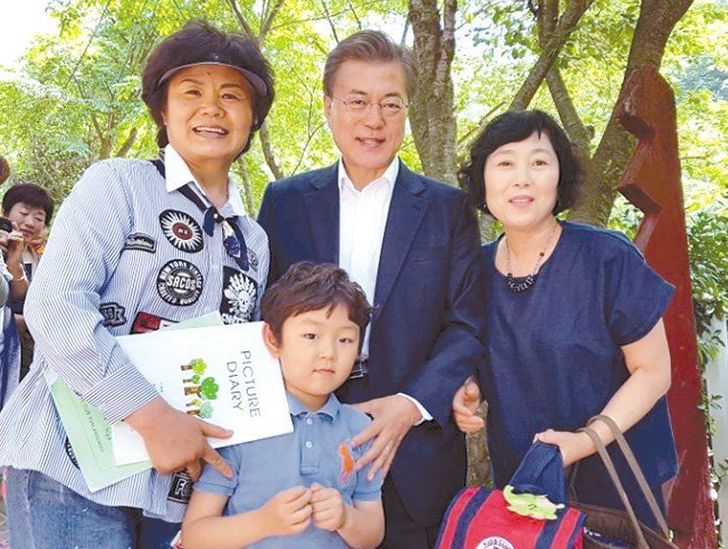
President Moon has encouraged citizens to take time off from work, but has he made that possible? With a failing economy, employers are hiring fewer employees, creating longer work days for those already working. Yonhap
By Amanda Price
The sexually exploitive and abusive crimes of certain Korean celebrities are now more than allegations. Arrests have been made, confessions have been recorded. Others involved are, to varying degrees, admitting their guilt.
K-Pop performers, TV personalities, the police, personal managers, nightclub employees and entertainment CEOs are being implicated, investigated or charged. Many believe what has been uncovered so far is just the tip of the iceberg.
The scandal is not unlike the corruption that led to Korea's previous president being impeached and imprisoned. It involves secrecy, cover-ups, criminal networking and abuse of power and privilege.
When the ex-President was found to be embroiled in corruption, Moon Jae-in, then a prominent member of the Democratic Party and presidential hopeful, fervently demanded that investigations be continued until the truth was uncovered and the President impeached.
His campaign against the abuse of power, and vows to protect and uphold the rights of everyday citizens established him as the people's candidate of choice.
When President Moon was elected, he promised to implement strict reforms that would end collusion between government, industries and chaebols. There would be restructuring in industries, equality in society, and citizens rather than political agendas would guide the President as he led the nation.
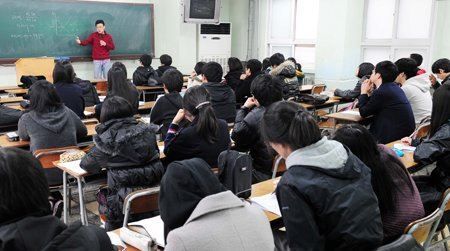
University students study long hours and most maintain part-time jobs, but there are no guarantees they will find stable employment or even part-time work. Korea Times file
Further issues were not ignored in the President's inaugural speeches ― The opaque judicial system would be made transparent; household spending on education would be reduced and students' welfare would take priority; gender equality in businesses and all government sectors would be established; 810,000 new jobs would be created in the public sector; welfare support would close the gap between classes; free housing would be made available to newlyweds; victims of war crimes would find justice; and presidential authority would be shared with citizens.
Moon also made his position clear on North Korea. Establishing peace on the peninsula would also be one of his priorities and ensuring that South Korea was at the helm of this process was his explicit goal.
At his first speech after his inauguration, Moon declared, “I will quickly move to solve the crisis in national security … I am willing to go anywhere for the peace of the Korean Peninsula ― if needed, I will fly immediately to Washington. I will go to Beijing and I will go to Tokyo. If the conditions shape up, I will go to Pyongyang.”
As more speeches were made, it became increasingly clear that this last goal was his highest priority.
When the President committed himself to fulfilling these pledges, his ratings were in the low 80's.
According to Seoul's polling agency, Realmeter, the President's current ratings are in the mid 40's.
While critics and opposition leaders are the first to point to the President's failures, perhaps his own unbridled enthusiasm and passion have created the largest part of the problem.
Since coming into power, Moon has rarely seemed as excited as when he has spoken about reconciliation, or possible unification with North Korea. In fact, during Moon's term in office, the greatest proportion of his time and attention have been spent dealing with North Korean issues.
Photos of the President and Kim Jong-un clasping hands or affectionately embracing each other, while beaming ear to ear, suggest that the President saw these moments as critical to the future of both nations. Why else walk hand in hand with a dictator?
As the importance of unification was weighed against domestic issues, it seemed that unification was coming out the winner.
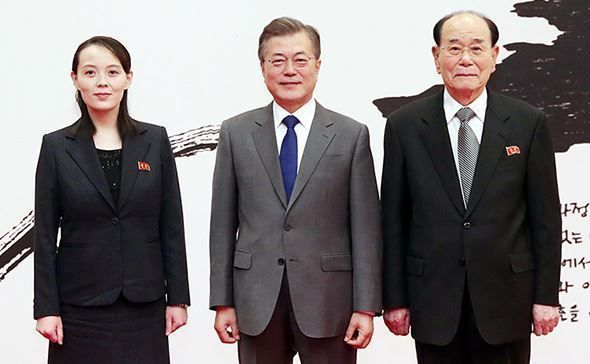
President Moon has made peace and unification with North Korea his highest priority, but has it come at a cost to South Koreans? Yonhap
Perhaps nowhere was this imbalance better demonstrated than at the Pyeongchang Winter Olympics.
With shameless displays of insincere but strategic magnanimity, Kim Jong-un was able to use South Korea's Games to promote his own regime. While it was a wise decision to invite and receive a North Korean delegation to the Games, the way they were received was not.
When North Korea's version of Ivana Trump arrived to see if South Korean facilities were up to standard, South Korean citizens raised their concerns on Cheong Wa Dae's website. When the President, unilaterally created a joint women's ice hockey team, 72 percent of South Koreans disagreed, according to an SBS and government survey.
Before the Games were even over, President Moon declared them an outstanding success. As many finals had yet to hold, and as many competitions had been very poorly attended, it is safe to assume that Moon was referring to the “Peace Games,” not the actual Pyeongchang Winter Olympics.
Moon cannot be blamed for being enthusiastic about his desire to see the two Koreas unified, but he can be held responsible for placing his desire for unification above the concerns of everyday citizens.
For all the enthusiasm, passion, focus, money and time that Moon has poured into his goal of unification, only a smattering of unity can be found. Progress cannot be denied, but not progress that is proportionate to the effort spent to achieve it.
Had the majority of the President's attention been keenly focused on the issues of South Korean citizens, or rather, had he been listening the warning signs of a slowing economy, persistent corruption, and an increase in unemployment may well have been heeded.
Moon has demanded the sex scandals be “thoroughly investigated,” as if the police were not already in the middle of investigations. It seems as if the President is just noticing what the people have seen since he was elected.
The President is now playing catch up.
Taking on new advisers and letting go of those whose primary focus was unification, the President is now talking about things that are of immediate concern to the people … hopefully it is not too late.
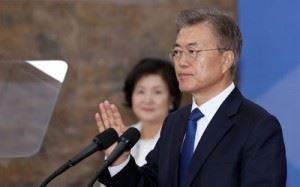
President Moon pledged that he would be “a people's President.” There is still time to fulfill that pledge. Yonhap
The President's dedication to following his goal of a united Korea may be commendable, but it has meant that he has not been a “People's President.” He has not been led by the concerns of everyday citizens. He has been driven by his own political agenda, and he has forgotten that the President he replaced did the same thing.
For the record, I like President Moon. I do believe that he is sincere and genuine. When he made his pledges and commitments, I believe he meant to fulfill them.
We are all able to be swept away by our passionate beliefs and the President is no different. I believe he came into power wanting to lead South Korea into a new era. What he failed to notice is that South Koreans did not want “a new era” ― they just wanted the era they were in to be fair and free from corruption and injustice.
South Korean citizens should not be treated like latch-key kids. The scandals, the corruption, the injustices have all been clear and present dangers during Moon's time in office. He should have been where he belonged. He should have noticed that people were struggling and suffering.
But there is also hope, and fortunately for the President, there is time to become the President that he promised to be.
Amanda Price is the former Director of Hillcrest College's International Student Department. She has a background in Science, History and Literature and has been consulting on Asian Affairs for more than 10 years. Her special interest is world history and she is the founder of Griffith University's History Readers. She writes full time and can be reached at amanda-price@bigpod.com