Respect for freedom of press
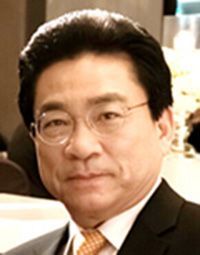
By Park Moo-jong
The Republic of Korea shall be a democratic republic, so stipulates Article No. 1 of the Constitution.
In this democratic country, “All citizens shall enjoy freedom of speech and the press, and freedom of assembly and association. Licensing or censorship of speech and the press shall not be allowed,” according to Article No. 21 of the supreme law
President Moon Jae-in “was” an ardent supporter of the freedom of the press as he wrote in his Facebook on the Day of Newspapers on April 7, 2017, during his presidential campaign.
The President started the article by quoting Thomas Jefferson (1743-1826), a founding father of the United States who served as its third president from 1801-1809 and was the principal author of the Declaration of Independence: “Were it left to me to decide whether we should have a government without newspapers or newspapers without a government, I should not hesitate a moment to prefer the latter.”
Moon said: “The freedom of the press of an era is a yardstick to gauge the level of a country's democracy. The very freedom of the press is realized by political power vowing not to control the press and suppression of greed, along with the efforts of journalists trying to keep the spirit of reasonable argument and writing in frank language.”
The President had made the point exactly. But now, where has such a Moon who had emphasized the freedom of the press so much gone after he took power?
The presidential office and the ruling Democratic Party of Korea (DPK) are suspected of having determined not to listen to the voice of criticism against them and to put a gag on the press.
As reported well both at home and abroad, the ruling Democratic Party of Korea and Cheong Wa Dae have been beleaguered by international concerns over their alleged infringement upon the freedom of the press in this democratic state.
International journalists' organizations, including the Seoul Foreign Correspondents Club (SFCC), have expressed concerns over press freedom in this country with regard to the ruling party spokesman's open hostility towards a Korean reporter for Bloomberg over a news story she wrote that he claimed was “borderline treacherous” in content that insulted the head of state while “wearing the cloak of a U.S. wire service.”
In a statement, the DPK spokesman singled out the Bloomberg reporter whose article headline described Moon as acting as the “top spokesman” of North Korean leader Kim Jong-un at the U.N. General Assembly last September.
The spokesman's “threats to the reporter's safety” as claimed by the SFCC came six months after she wrote the article. Neither Moon's office nor the ruling party made any response to the Bloomberg story.
The belated reaction came after Rep. Na Kyung-won, floor leader of the largest opposition Liberty Korea Party, “borrowed” the Bloomberg headline to criticize Moon's diplomacy with Pyongyang in the wake of last month's failed Hanoi summit between Kim and U.S. President Donald Trump.
Furthermore, Rep. Na did not directly call Moon the “top spokesman” of Kim Jong-un. She just said, “Please ensure that we never again hear the embarrassing talk that the President of the Republic of Korea is the top spokesman of Kim Jong-un.”
Many people might be wondering why the ruling camp reacted so emphatically against the opposition floor leader's speech without doing so six months ago when the Bloomberg article was published.
When Na mentioned the word, “top spokesman,” ruling party lawmakers in their seats sprang up to shout at her and their floor leader dashed to the platform to deter Na's speech along with some others in defiance of the speaker's orders.
The DPK lawmakers appeared to be racing with each other to prove their loyalty to President Moon and party leaders. The next general election is slated for April next year, and they have to get their party's nomination.
If they had taken similar action against the Bloomberg story six months ago, they might have won good marks.
The DPK spokesman, in particular, should have not targeted the reporter, but the U.S. news agency. It is basic common sense that questions or complaints regarding news stories must be raised with the companies rather than personally attacking the writers.
The ruling party insisted earlier that its spokesman ― who is also subject to criticism for refusing the SFCC's demand for the withdrawal of his statement ― did not personally attack the journalist.
Though belatedly, the party decided Tuesday to remove the reporter's name and personal details from the statement and apologized to the members of the foreign press “if” it caused misunderstanding.
There is one more thing the ruling party should do: Halt its referral of Rep. Na to the National Assembly Ethics Committee for “insulting President Moon Jae-in.” The opposition party should also drop its complaint to the committee against the ruling party's representative and floor leader for “obstructing Na's speech and thus destroying parliamentary democracy.”
The latest situation should serve as a good opportunity for those in power to keep in mind anew the simple truth: No power can beat the freedom of the press and its right to report without censorship by the government.
Park Moo-jong (emjei29@gmail.com) is a standing adviser of The Korea Times. He served as the president-publisher of the nation's first English daily newspaper from 2004 to 2014 after working as a reporter since 1974.