REVIEW Chinese feel Korean-Chinese friendship through Korea poems
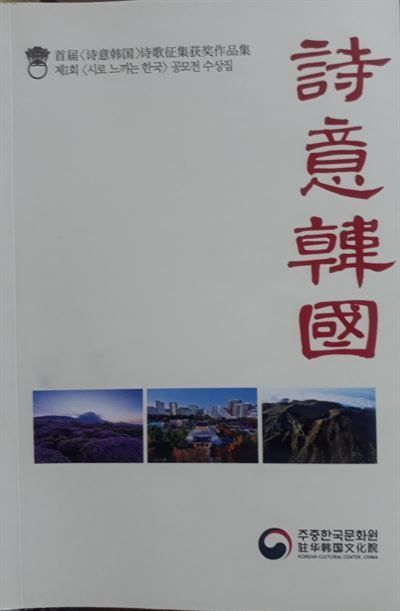
The first “Feeling Korea, through Poem” hosted by the Korean Culture Center in Beijing. Photo by Ko Sung-hwah
By Ko Sung-hwah
In the summer of 2018, Korean Culture Center in Beijing hosted the first “Feeling Korea, through Poem.” Contest. This contest was opened to members of the public who are interested in poetry, and to other professional poets and writers.
As the title indicates, the purpose was to make a big step forward in Korean-Chinese literature exchange and cooperation. The Korean Culture Center in Beijing held the awards ceremony last September.
Fortunately, a small booklet of 29 outstanding awarded collections came into my hands. More than 1,000 poems were submitted from all over China, written by people of many ages: from very young primary schoolchildren to seniors. Most offered a colorful presentation of Korea in various topics and areas.

Ko Sung-hwah.
This first collection consisted of four main parts. Part 1: Telling the Poem delivered congratulatory messages and evaluating comments. The contributors were deeply moved by how Korean-Chinese friendship can be blended through the melody of poetry, and expressed a wish that the afterglow of these poems would flow peacefully and widely.
In Part 2: See through the Poem, Chinese experts contributed their pieces of art; showing Korean nature and charm or the grandness of Korean history.
Part 3: Feel with Poem was where the awarded poems were presented. They covered the diversity of Korean culture and local beauty.
Part 4: Photo Story introduced photo collections that represented Korean colors and features that harmonized with the poems.
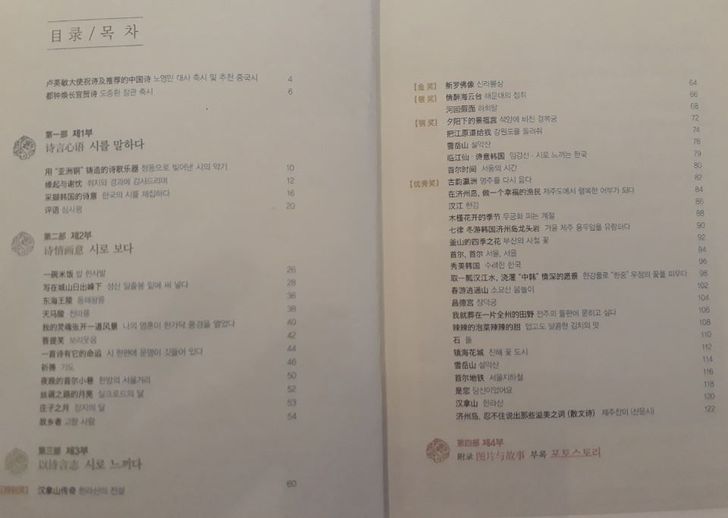
The table of contents for the award-winning poems. Photo by Ko Sung-hwah
Among the professionals' works, I'd like to present a short work from Sun Xiaoya's “Smile of Bodhi.”
“We just gazed at one another in silence. We laughed heartily gazing each other.
Our laughter planted silent barley (bodhi).”
It is always amazingly attractive how Chinese-Korean translation can sometimes bring different meanings that all make sense in the context. It seemed like the poet was presenting this poem to a particular friend; nonetheless, in terms of Korean-Chinese relations, I found it somewhat impressive. Although it was short, it was strong.
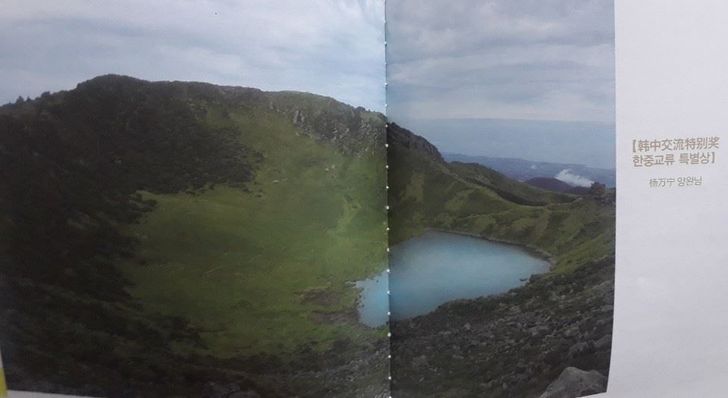
“The Legend of Hallasan.” Photo by Ko Sung-hwah
In the non-expert section, Yang Wan-ning won the Special Award for Korea-China Exchanges with “The Legend of Hallasan.”
It admired the mystique and sanctity of Hallasan and its warm and motherly embracement, then beautifully connected the previous life to the present through the term legend.
Luo Zichen won the golden prize, on one hand delicately drawing the stature of the Silla Statue of Buddha under the moonlight and sunset; on the other, describing with wild tones the turbulent history that the statue has gone through. The harmonized balance of differentiated color was expressed with vividness.
Silver prizes were given to The “Flavor of Haeundae,” “Hahoe-tal: River, Flow Freely,” and “Yeongbokgung at Sunset.”
Bronze prizes went to “Bring back Gangwon-do,” “Seoraksan,” “Imgangseon· Feeling Korea through Poem,” and “Time in Seoul.”
There were 10 other excellence awards that included prose poems.
Going through the poems, I again realized how close Korea and China are in sentiment. The burning passion from “Jeju Seongsan Ilchulbong Tuff Cone,” the clear and cool air from soft winds at “Naksansa Temple,” and the stillness of cloud and moon could be naturally imagined from their words.
In addition, the writers had a high understanding of Korean history and historical relics. Quite a few pieces covered the agony of Korean history. It is always interesting how different people, especially those from different circumstances, can share the sympathy.
Another thing that caught my attention that the term “friend” appeared frequently. As the value of friendship counts in Chinese culture, the poems also represented its worth.
As Lee Yuseung, professor of Beijing International Studies University, wrote in her evaluation, both Korea and China have a long history of appreciation of poetry. She added, “We are here, continuing the long tradition of composing a poem in East Asian culture. And now we are standing in the flow of the appreciation.”
South Korea has been a friend of China for a long time. We sometimes had difficult times but we have stood in the flow of history together. To be a closer friend than ever, understanding each other's deeper thoughts and reading the minds comes first. In this context, cultural exchange is where friendship can be sustained with the lowest risk, especially when we see the language. This “Feeling Korea, through Poem” must build closer emotions and sympathy.
An extract from a poem by Pu Sang, an expert poet, will close this review.
What is a poem? Poem is a lonely adventure in your mind. What is a poem? Poem is a secret hallway the poet found. You might meet someone there at times. “A Fate, laid in a Poem”
Ko Sung-hwah is a researcher of the Global Security Cooperation Center, Hankuk University of Foreign Studies, Seoul.