Why is my wallet thin?
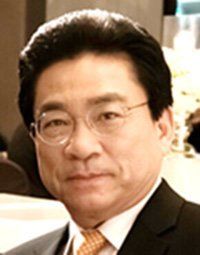
By Park Moo-jong
“Did you hear the news that our country has finally achieved the long-awaited goal of breaking the $30,000 mark in per capita income?”
“Really. What a good news! But why is my wallet still so thin?” “None of my business.”
Two shopkeepers at the sagging Dongdaemun Market in Seoul were chatting last week after the Bank of Korea announced that South Korea's per capita gross national income (GNI) reached $31,349 in 2018, up 5.4 percent from $29,745 tallied a year earlier.
Thus, South Korea became the seventh country in the world to join the so-called “30-50” club of economic powers which have per capita income surpassing $30,000 and a population of over 50 million.
It took 12 years for the nation to breach the $30,000 mark after it surpassed $20,000 in 2006, while Japan and Germany took five years and the United States took nine, all crossing the line two decades ago in the 1990s.
To recall, our per capita GNI stood at just $67 in 1953 when the 1950-53 Korean War, provoked by the North Korea invasion, devastated its economy. What a great achievement!
The Moon Jae-in government must be happy to see Korea passing through the $30,000 threshold, a symbolic certificate of an advanced country, less than two years after its inauguration.
Unfortunately however, many people, particularly those in the low-income brackets, are wondering if the figure is right.
The $30,000 per capita income means that a four-member family should earn $120,000 (about 130 million won) a year.
In short, the figure testifies to the widening gap between the haves and the have-nots. Government data proves this. The average income of those in the bottom 20 percent was only 1.23 million won ($1,100) per month in the last three months of 2018, down 17.7 percent over the same period the previous year.
In comparison, households in the upper 20 percent bracket earned an average 9.32 million won ($8,500) a month during the fourth quarter, up 10.4 percent from 2017.
The achievement is to be celebrated. It is the direct result of the Korean people's undaunted efforts to rebuild their nation from the ashes of the war over the past 70 years. Nonetheless, why are so many people not happy with the “success?”
The economy is still staggering. The unemployment rate is ever going up to the despair of young jobseekers. The majority of the people I interviewed over the past months from time to time complained of their worsening economic situation.
It is no wonder that the International Monetary Fund warned the government on Tuesday against the headwinds it faces in the short- and medium-term, with growing downside risks. The fund advised the government to pursue more expansionary fiscal policies to support growth.
The ongoing economic difficulties are mainly responsible for the gap between the record per capita income figure and what the people actually feel about their living standard.
But, I'd like to cite the social problems, rather than the economic matters. Figures such as $30,000 or $40,000 are not important.
The basic principles of any democratic society have been too easily ignored here, making many wonder if they are living in a law-abiding country. Demonstrations and sit-ins have become daily routines, causing severe inconvenience to good citizens.
In short, social disorder has reached its limit, as too many people, giving the excuse of needing to earn their livelihoods or citing the freedom of speech and to demonstrate, do not respect the law, while law enforcement authorities appear to be neglecting their duties.
How about our politics, especially our dear lawmakers? It is not for nothing that people slyly dig at them, calling them “lawbreakers.” Just three days ago, the conflicting legislators turned the main session of the National Assembly convened after a long recess into utter turmoil as a result of the largest opposition party floor leader's speech.
The problems of our society are the natural results of the egoistic lifestyle of Koreans, who have a tendency to care only about themselves and their families, but are seldom willing to put themselves in the shoes of others.
The lawmakers are typical. They tend to be obsessed with their own interests without taking into consideration the damage their egoistic actions cause other people.
It is something like trying to round a square to expect bureaucrats, who are used to watching and waiting on any problems, to work more effectively and productively.
As the seventh member of the 30-50 club, South Korea may have joined the group of advanced countries. But in terms of morality and ethics related to a law-abiding spirit, the country is not yet qualified to be admired by the world as an advanced country.
Now is not the time to pop up. We have to raise, first of all, the effectiveness of the government, ease social conflict, uproot corruption in politics and business, and encourage the people's law-abiding spirit.
When will citizens actually be able to be happy with fat wallets in the era of a $30,000 per capita income, both in name and reality?
Park Moo-jong (emjei29@gmail.com) is a standing adviser of The Korea Times. He served as the president-publisher of the nation's first English daily newspaper from 2004 to 2014 after working as a reporter since 1974.