INTERVIEW Culture is the best answer for Korea-China relations
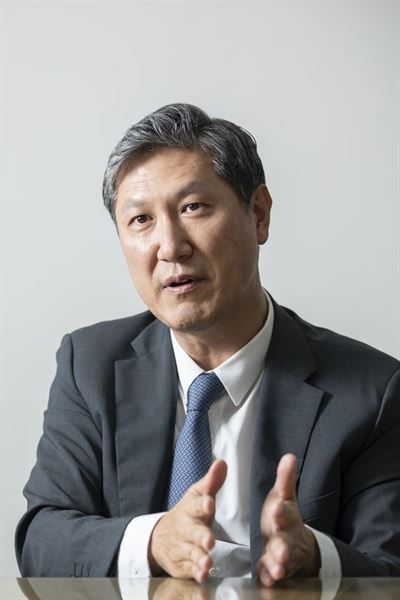
Roh Jae-heon
By Hwang Jae-ho
It was 1992, during former South Korean President Roh Tae-woo's term of office, when Korea and China established diplomatic relations. This was one epoch-making achievement that brought both countries into a fate community in Northeast Asia; therefore, it is evaluated as the representative outcome of Roh's diplomacy toward North Korea. In 2012, Roh's son, lawyer Roh Jae-heon, established the Korea-China Culture Center and became director. Roh has contributed to strengthening bilateral friendship through cultural exchanges since then.
Q: The Korea-China Culture Center, what exactly is the mission?
A: It mainly focuses on cultural exchanges between Korea and China. Officially, it was founded in 2012 as a commemoration of the 20th anniversary of Korea-China diplomatic relations. Frankly speaking, till then I was only vaguely interested in China. I've studied and worked in the U.S., then went to Hong Kong. Hong Kong, of course, is quite influenced by China, but has its own strong color. However, as I took a part in the 20th anniversary ceremony, I could catch some sense that Korea and China have a shallow understanding toward each other. Both countries needed to build up some kind of a bridgehead or platform for further understanding, not only for my generation but also for the future generation. There have been a number of agent endeavors for Korea-China cooperation. However, the actual approach to culture was still running short. I personally thought that both of us shared a high level of favorable impressions; but the more I delved, the more I found there were many we actually weren't well aware of. That was the ultimate motivation for me to start the Korea-China Culture Center. Through maximizing the exchange programs, cooperation is expected to be enhanced more.
Q: Can you describe some works the Korea-China Culture Center has done so far?
One representative example is the entertainment program we had with China's CCTV around four years ago. China these days is not really a big fan of classical dramas, such as Peking Opera. As a result, CCTV created an entertainment program to promote people's interest. In the process of designing the program, a Korean entertainment production company jumped in. After categorizing Chinese classic drama into three (Peking Opera, Yueju Opera and Sichuanese Opera), six Korean and four Chinese celebrities were grouped as a team. Their goal was to learn and produce a successful performance at the end. I consider this exemplar very refreshing and future-orienting, because it exactly points the direction for the fusion of different cultures. The new upcoming generation of the Korean wave should reflect “universal value,” which can embrace every difference, not only those which are 100 percent “ours.” In this sense, this program was a worthy start.
Q: I guess there must have been some difficulties for the Korea-China Culture Center during the THAAD issue?
A: Well, actually, it wasn't only our problem. The overall society had a hard time, but what really matters is always the feelings and sincerity. The policies can be deregulated and amended, but already changed minds and attitudes are terribly hard to re-attract. At first, I didn't consider THAAD (a U.S. missile defense system installed on South Korean soil) would have such a serious effect, because it was a matter of security and arms. Nevertheless, the harsh emotions surrounding this issue were heading way deeper and deeper; for both countries, I mean. As we could often see from the media, I also think both of us have responsibility on this. Since the matter could not stay in the original [political] arena, where it in fact belongs, the hard feelings spread over to other sectors as well. In the past, China had great feelings toward Korea, but what you see these days is most of them turned quite negative. I understand the feelings cannot always stay favorable. Though President Xi Jinping referred to Korea as “Korea, like a close relative's home,” we still can sometimes have confrontations. In other words, I'm saying we might have possibilities of second and third THAAD issues. When we have misunderstandings and look at the problems emotionally, the answer cannot be clear. All sectors, including government, media and others, have to come together for better solutions.
Q: Can you share some of the current events you are planning?
A: In August 2016, we opened the Silk Road Chinese Movie Theater and play three to five Chinese movies every month. We try to reflect the period and audiences' responses, so our monthly movie curation is based on different genres, directors, actors and so on. With the accumulated Korea-China movie industry's related human resources and infrastructure, we opened the 2017 and 2018 Korea-China Scenario Forum during the Busan International Film Festival. As 2017 was a chilly year due to THAAD, we could hardly invite Chinese movie-related participants and start a Korea-China exchange. Now we will continue developing what we do and make more informative content for a stronger bridge connecting the two countries.

Silk Road Theatre
Q: What is the biggest difference between Korea-China culture?
A: The young generation in China is amazingly impressive. The reason I consider they are progressive is that they are fluent and honest in what they think and speak, no matter the age and status of the other. They are open to creative action and comments or demands without being conscious of their positions. When I think of the Korean young generation, it would be better if their circumstances could evolve like the young Chinese; because, from time to time, the juniors cannot even speak during meetings. I once thought Chinese young people must be less expressive or less creative because of the communist system, but I was totally wrong. Now I think maybe we are the ones who are drawing limits to ourselves.
Q: We started diplomatic relations with China in August 1992, when your father was the Korean president. This event is still evaluated as an incredible point that changed Northeast Asian regional order.
A: The beginning of Korea-China diplomatic relations is more significant in the sense that we came to provide new circumstances in the relations with North Korea rather than Korea-China's bilateral aspect. It is more like an establishment of diplomatic ties within a macro perspective. Looking over Korea-China's bilateral relations, during the last 26 years we had several cases that both countries are responsible for; which we couldn't have even imagined in the last 5000-year long history. Korea received enormous benefits thanks to China and vice versa. Both Korea and China have contributed on dynamics to each other in the flow of history. However, now is a momentous period; everything will proceed differently from the past. When we think of relations with China, we must overcome the limits of security or economy and head for strategic decisions for the sake of both nations and their peoples. Then the question is, how to approach China: the answer is through delicate and specialized steps.
Q: Is there any other comments you'd like to add?
A: There are plenty of experts who are very familiar with Chinese issues. Since China has a huge territory, enormous population and many fields of endeavor, the experts from various areas distribute the works. That's how we can guarantee sustainability. Furthermore, we must cooperate. Although we divide our fields, we have to gather up and march along together. We should do what we are best at, and walk together.
Director Roh is a very appealing figure to China. Under President Roh Tae-woo, 1992 saw the climax of Korea's policy toward the North. Korea started diplomatic relations first with the Soviet Union, then Eastern Europe and ultimately accomplished them with China. China then was isolated from the international community due to the Tiananmen Square incident in 1989. It was desperate for technological aid after opening up and reforming and diplomatic relations with Korea provided a window of opportunity. President Roh greatly contributed to Korea-China relations; now his son is aiming to play a role in the area of culture. I look forward to him being an exemplary and symbolic player in Korea-China relations.
Hwang Jae-ho is director of the Global Security Cooperation Center, Hankuk University of Foreign Studies, Seoul. Ko Sung-hwah, a researcher at the center, assisted Professor Hwang with the article.