A picture is worth a thousand words: Seoul in the late 1950s
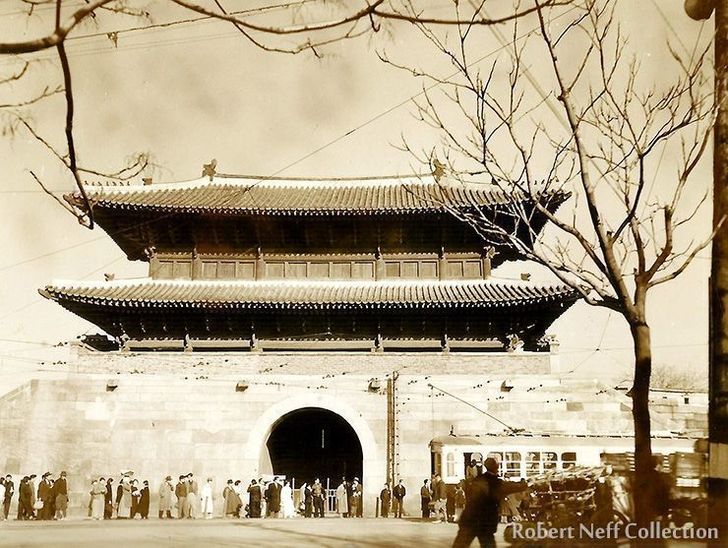
Waiting for the trolley, circa late 1950s.
By Robert Neff
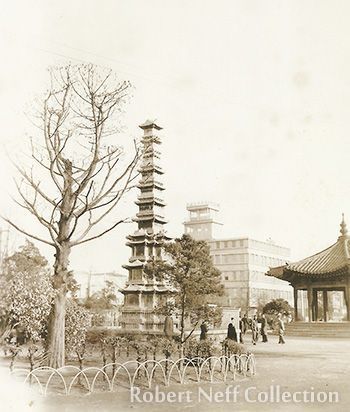
Tapgol Park, circa late 1950s
There is an old saying that a picture is worth a thousand words and it was implied that the image spoke the truth. It may have been in the past but not so much in the present.
The digital age has enabled us to record every part of our daily lives through the cameras of our smartphones. Without hesitation we take pictures of our food, pets, random strangers, vacation spots and selfies. Because they are digital, we can take hundreds of pictures and then choose the most appealing one that we then Photoshop to remove the blemishes or exaggerate the subject. While these pictures may be aesthetically pleasing, they lack the depth of soul and genuineness that the pictures of the past possessed.
Images from the pre-digital age are often clumsy and fuzzy; the photographer was often an amateur who received the camera as a gift or purchased it on a whim. Taking pictures wasn't cheap. Film cost money. Developing the film cost even more. And, until the picture was developed, the photographers had no immediate idea how successful their efforts were. Taking pictures was an expensive gamble.
.jpg)
School boys in the park, circa 1956-1962.
Some of my favorite images of Korea come from the efforts of these amateur photographers ― people like Fred Dustin and Specialist Robert A. Downs, an American soldier. Through their pictures they attempted to convey their experiences of Seoul in the late 1950s to their families and friends back home. Here are their “one thousand words.”
Trolleys once shared the streets with horse-drawn buses, ox carts, bicycles, military vehicles and a handful of civilian vehicles. Some things never change ― such as standing in line for public transportation.
Conditions were harsh. Houses were small, ramshackle and often lacked running water. Children played in the streets and the goods found in the small stores and local markets were usually the bare necessities.
Parks, such as Tapgol (formerly known as Pagoda), provided a popular venue for citizens of all ages to gather and play. Now Tapgol Park is the domain of elderly men who gather to play games and drink soju while regaling one another with the exploits of their youth. They are the denizens of the past.
Palaces were also quite popular with not only foreign tourists but with the general population. They were surviving monuments of an age of grandeur and excesses.
But not all monuments ― even those dedicated to the future ― survived. The statue of Rhee Syngman on Namsan was toppled during the April Revolution of 1960 and decapitated, only the head remains ― relatively forgotten.
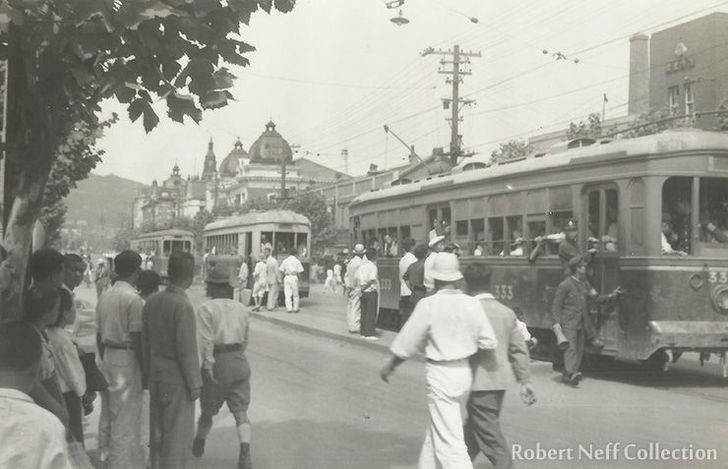
A line of trolleys, circa 1956-1962
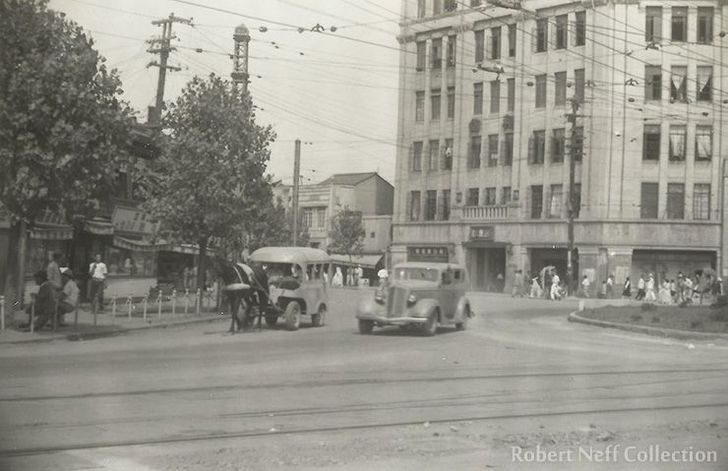
A horse-drawn bus and an automobile, circa 1956-1962.
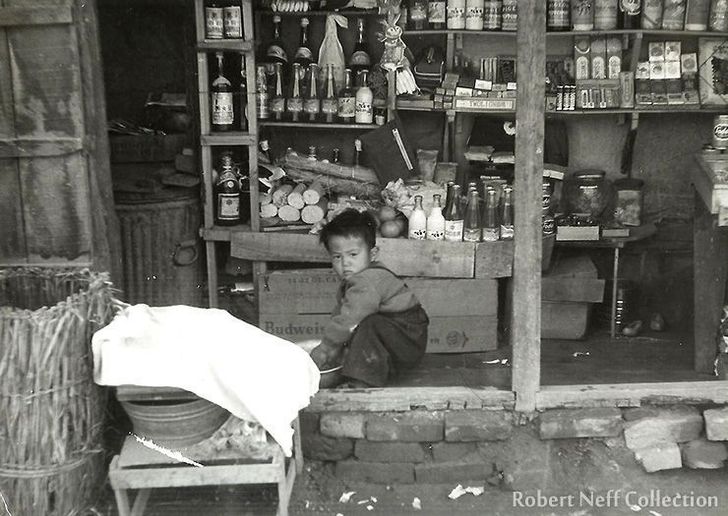
A small market in Seoul, circa 1956-1962.
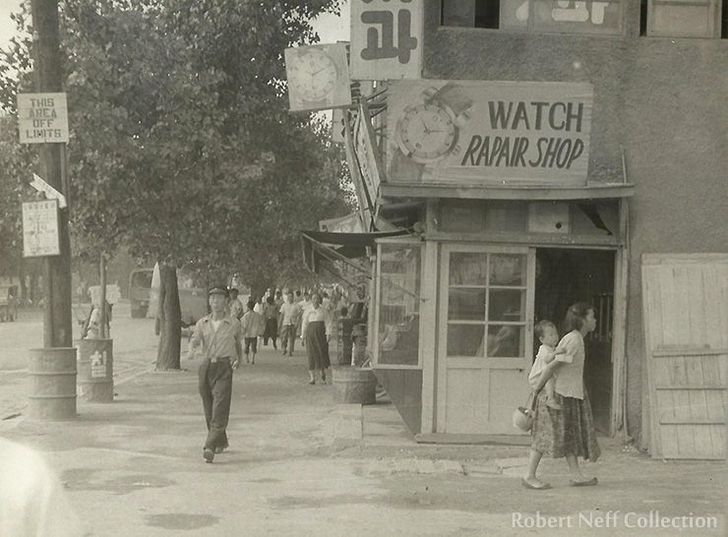
When time stops, circa late 1950s.

Running water was a luxury, circa 1956-1962.
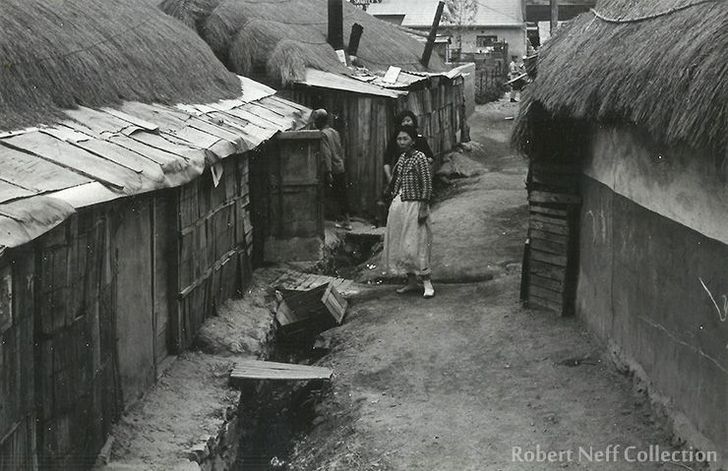
The living conditions for some, circa 1956-1962.
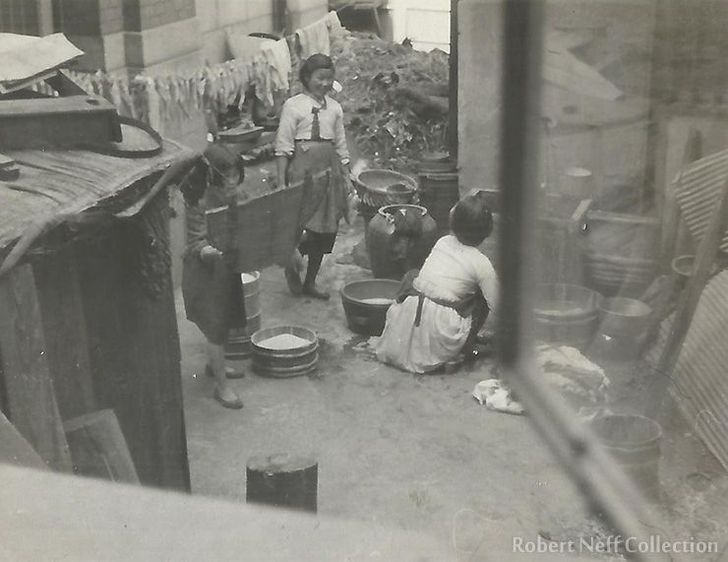
The view down the alley, circa 1956-1962.
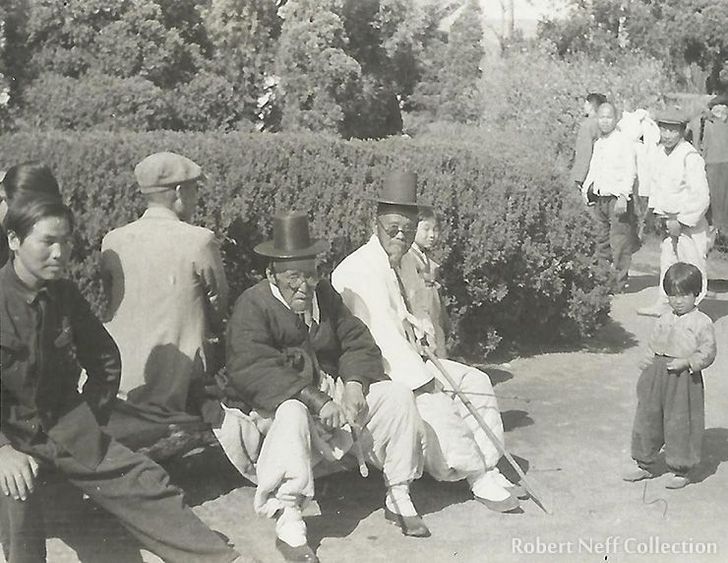
Elderly men in the park, circa 1956-1962.
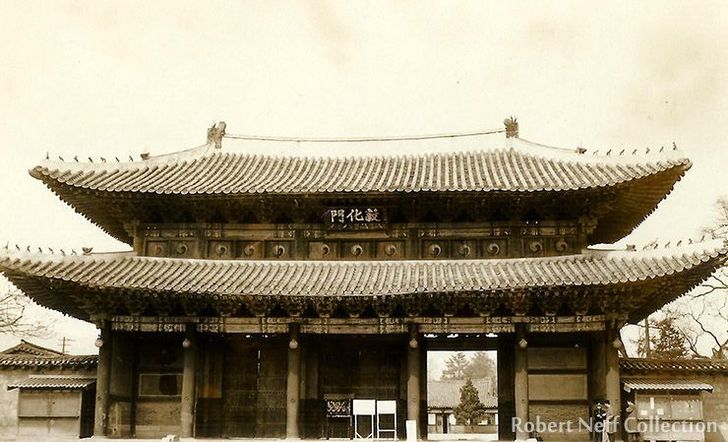
Palace gates, circa late 1950s.
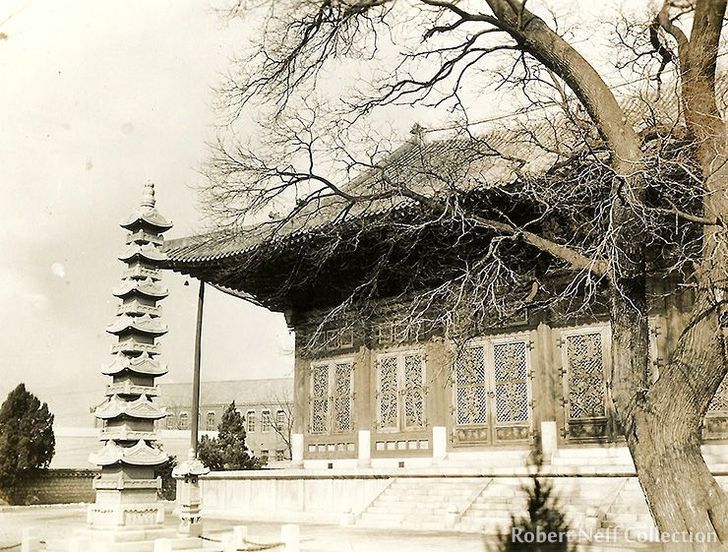
Palace grounds, circa late 1950s.
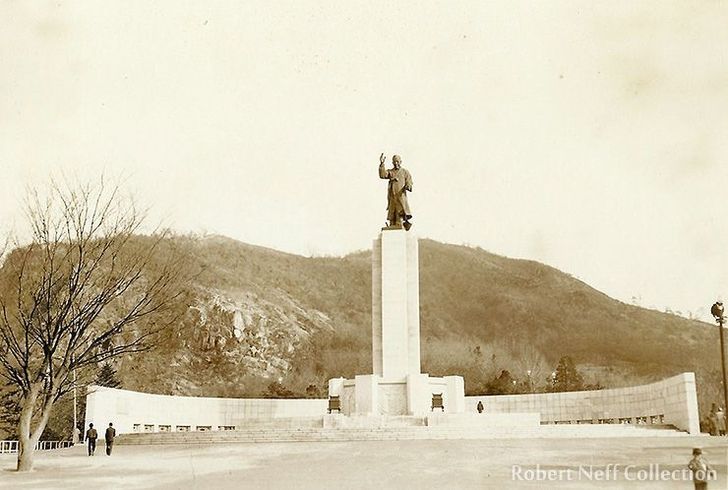
Before the fall ― the statue of Syngman Rhee on Namsan, circa 1959.