Milestone for South Korea-Vietnam relations
On the occasion of an official visit to South Korea by the chairman of the National Assembly of Vietnam from Sept. 29 to Oct. 2 at South Korea's National Assembly Speaker Moon Hee-sang's invitation, we look back on the achievements of the 26 year relationship of the two countries and the prospects of the “strategic cooperative partnership.” ― ED.
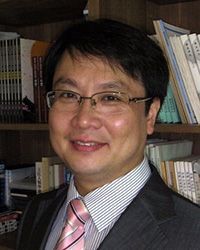
By Kim Hyun-jae
Since the establishment of diplomatic relations Dec. 22, 1992, Vietnam and South Korea have rapidly expanded their ties into a “comprehensive partnership.” This has brought great achievements in all fields including politics, economics, security and defense, culture and society.
South Korea highly appreciates the central role of Vietnam in the Association of Southeast Asian Nations (ASEAN) and attaches importance to relations with Vietnam. The two countries have regularly maintained senior visits, including the official visit to Vietnam by President Moon Jae-in in March this year, in which leaders of the two countries committed and proposed measures to promote bilateral relations to a new level.
Moon also affirmed Vietnam is the focus of South Korea's “New South Policy” to promote relations with ASEAN. In 2017, the two countries also exchanged senior delegations. They include the delegation of Vice Chairman of National Assembly Uong Chu, delegation of Permanent Deputy Prime Minister Truong Hoa Binh, delegation of Deputy Prime Minister-Foreign Minister of Vietnam Pham Binh Minh visiting South Korea. For South Korea, the delegation of National Assembly Speaker Chung Sye-kyun visited Vietnam.
In developing diplomatic relations, political credibility is an important foundation for promoting economic cooperation between the two countries. In 1992, trade turnover of the two countries was only $0.5 billion. Then it increased 117 times to $58.5 billion in 2017. Currently, Vietnam is South Korea's third-largest trading partner after China and the United States.
In contrast, South Korea is the second-largest trading partner of Vietnam. Total trade turnover of the two countries reached over $60 billion in 2017. According to the Korean International Trade Association, in the first six months of this year, the trade turnover reached $32.936 billion, in which South Korea's exports to Vietnam reached $23.546 billion, up 1.1 percent from a year before, while its imports from Vietnam hit $9.390 billion, up 29.2 percent.
Huh Chang-soo, president of the Federation of South Korean Industries, said, “By 2020, trade turnover of the two countries can reach $100 billion, which have been committed by the leaders of the two countries.” In terms of foreign direct investment (FDI), South Korea is the largest investor among 125 countries and territories investing in Vietnam, with about 5,500 projects, whose total cumulative registered capital until the end of August 2018 reached $61.08 billion.
Vietnam-South Korea investment relations are mutually beneficial: The capital, technology and knowledge of South Korean enterprises are combined with the abundant and skilled labor force of Vietnam. Currently, most major South Korean corporations such as Samsung, LG, Lotte, POSCO and CJ have invested in Vietnam and expanded their presence not only in low value fields such as garments and clothing but also in fields of high technology and infrastructure projects.
In addition to economic growth, exchanges and cooperation on culture, education, tourism between the two countries have also been strengthened. There are about 150,000 South Koreans living and working in Vietnam and about 170,000 Vietnamese in South Korea, in which more than 60,000 people are Vietnamese brides married to South Koreans.
South Korean-Vietnamese multicultural families have been and will be the “public diplomatic messengers” to promote the “alliance” relations between the two countries. In addition, cooperation in the field of training is becoming more and more developed. In recent years, the number of Vietnamese students learning Korean at university or higher has increased rapidly.
There are more than 20,000 Vietnamese students in South Korea. In terms of tourism, Vietnam was the most popular destination for South Koreans in Southeast Asia in 2017 when about 2.5 million South Koreans visited and stayed in Vietnam. The number of Vietnamese tourists to South Korea increased by more than 70 percent, equivalent to over 300,000 visitors.
In the future, the bilateral relations are expected to continue to produce more achievements. Located in the heart of the ASEAN region, Vietnam has a stable political environment, a culture that is very similar to South Korea, and strong economic growth, which becomes an attractive destination and potential market for South Korean investors and enterprises.
Vietnam's GDP growth rate in the past 10 years has always been over 6 percent, the inflation rate is well controlled under 5 percent, the foreign exchange rate is stable, with no fluctuation and abnormality affecting the economy. Vietnam boasts of the world's 14th-largest population with nearly 100 million people; 60 percent of the population is under 35 years old ― this is a plentiful labor source and low cost for the market.
Vietnam has also expanded its relations with other countries in the region and throughout the world through bilateral and multilateral cooperation mechanisms such as the signing of 16 free trade agreements (FTAs), including South Korea and the European Union (EU). It has become a full member of the World Trade Organization (WTO), the ASEAN Economic Community (AEC), and the Comprehensive and Progressive Agreement for Trans-Pacific Partnership (CPTPP).
In addition, the government of Vietnam is actively proposing policies that help to create a favorable business environment and attract foreign investment, such as infrastructure improvements and state enterprise equitization promotion, liberalization and business equality intensification.
Specifically, the state still only monopolizes trade activities in 20 fields; over 96 percent of administrative procedures have been simplified; a one-door mechanism for export origin certificate of goods in ASEAN with four countries Indonesia, Malaysia, Thailand and Singapore is applied.
It can be said that Vietnam is a potential market and an attractive destination for South Korean investors. In contrast, with the strength of capital and advanced technology, South Korea will support Vietnam to expand its existing potential, promote economic development and bring benefits in many fields for the two countries.
These successes are also the result of the efforts of the government and the National Assembly of Vietnam and South Korea. Therefore, this visit by Chairman of National Assembly of Vietnam Nguyen Thi Kim Ngan is expected to enhance the strategic partnership between Vietnam and South Korea to a new stage for the mutual benefit and prosperity of the people of the two countries.
Kim Hyun-jae (hjkimgogo@hanmail.net) is a professor and director of the Vietnamese Research Institute, Youngsan University in Busan.