A gold miner's life in Korea in the 1960s (part two)

In front of one of the adits in 1961.
By Robert Neff
When I visited the village and mining site in the summer of 2010, I was surprised to find a couple of elderly women who remembered Fred Dustin. Unfortunately, I was not able to get their names, but they were very excited to hear that he was still alive and asked about his health and wondered if the mine would be opened again.
It is a shame that Dustin never had the opportunity to return to the mine before his death earlier this year ― I am sure he would have enjoyed wandering the village.
In 2010, there were still a couple of the adits (tunnels) ― their entrances were overgrown and I was cautioned not to enter them as they were dangerous. One elderly woman, however, was not afraid to enter these dark places. She told me that she occasionally went deep into them to harvest bats to use in home remedies for her and her friends' ailments.
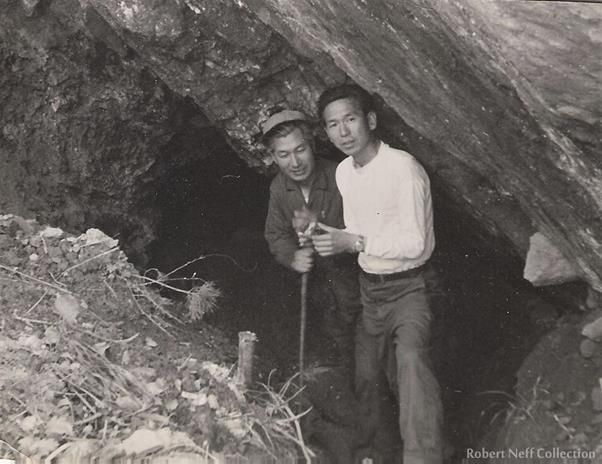
Two Korean miners. Circa 1961
According to Dustin, the villagers of the past had a history of home remedies.
“Across the stream west of the office was a very abrupt mountain rising maybe 200 meters to the top and difficult to scramble up but when one did, one was rewarded with a number of small?fields of poppies!!! That first summer, I often clambered up the mountain just to enjoy those beautiful poppies, I thought?how wonderful the poor village grower was to spend his or her time tending?such beautiful poppies in such a wilderness. It was indeed much to my chagrin when I learned that the tar-like substance I was weighing for the villagers [using the gold scales] was raw processed opium!”
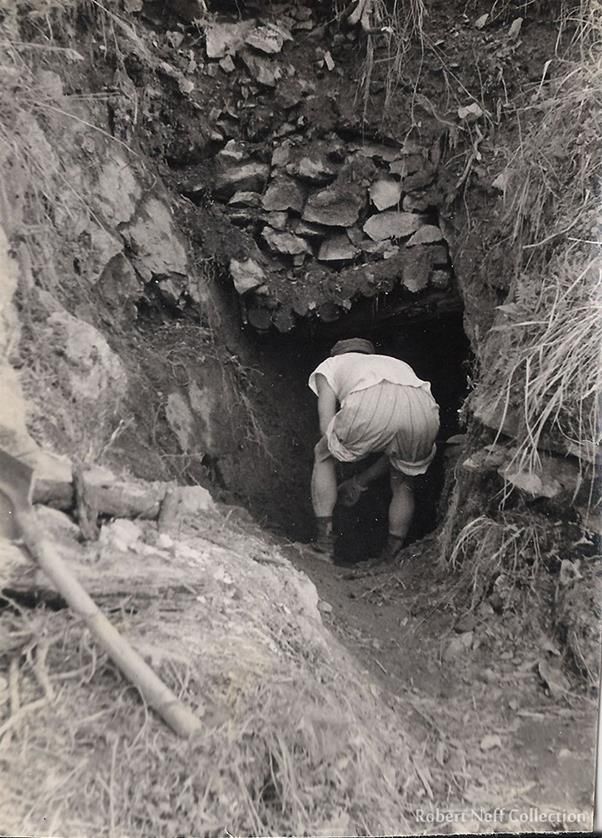
Looking into the mine circa 1961.
Perhaps the most amusing anecdote Dustin shared was when the village head (elder or chief) fell from a persimmon tree and broke his arm and shoulder. The bones were set and the elderly man slowly recovered but over the next couple of months he sent someone to gather a strange ingredient for his medication. What was it?
The mine hired several young men, all healthy and virile. Working in the depths of the mine was hard and thirsty work so the men were constantly drinking a lot of water. It was this that was needed. Not the fresh water but rather the used water ― the urine.
The urine provided the injured man with healing relief and provided Dustin with a great deal of amusement ― the village head required the mine's head (toilet).
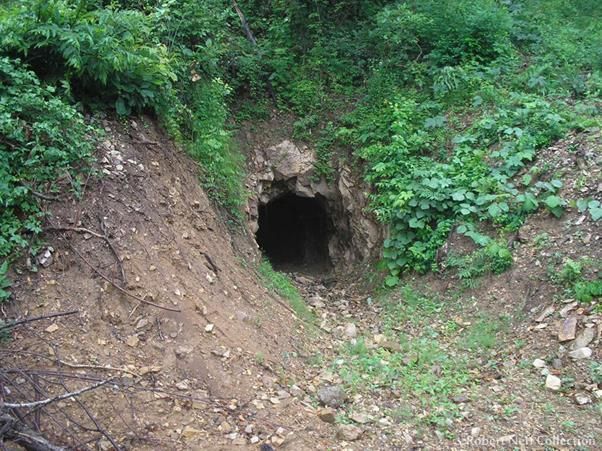
An adit's entrance in June 2010.
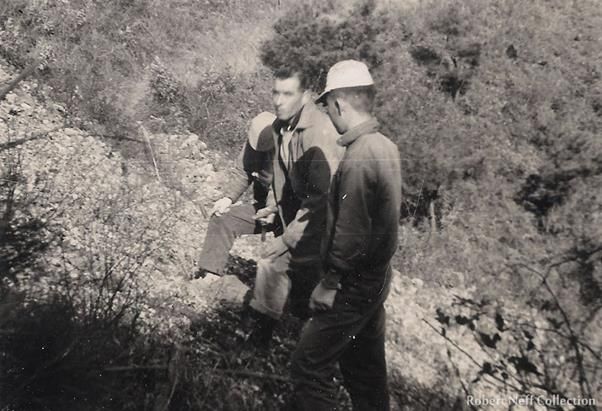
Dustin and Korean miners. Circa 1961.
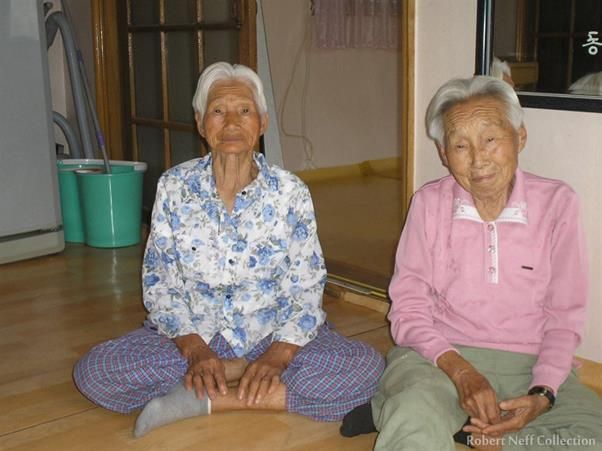
Elderly residents fondly recall Dustin's stay in the early 1960s. Circa June 2010.
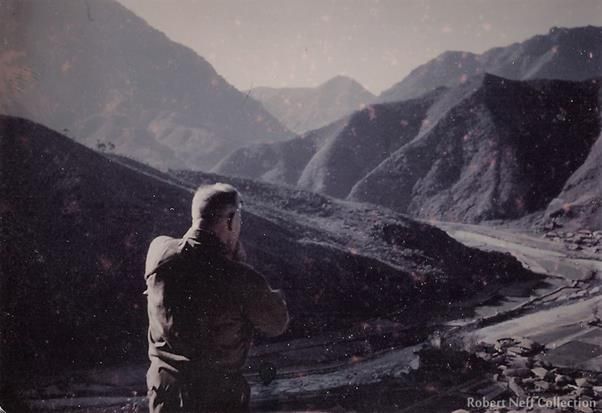
General Whitcomb looking down at the village from one of the mine's adits. Circa June 2010.