The sinking of the Kowshing

The sinking of the Kowshing
By Robert Neff
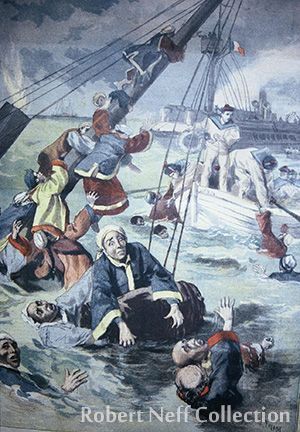
The French warship Lion rescuing the Kowshing crew
On the morning of July 25, 1894, the Kowshing, a British-flagged steamship, was confronted by three Japanese warships (the Akitsushima, Yoshino and Naniwa) off the Korean coast.
Captain Thomas Ryder Galsworthy, the steamship's commander, may have feigned surprise at the confrontation but he knew from the beginning that he was entering uneasy waters.
Korea was a hotbed of intrigue and conflict. An insurrection had spread throughout the country and the Korean government had requested Chinese assistance which led to Japan insisting on sending its own troops to the peninsula while at the same time issuing a warning to China not to send any more.
Only days earlier, the steamship had been hired by the Chinese government to transport some 1,100 soldiers ― many of them boys and day laborers dressed in traditional Chinese uniforms and armed with an assortment of outdated rifles, spears and bows and arrows ― to an undisclosed destination. It was only at sea that he learned he was to go to Korea. Great secrecy surrounded his voyage including the destination, which was only revealed once he was at sea.
At first Galsworthy was not too concerned about the Japanese warships; the Kowshing was, after all, a British merchant ship but this nonchalance changed when two shots were fired over the bow and he was ordered to stop his ship and prepare to be boarded.
He complied, much to the disgust of the Chinese generals, who ― armed with fans and parasols ― declared that they would rather go to the bottom of the sea then to be captured by the Japanese.
Galsworthy tried to reason with the Japanese, pointing out that war had not been declared (he was unaware that a naval battle had occurred just hours earlier in the vicinity) and offered to return to China, but the Japanese officers refused and insisted that the ship ― along with the Chinese sailors ― surrender.
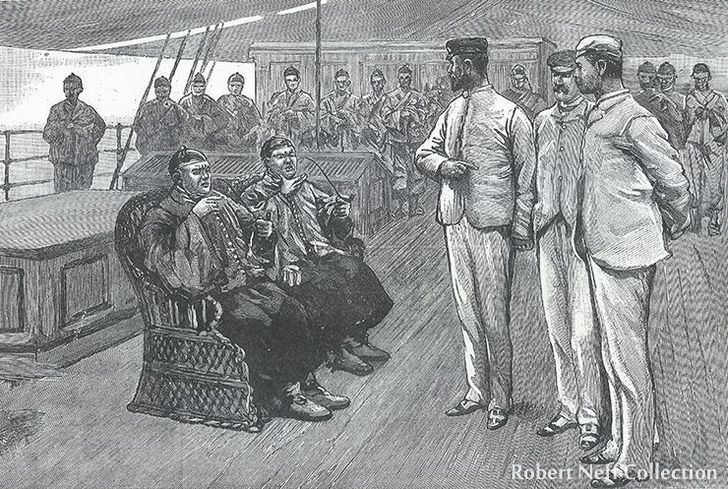
Captain Galsworthy attemtping to convince the Chinese generals to surrender
The Chinese refused and made it clear to Galsworthy that they would kill him and his crew if he tried to comply with the Japanese demands.
Finally, after hours of failed negotiations, the Japanese warship Naniwa sounded its siren and then fired a torpedo at the merchant ship. This was followed by a broadside from its five main guns that doomed the Kowshing to a watery grave. The Naniwa's machine guns mowed down the Chinese soldiers not killed by the initial explosions.
Chinese soldiers struggled to get into the lifeboats while others jumped into the water in an attempt to swim to the nearby islands. Many of the Chinese could not swim and, according to one witness, they turned their guns on their comrades who could swim or were in the lifeboats “probably having the savage idea that if they had to die, their brothers should not live either.”
Allegedly, the Japanese also fired on the Chinese survivors in lifeboats or those in the water but did everything they could to save the non-Chinese members of the crew.
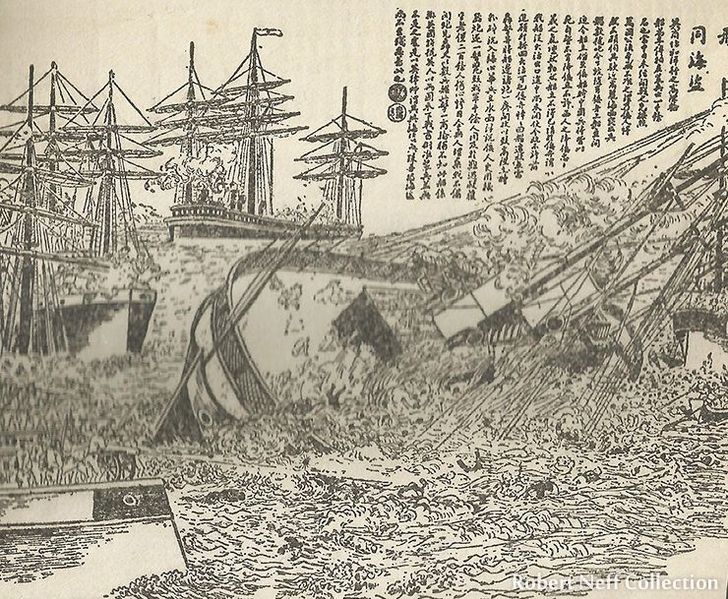
An old woodprint of the sinking of the Kowshing
The attack on the Kowshing was widely denounced ― especially considering war had not been officially declared. William Henry Wilkinson, the British Consul in Seoul, described the attack as murder ― the “helpless Chinese” had been left “to perish of starvation” while clinging to the Kowshing's mast or fall prey to the sharks swimming around the sunken ship. He further declared that he felt “admiration for the courage shown by the Chinese troops, who preferred death to the dishonor of being made prisoners by their cowardly assailants.”
Over the next couple of days, hundreds of Chinese would be rescued by foreign warships and Korean junks. Nearly 800 Chinese soldiers and most of the Kowshing's crew had perished. Yet, despite the fact that war had been undeclared, it was eventually decided in an international court that the Japanese government had been within its rights to sink the ship ― even though it was neutral ― because it was transporting troops of a belligerent nation.
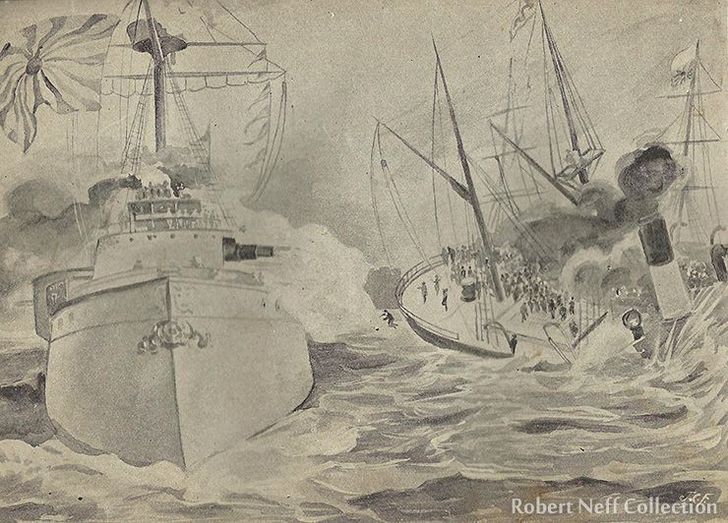
The Naniwa firing upon the Kowshing
For the spirits of the dead and their families, the official declaration of war issued on August 1, 1894, probably did little to ease their pain.
It was just over 105 years later ― in the spring of 2000 ― that a Korean salvage company rediscovered the Kowshing. The company claimed that in addition to the soldiers, the Kowshing had carried some 600 tons of silver (an unbelievable figure considering the ship's size and the fact it was loaded with men, horses, ammunition and field guns) worth 10 trillion won ($7.6 billion). It was determined to recover this vast amount of treasure.
After much salvaging (and destruction), the company managed to find only a handful of silver dollars, some silver ingots, a few rusty weapons and the remains of several soldiers. The company had failed and the true treasure ― the Kowshing ― was destroyed.