The Constitution Assembly elections of 1948
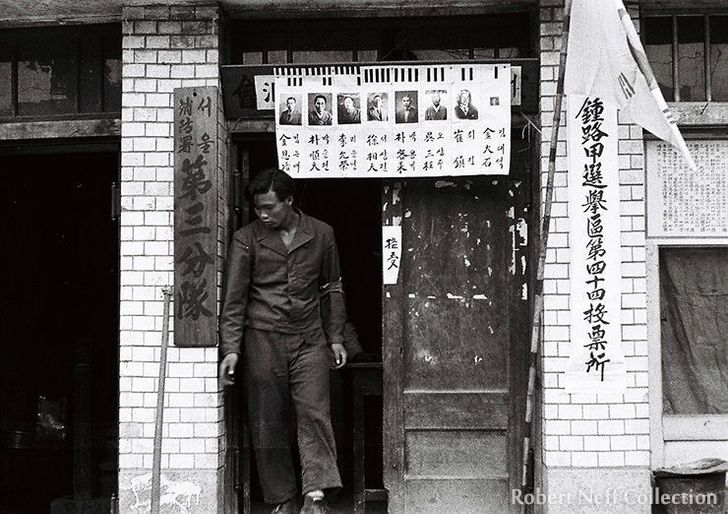
Pictures of the candidates, their names and numbers, May 1948.
By Robert Neff

Pictures of candidates and a poster promoting a clean campaign, May 1948.
The Constitution Assembly elections held on May 10, 1948, have been described as an important milestone in Korean history but they weren't without controversy.
Security was obviously one of the largest concerns. Unrest was rampant ― especially on Jeju Island ― and attacks on polling booths throughout the country were anticipated. As a precaution, these booths and police stations were heavily guarded.
Another problem was the ballots. According to John C. Caldwell, of the Office of Civil Information in Gangwon Province:
“The ballots [had] to be printed in three languages: Chinese, Korean and sign language. The well-educated minority in Korea read Chinese and Korean; many more, educated only in the Occupation's adult education schools, read only Korean; and still more were completely illiterate.
“For the latter, we devised a system of marks to distinguish one candidate from another. Outside and inside the voting booths there would be a picture of each contender with his name in Korean and Chinese and the sign or number of marks which would identify him on the ballet. The illiterate voter could thus put one and one together.”
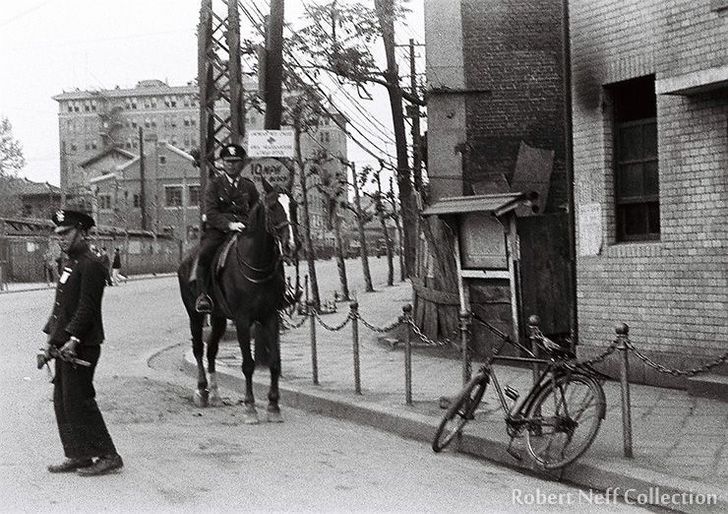
Police armed with rifles and mounted on horses patrol the streets, May 1948.
There was an additional problem ― participation. Not everyone agreed with the elections and were reluctant to vote so the government took extreme measures. According to Prof. Bruce Cumings:
“The National Police and associated right-wing auxiliaries organized the voting, requiring that peasants have their food ration cards stamped at the polls (if they did not vote, they would lose their rations).”
The election was a success ― depending on your view ― and South Korea's first National Assembly was formed ― the majority of the elected members were supporters of Syngman Rhee or Kim Seong-su.
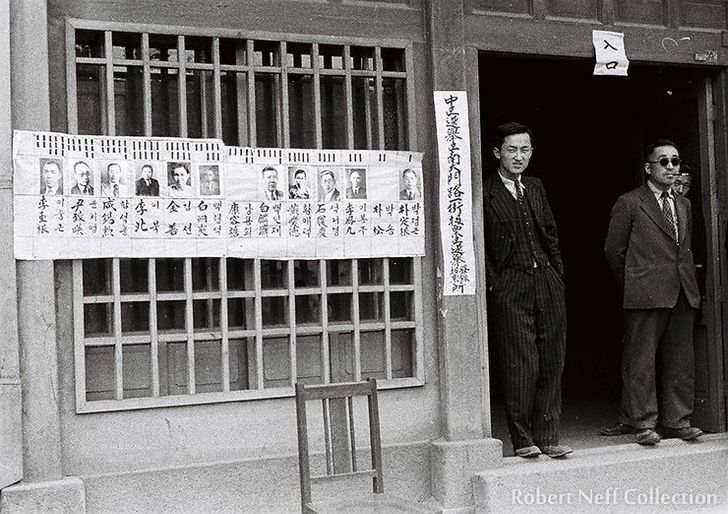
An election office, May 1948.
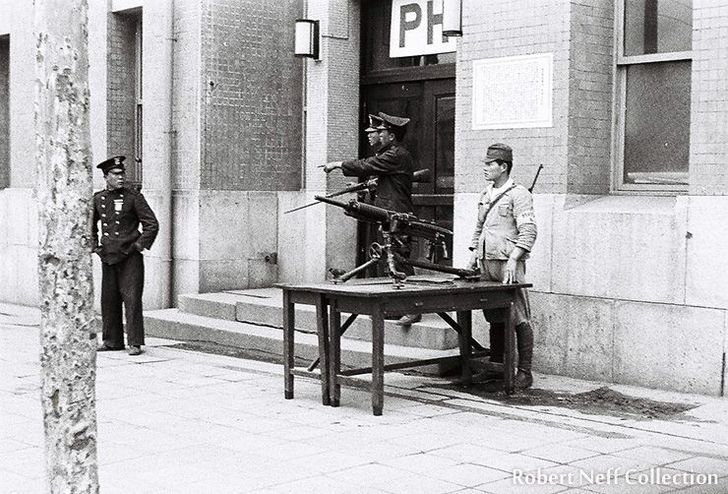
The heavily-guarded police headquarters, May 1948.
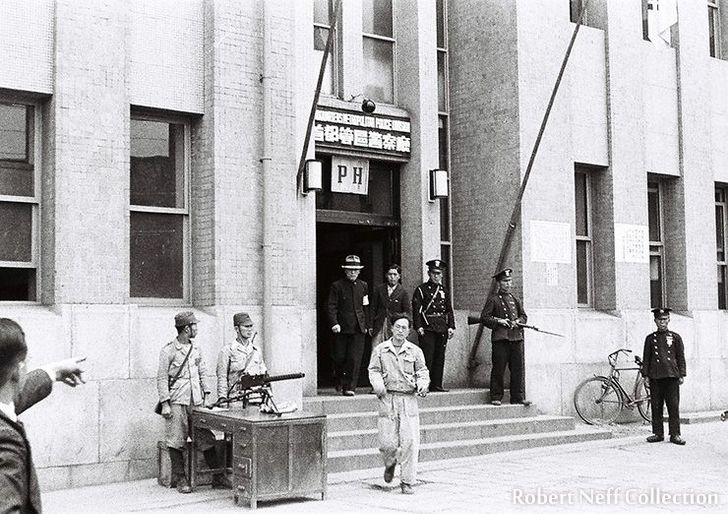
Another view of the heavily guarded police headquarters, May 1948.