My life at a Korean law firm (part 17)
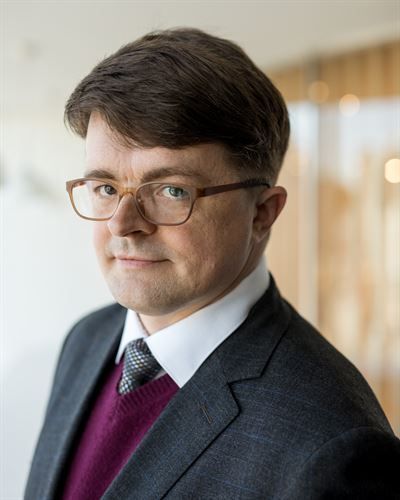
By Jacco Zwetsloot
Many people come to Korea and expect it to be a largely Buddhist culture because of its history and geography. I knew before arriving that some of the world's largest churches (both in terms of congregations and building size) could be found here.
Nevertheless, on that first night driving from Gimpo Airport to Sinchon, while it was not a complete shock to see red neon crosses lighting up Seoul's darkness, it was still more than I had expected.
Even now it surprises me to see that some multi-story buildings have one or half a floor occupied by a church congregation, and some of these have even managed to erect a steeple-like structure on an otherwise non-distinct square concrete building. Christianity has taken root in Korea like nowhere else in Northeast Asia.
Although in Australia I had attended a Church of Christ, when I arrived in Korea, I decided to give Lutheranism a try. The English papers (this one and the other ― there were only two at the time) printed a weekly list of all types of religious services, with locations and phone numbers.
The first time I went to the International Lutheran Church in Hannam-dong I had stayed overnight at Seoul Foreign School, where a friend was house-sitting. He agreed to come with me.
In the morning, we greeted one of the SFS teachers in the elevator, and made our way to the bus stop. Our route took us through Itaewon, but we could not quite work out where to get off, because the instructions were so rudimentary and there were no map apps then. I did not even have a cell phone.
In the end we got off somewhere and used a phone in a nearby shop to call the church and get more directions. When we finally got to the church, we saw the teacher we had earlier greeted in the elevator. It turned out that he and several others from SFS had taken the school's bus direct to the church. Had we spoken more than a greeting, we could have come along too, and saved a longer trip.
Incidentally, the man who answered the phone and gave directions to the church was Mr. Kim. He was the faithful cook, church caretaker and all-round manager. I learned later that he had come south during the Korean War and had never been able to return to his hometown.
He was over 60 when I met him, and had worked at the Lutheran Church since before it had even been consecrated, back when it was a humble mission to the U.S. military in the 1960s. It had been built as a kind of Christian drop-in center where men could hang out, play a game of pool, have a simple U.S.-style meal and sleep in a dormitory-type room.
When the building was turned into a church, the dormitory became the chapel. It must be one of the few Seoul churches whose building has not undergone a serious structural rebuild since the 1960s.
Mr. Kim officially retired in the mid-2000s, but he was unstoppable, continuing to work for the church a couple of days a week, until finally illness and back pain forced him to stop last November. When he left, the church lost a living institutional memory and one of its brightest but also most humble of stars. He now languishes in hospital in a semi-conscious state, and I'm sad to say he is not expected to recover.
ILC came to play a central part of my first years in Korea. There I met many wonderful people who were to become firm friends. In particular I was drawn to Dawn and Karl who, like me, were young and single English teachers in Korea. We spent most of our weekends together, exploring the city and countryside, laughing and watching movies.
Because I lived outside Seoul and it was a long trip in, I frequently stayed wherever Karl lived ― first the hagwon where he taught (it was built in the shape of a ship, and four teachers shared two twin rooms behind), later an officetel, and then finally a now-demolished house near Seolleung that we called Gangnam Castle.
We formed such a tight unit that I sometimes think we stayed in Korea because of each other, and the International Lutheran Church was the glue that brought us together.
Once, out of curiosity, we visited Yeouido Full Gospel Church, one of those mega-chuches with a constant series of services each Sunday. It was like a well-oiled machine: they had ushers who led us to special seating areas for foreigners, simultaneous translation was provided in several languages through headsets, and there was what appeared to be a professional band.
All that I can remember from that trip was: it was much slicker and emotional than ILC, and I accidentally walked all over a mat that had been laid out on the stairs for people to sit on when the pews were filled up. I never went back.
In October 1999 my wife Ji-min and I were married by the late ILC Pastor Dwayne Hoyer. We left for Australia the next day. I am no longer the faith-filled Christian I once was in my youth, although my wife is. That is somewhat ironic because she first came to the church through me.
I still go to ILC sometimes, because I like the people there, the atmosphere is welcoming, the pastor and his wife are friendly and genuine, and it is nice sometimes to sing songs together in a group. Yes, I have become that which I once disdained: a person who is drawn more to the form of religion than the function.