Promoting Korea-UK ties
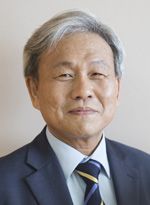
By Choe Chong-dae
On March 16, a commemorative reception for the closing ceremony of the 2017-18 Korea and U.K. Creative Future, Year of Mutual Exchanges was held at British House, the British ambassador's residence in Seoul.
In attendance were Parliamentary Under Secretary of State for Work Pensions Baroness Buscombe and other distinguished figures, including Simon Smith, the new British ambassador to Korea, Martin Fryer, the director of the British Council in Korea, and Kim Tae-hoon, the director of the Korean Cultural and Information Service.
The event showcased the culture of creativity and innovation between Korea and the U.K. in an atmosphere of friendly exchanges and camaraderie. Success in creativity and innovation defines both the U.K.'s and Korea's futures. “Creative Futures,” the slogan of the Korea/U.K 2017-18 event, represents both countries' aim at fostering a successful future for the arts, creative industries and creative education in the U.K. and Korea.
The U.K./Korea 2017―18 program shared the U.K.'s innovation and excellence in the arts and creative industries, and promoted creative practices by fostering new approaches and pushing boundaries through artistic collaborations between artists and arts organizations from both countries. The Korea Season, led by the Ministry of Culture, Sports and Tourism, launched in July 2017 in London and enhanced the cultural ties between artists and arts organizations from the two countries.
During the late 18th century, a number of British vessels such as the Providence, the Alceste, the Lyra, the Lord Amherst, and the Samarang tried to initiate commercial relations with Korea, but there was little progress. Looking back on the two countries first contact, the unofficial encounter between Korea and the U.K. was obscure in 1797 when Captain William Broughton disembarked from the survey ship HMS Providence at Busan.
As Korea's Joseon Kingdom declined to engage with the Royal Navy in the 19th century, Geomundo, an archipelago off the south coast of Korea, became a significant location because of its strategic location. The islands were surveyed in 1845 by Sir Edmund Belcher, who named them Port Hamilton after the then Secretary of the Admiralty of England, Captain W.A.B. Hamilton.
When Russia and the U.K. were vying for the control of the Korean Peninsula, the Royal Navy occupied the port for 22 months, between 1885 and 1887. This was known as the “Port Hamilton Incident.” Initially sent by the British Empire to block the Russian military from advancing into the Korean Peninsula, 10 British sailors of the Fleet sacrificed their lives in a naval fight with a Chinese fleet led by Adm. Ting Ju-chang, from China's Ching Dynasty, who wanted to defend his country's traditional rights of sovereignty over Korea. Other sailors were killed by gun accidents that happened on board the H.M.S. Cleopatra and the Albatross near Port Geomundo.
Fortunately, the British sailors had friendly ties with local Korean folk during their visits to the island. The British treated the villagers very well, paying handsome rents to landowners and generous salaries to the laborers. They built military facilities including barracks and artillery emplacements.
With other Western powers eyeing closer ties with Korea, such as the United States and Russia, Britain also felt the need to strengthen its relations with Korea. This led to the first Korea-Britain Friendship Treaty in 1882, officially signed in 1883. Accordingly, William George Aston, the first British consul-general in Korea, served from 1884 to 1885. He was the first European consular officer to reside in Seoul. The pact paved the way for Korea to “open its doors” to the U.K.
Despite the history of the Hamilton Incident, Korea and the U.K. are closer today than they have been for many decades. The 2017-18 Korea and the U.K. Creative Future, Year of Mutual Exchanges, significantly strengthens cultural exchange between the U.K. and Korea.
Choe Chong-dae (
choecd@naver.com) is a guest columnist of The Korea Times. He is president of Dae-kwang International Co., and director of the Korean-Swedish Association.