Life at a Korean law firm, or at least my journey to it (part 3)
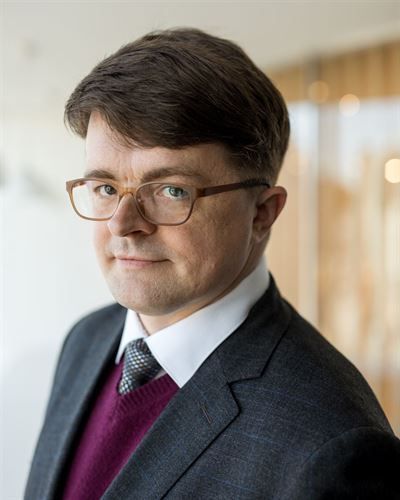
By Jacco Zwetsloot
South Korea in the mid-1990s was in the international news for violent demonstrations by students and unionists. Even before I left Australia, friends who had seen footage on television told me to watch out for these rallies and to take care.
When I came to Seoul, I learned that every spring was the beginning of riot season, when student radicals would square off against armored police who, because they were drawn from military conscripts, were usually of a similar age. In fact, after their discharge from the military they would go back to the same universities as the demonstrators they had clashed with.
To foreign observers, the rallies appeared to be well-orchestrated but violent street ballets, with each side knowing when to advance and when to retreat, but in reality the potential for violence and injury was always there. The 1987 death of Yonsei University student Lee Han-yeol, killed by a teargas canister flying at full force from a police launcher into his chest, was still in memory.
The Korea Federation of University Students Council, or Hanchongnyeon, was the major player in that summer’s demonstrations. It was a national umbrella body for left-wing student union groups from various universities, and eventually came to be outlawed by the Korean government for allegedly pro-North Korean activities. In August 1996, it occupied the campus of Yonsei University for over a week in a battle that became increasingly violent.
Unaware of all this, and before the real fighting had begun, I made my way on the morning of Sunday, Aug. 11, 1996, from Seoul Foreign School, which lies just over the hill behind Yonsei, to a bus stop across the road from the university’s front gate. The day was my 23rd birthday.
The main road to the front gate of the campus was strewn with the sleeping bodies of about 100 students. Most were lying on pieces of cardboard without blankets; the summer evenings were warm enough. A few had already roused and were moving around the closed front gate, wearing bandannas over their mouths and carrying thin metal rods. Clearly something was brewing. However, I was able to walk unmolested through this mass of students and out of a side gate, through a phalanx of riot police.
That evening, I caught a train from Sinchon Station back home to Paju City. The windows were open and overhead fans circulated the air. I sat opposite two young American soldiers from Camp Edwards who had come to Seoul for the weekend. As we rattled slowly away from the station, I began to feel a stinging sensation in my throat. Soon my eyes began to water, and my mucus membranes were on fire. I looked around and saw that others were similarly affected. Some young children had begun to cry. My GI interlocutors told me, “Tear gas. We’ve been trained for this. Don’t touch your face or blink your eyes.” That was easy for them to say, when all my instincts told me to rub whatever was on my face to get it off. But they were right, rubbing and blinking only made it worse. I desperately wanted to get out of the train and under a shower, but after about 10 minutes the feeling went away.
The battle at Yonsei had started. For the next week the whole Sinchon area was constantly covered in a thick shroud of tear gas that hung low to the ground. When I returned the next weekend, locals had taken to wearing damp cloths over their faces, but otherwise life went on as usual outside the university. Meanwhile, the students kept the police at bay before finally the campus gates were stormed and over a thousand demonstrators arrested. They were made to duck-walk to waiting buses that took them away.
The riot left its scars. The volume of pepper spray dumped on the campus caused significant damage to Yonsei’s trees. The geology department’s priceless rock collection was found to have been taken to use as missiles. Perhaps it was one of those rocks that hit riot policeman Ko Jong-hui in the head. A university student on leave to fulfill his military service, Ko died a few days later.
Within a couple of years, after similar violent incidents, Hanchongnyeon had been outlawed by the Korean government, and also lost the support of most of its member student councils that left one by one.
This was my introduction to radical politics in Korea. I had several more run-ins with tear gas, including one when a friend and I walked unwittingly into a union clash with riot police near Myeongdong before running quickly in the opposite direction. But in 1998, the Kim Dae-jung administration vowed not to use the substance anymore. Now the memory is so distant that few Koreans under 40 will ever have experienced that burning and stinging sensation in their nose, mouth and eyes.
Jacco Zwetsloot works for HMP Law as Director of Business Innovation.
The thoughts expressed in this column do not necessary reflect those of HMP Law.