How Koreans view the law (2)
By Hwang Ju-myung
In this newspaper on April 4, in an article titled “Park faces tougher questioning Tuesday” the following sentence appeared: “Unlike the questioning at the Seoul Central District Prosecutors' Office where [former President Park Geun-hye] was summoned and prosecutors focused on listening to her side of the story, [Prosecutor] Han is expected to be more aggressive this time to extract a confession.” Most layman readers would likely read that and move on, but to those familiar with the Korean prosecutorial system, this sentence gets to the heart of criminal law procedure in this country.
In Korea, people believe that if a suspect is arrested, he or she must be guilty of something. In the court of public opinion, simply being arrested is tantamount to a guilty verdict. For this reason, judges are cautious in issuing arrest warrants, and like to see some solid evidence that will lead to a guilty verdict before allowing someone to be held on remand. Consequently, an arrest warrant acts like a preliminary judgment ― not in legal terms, but in the minds of most people. There is a related expectation that, once arrested, a guilty suspect will confess to their crimes, apologize for hurt or damage caused and plead for mercy. A defendant who doesn’t do so is seen as a bad person, contemptuous of the public and the law. When I was a court judge in the 1960s and 1970s, I occasionally had to preside over cases involving defendants who were U.S. soldiers accused of committing crimes against Korean law (usually they would be tried in a U.S. military court, but occasionally they were handed over to the Korean justice system). These defendants maintained their innocence all the way to the end of their trial. To Korean thinking, this is arrogant, and the wrong thing to do. To American thinking, this is the right of every defendant ― although one must bear in mind that in the United States, pleading guilty can lead to a lesser sentence, so there is some expectation there too that the guilty will confess.
Laying aside questions of the innocence or guilt of former President Park, the fact that she has been arrested but refuses to confess and throw herself on the mercy of the courts leads to increased public opprobrium against her. If she were to “confess all” and throw herself on the mercy of the court, it may in fact lead to a softening of opinion against her, as well as a lighter sentence than if she were convicted without a confession. In the ongoing debates between presidential candidates, we can see that the question of whether any future president would offer a pardon to President Park is based on the assumption that she will be found guilty, and the negative answers mostly given are a reaction to her refusal to plead guilty.
Confessions, often reached through marathon 10-plus-hour interrogation sessions at the Prosecutor’s Office, are the main piece of evidence employed in reaching a guilty verdict. Defendants are rarely allowed to retract their confessions at their trial, and pleas that confessions were obtained under psychological duress (the days of physical torture are, for the most part, behind us) often have little effect. Without a confession, prosecutors have to build a case using a myriad other pieces of circumstantial and physical evidence, as well as multiple witness testimonies. For overworked and under-resourced prosecutors, therefore, the confession is key to maintaining a high conviction rate.
And conviction rates in Korea are very high. According to statistics released by the Ministry of Justice, for criminal cases between 2007 and 2015, the percentage of defendants who were found not guilty at their first trial never reached above 0.7 percent. In fact, in four of those years, the acquittal rate was less than 0.5 percent. For defendants who were found guilty and appealed (or in the rare case that the Prosecution appealed a not guilty verdict), the acquittal rate was only slightly higher, between 1.7 and 2 percent. Unfortunately, statistics on what percentage of criminal convictions depend on a confession are unavailable, but it will be high. The same phenomenon can be seen in Japan, where the conviction rate is also above 99 percent, and most of these depend on a suspect’s confession.
How do other countries compare? In the United Kingdom, conviction rates are around 80 percent. In the United States, results differ from state to state, but the U.S. Bureau of Justice Statistics gives a 59 percent felony conviction rate, while the Offices of the United States Attorneys has an overall conviction rate (for both felonies and misdemeanors) of just 45.7 percent, but this does not include guilty pleas and cases dismissed. Nevertheless, it is clear that Korea (and Japan) has a very high conviction rate.
While a populist might laud Korea’s statistics as a victory against crime and criminality, these statistics are actually problematic. Prosecutors only take a case to court if they feel they stand a reasonable chance of achieving a guilty verdict, so they push for a confession to lead to an easy conviction. This leaves the system open to abuse, because there is an old saying in Korea that if you shake someone enough, you’ll find that some dust comes off them. Of course, law school professors teach that extraordinarily high conviction rates are not necessarily a good thing, and there are sections in the Criminal Procedure Act to ensure due legal process. For example, articles 308 to 317 ensure, for example, that a conviction may not be obtained on the basis of only a confession, that evidence obtained improperly shall not be admissible, that a confession obtained fraudulently or under coercion cannot be used as evidence in a court, and so on.
Korea has adopted many good things from American criminal law legislation and procedure based on rule of law, but in a country with an underlying Confucian structure, government organizations such as the Prosecutor’s Office still enjoy authoritarian supremacy in every respect. Unlike in Western nations where individual rights are guaranteed and protected, the feeling in Korea is that any rights are favors granted from above (now from the elected government, but once from the king or the colonial authorities). This should all change if rule of law is to put deeper roots into Korean society. Perhaps it is already changing, but I doubt we will see any fundamental shifts very soon.
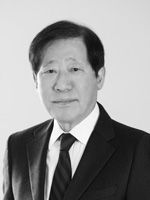
Former judge Hwang Ju-myung is founder and chairman of HMP Law, a full-service Korean law firm. For more information, write to info@hmplaw.com.