Timorese effort to boost women's role
By Adalgisa Maria Soares Ximenes
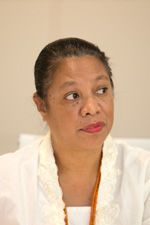
Although Timor-Leste is a paternalistic society, woman involvement in the fight for liberation and nation building in the country, has a history of 42 years.
The involvement of Timorese women in society had been introduced by a major and very outstanding political party, and movement for the liberation of the land, namely Fretilin or the Revolutionary Front for the Independence of Timor-Leste, since 1974. Fretilin has integrated the women’s movement in its structure even at the grassroots level. Women played the same role as men to fight for the liberation of our country either as part of the army, a clandestine movement, or on the diplomatic front. Consequently, many Timorese women were targeted by the invaders and many of them were physically abused and killed.
As a background, Timor-Leste proclaimed its independence on Nov. 28, 1975. Eleven days after the proclamation, our land was invaded, and we had to fight for 24 years to free our country again. In 1999, through a referendum held by the U.N. we regained our independence. Our restoration of independence was on May 20, 2002.
In the process of the restoration of our independence prior to this, in the constitution draft and later, in its official version, it dignifies men and women as having equal roles and rights in Timorese society.
State policy, through its laws, gives ground for Timorese women to be a leader of Parliament, government and the community. Women representation in the current formation of Parliament members and the government Cabinet plus village leaders is around 38 percent.
In the Cabinet structure, there is a secretary of state to look after women related matters. It works closely with women civil society organizations, and has successfully convinced the government and Parliament in the approval of the “Domestic Violence Law” which was eventually promulgated by the President of the Republic. The laws clearly classify domestic violence as a “crime.”
Estimated future trends of woman participation or involvement in Timor-Leste society is to have capable and qualified and professional Timorese woman. For such, scholarship policies in the country give more opportunity for female scholarship candidates to study abroad. In the Republic of Korea, out of 35 scholarship recipients, there are 14 female students.
On the diplomatic side, we are altogether 13 women deployed in 35 Timor-Leste Diplomatic Missions around the world.
Adalgisa Maria Soares Ximenes is the Ambassador of Timor Leste in Korea.