Korea should tackle imbalances
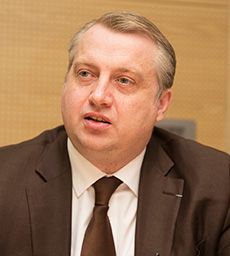
By David-Pierre Jalicon
Reinventing globalization
Recent events such as Brexit or the program of U.S. President Donald Trump should not only be seen from the local perspective but should rather invite us to rethink the globalization in which we have been living in for the last 30 years. Indeed, many, especially middle-class citizens from older developed countries do not feel belonging to this “global village.” If we do not rethink globalization; isolationism, protectionism and walls will appear here and there. The stakes are not only to achieve a balance for each country but a balance within countries. In economies, as in every thought, there are cycles, and it seems that we are at the end of one and at the beginning of another.
Walls or borders: make the difference
In our goal, to achieve globalization, we have promoted a borderless world, by assuming that the idea of borders should be considered only as a negative. We might have forgotten that a border is a tool to create dynamism in a community which then acts as a team to achieve a common goal by developing its genuine distinctive ability, its own identity. But, the system should remain open to be constantly reinvented by itself through interaction with others. This positive vision of the borders, keeping alive the identity of each country, makes the world richer in many senses.
The border should then, be seen, as a place of recognition and cross exchanges rather than as a wall.
Walls can’t be the solutions to the challenges our world is facing, in terms of innovation or environment as the stakes and investment are too burdensome for one country alone.
Cancelling free trade agreements (FTAs) with trade surplus countries is only a patch and will not cure a sick economy in the long term. It will not protect the people you pretend to protect as it will deprive them from the possibility of choosing the product they like and will infringe, in the end, their freedom.
The Korean situation
The current situation in the U.S. might drive Korea to rethink its international economic policies. This would be the wrong answer, as the issues for the Korean economy are probably more internal than external, today.
For example, the dependence of the Korean economy on exports is too high and should be balanced with the development of a stronger local market.
The pursuit of deregulation should be amplified. It will not only benefit foreign invested companies but local ones by introducing more flexibility and developing a spirit of entrepreneurship.
Structural reforms of the economy, in terms of the labor market and wages system should be achieved
A better balance between the services and manufacturing industries is a need, as well as sustainable balance between big groups and SMEs.
A more balanced nation is probably one of the hidden aspirations of the demonstrations which are taking place across the country. The way this aspiration is expressed all around the world might take different forms but behind it there is this common idea, that a new world system is needed. This new world should provide sustainability, balance and protection for all and be better spread within the society
A world without borders would be a desert, consistent, smooth, with a nomadic identical humanity. A world composed of interactive borders is a world of accepted difference and flourished diversity instead of a world of walls.
David-Pierre Jalicon is chairman of French Korean Chamber of Commerce and Industry.