Mt. Namsan in Gyeongju
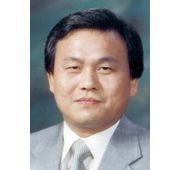
By Choe Chong-dae
I become very nostalgic whenever I think about Gyeongju, the city where I was born and raised. Gyeongju was the capital of the ancient Shilla Kingdom for millennia. It is an ancestral cradle of Korean culture and is still alive with the artistic spirit of the period. When I was younger in the 1960s and early 1970s, I would travel to Namsan (South Mountain) in Gyeongju whenever an opportunity arose.
Mt. Namsan in Gyeongju is a veritable open-air museum, a treasure house of Shilla culture. It is comprised of innumerable cultural relics such as 150 ancient Buddhist temple sites and shrines, including 110 Bodhisattva statues, 96 stone pagodas, 13 royal tombs, four fortresses and other relief carvings and stone lanterns, which are of very high artistic value on an international scale. Accordingly, Namsan is also known as a treasure of Buddhist culture and a holy ground that reflects the spirit of the Shilla people, as a protector of the Korean nation and as an integral part of our artistic world. It has become a vestige of the past that lives in my heart.
Many historians assert that “you cannot say that you know Gyeongju without exploring Namsan.”
Namsan was not only the Shilla people's paradise and a holy Buddhist Land from ancient times but also a sacred place for prayer for relief from suffering. People who made the pilgrimage to Namsan were concerned with attaining happiness in this and future lives. They circled around Buddhist statues and pagodas in fervent prayer. They believed that those who pray to Buddhist figures on Namsan on the first and 15th day of each month of the lunar calendar achieve their desires.
When Shilla culture was in full bloom, its greatest cultural heroes and eminent scholars such as Jajang, Wonhyo, Uisang, and Choi Chi-won are known to have studied at various temples on Namsan for significant parts of their careers. Zen Master Choongdam Seonsa, a famous Buddhist priest who lived during the reign of Gyeongdeok, the 35th King of Shilla, studied at a temple on Samhwa Peak on the slopes of Namsan.
Rev. Choongdam, a devotee of tea and its spiritual healing properties chanced on King Gyeungdeok on his way back to town from Namsan after offering tea to Maitreya Buddha. Deeply impressed by the spiritual power of Chungdam, the King was imbued with the peace and equanimity that foreshadows a prosperous reign. The King asked the monk to compose a song for the Shilla people on the theme “Peaceful Reign.” Accordingly, the monk composed a poem and presented it to the King in 765 A.D. The poem, “Song of a Peaceful Reign,” follows. It is good for the Korean people to keep this song in mind now.
“The King is the majestic father; the vassal is the affectionate mother.
The people are the happy children.
Accordingly, the people should recognize their parents' loving-kindness.
Since the noble parents feed and reign over myriad creatures (people), who would leave home and journey elsewhere?
The people should remain in their native land.
If the King, vassals and people all perform their duty, peace will reign in our land.''
In later times during the Joseon Kingdom, Kim Si-seup (1435-1493), better known by his penname Maewol-dang, stayed at Yongjangsa Temple on Namsan from 1465 to 1470. While there, Kim wrote the first novel in classical Chinese in Korea, titled "Geumo Sinhwa" (New Stories from Geumo Mountain) as well as other books. Namsan is called Geum-o Mountain in this work.
Standing at a temple site on Namsan during a recent visit to Gyeongju, I was inspired by the fabulous legacy of Shilla culture and a dream-like state of virtual utopia, and could put Korea’s current bizarre political crisis aside.
Choe Chong-dae is a guest columnist of The Korea Times. He is president of Dae-kwang International Co., and Director of the Korean-Swedish Association. He can be reached at choecd@naver.com