State leader without empathy
By Kim Rahn
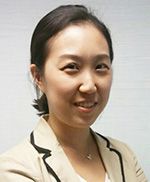
She used to be a princess. She lived in a castle, surrounded and attended to by people who catered to her father, a strongman. After her mother was killed, she took the role of the queen on behalf of the mother.
She was forced to leave the castle suddenly when her father was also killed. It is not really known how she has lived since. What is known is that she did not marry and was not very close to her siblings.
When she ended her reclusion to begin her own political career 18 years ago, many people who had liked her father welcomed her return, and their support drove her to become the President.
The former princess, President Park Geun-hye, however, had a serious defect that prevented her from becoming an effective leader: she lacked empathy for ordinary people.
This defect may not be her fault. She spent much of her childhood and early adulthood in the castle-like Cheong Wa Dae as a royal family member. Park did not have the chance to live an ordinary citizen’s life ― she did not need to worry about a small salary, soaring housing prices, difficulty of childcare, crowded subways during rush hours, and job interviews.
Of course she had her share of pain, including the assassinations of her parents and estranged relationship with her siblings. And her unusually painful experience may have only amplified how her life was more different from others’ and made her trust only a few people, including Choi Soon-sil, who is at the center of the influence-peddling scandal.
But while it may be natural for Park to lack empathy with ordinary people, it is also important to see how this becomes a problem for the head of the country comprised of such ordinary people, as she needs to make policies for and solutions to those ordinary people’s problems.
Park has been criticized for her delayed action during the Sewol ferry disaster, as she wasted the first seven critical hours after the ferry began sinking. She continued to keep her silence about what she was doing during those hours, with only rumors growing. One thing was confirmed, however: she was having her hair done before visiting the disaster control headquarters in the late afternoon.
This hair thing has caused the fury of the public, who deemed that the President prioritized her hairstyle over the lives of more than 300 passengers, most of whom were high school students.
The sinking was broadcast live since the beginning on that morning, and many citizens paid keen attention, hoping there would be more survivors. And when everybody was working urgently for rescue operations, the President was the only one who did not work urgently. She waited until her hair was done.
It is also widely known that she rarely meets people ― even her aides ― unless absolutely necessary and likes to have meals alone at her residence. It was no different on the day of the disaster ― she also had lunch and dinner alone, according to her former chef. In contrast, according to a website that collects people’s stories about the disaster, many people watching the ferry sinking on TV could barely eat out of concern for the young students aboard.
Not feeling the way other people do, a personality that probably developed from her unusual family background, may not be her fault. But it is her duty, as President, to empathize with others, or at least “make an effort” to empathize with the very people who elected her and for whom she has to make policies.
If she had really wanted to lead the people, she needed to try to understand their hardships and needs, especially as she has never experienced such hardships. If she could not directly communicate with ordinary citizens, at least she could have listened to their needs indirectly through her aides.
Instead, Park opted for eating alone, cutting communication, and opening the door to current national havoc.