Precious things Korean
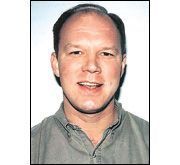
By Bernard Rowan
In the spirit of Chuseok that has just passed, it would be fitting to remind ourselves of some of the special social and cultural customs of Korea that are embedded in our daily lives, and to celebrate them for what they truly mean. This isn’t an exhaustive list as it comes from my limited experience, but hopefully it gives a glimpse of the Korean spirit.
Korean children and adults alike have great respect for elders, and show this by always being mindful of their manners. I remember my friend teaching his son to bow and greet an ajusshi or ajumma. Actions showing respect for elders form part of everyday Korean life.
It's wonderful to spend some time in the secret gardens of Biwon at Chandeokgung and among the natural places of Korea’s palaces. Seoraksan and other mountains are beautiful year-round. To reach a summit and see untouched views of nature remind us that reality exceeds human hope and urges us toward balance and harmony.
Korean college students and their lifestyles are another distinctive part of Korean culture. Whether it’s their investment in academic studies, their advocacy of political movements and democracy, or their social life, the Korean spirit is renewed through the work of young adults.
The kinship of Koreans, or the ubiquity of Korean friendship, is remarkable. How many times do we see friends of all ages walking arm in arm? When there is a need, peer groups or networks of friends support students in achievement. Similar behaviors save families and neighborhoods in need of scarce capital or souls in need of gladdening. The Korean pursuit of leisure, politics, business, and community development all benefits from extended Korean kinship.
When we walk from busy city streets back to neighborhoods, it’s precious to pass groups of young and old sitting outside to enjoy a meal, some drink, and conversation. The laughter, spirited talk, and food invite us to join in and take part.
Though it reaches to the great and beyond, Korea’s Buddhist temples and grottoes are ancient reminders of the human spirit. Outlasting persecution, purges, and the ebb and flow of events, Seokkuram, a mountain temple, or an urban temple all provide places for meditation, rest, and centering life past what does not remain for long. Many hermitages also frame wonderful experiences of nature as well as devotion.
Korea’s forward thinking and progressive mind-set is highly valuable. It arises from a deep awareness of its rich history. It flows from hardship and the Korean War. Its accomplishments characterize Korean people as pillars of progress. Korea’s companies, scholars, scientists, and artists continue to push the envelope of human invention and achievement for the good of all. Koreans are change-makers.
Precious is the Korean estimate of love. Despite the growing incidence of extended adolescence, delays in marriage, divorce, and declining childbirth, Korean love continues to unite families and generations. Korean culture encourages finding a life partner. This arises from a communal society that values friendship.
The Korean alphabet is a precious invention that makes possible nearly universal literacy for one of the most successful societies in human history. Its simplicity compared to other global alphabets complements its versatility.
Koreans invest in education. Families spend much money on educational pursuits, in and beyond formal schooling. Earning a position to study at a university remains a general social goal, not a matter of relative investment or debates over whether it’s “worth it”. Top positions elicit the talents of educated professionals.
Korea’s precious things arise from a combination of rationality and reason. They extend from various spiritual understandings, cross-cutting cleavages that cohere with a norm of Confucian manners, and the associated dedication to learning ― lifelong learning.
Also, Koreans model community on family. Affinities of Korean ethnicity transcend national identity. Korean ethnic identity arises from a conception of the Korean people as a family writ large. This comprises the ties of friendship networks. It also results in such varying ethical feelings like han or felt suffering.
The increasing challenge in an ever-more interconnected Korea is that these precious things remain open possibilities. New groups within the “Korean space and time”, new kinds of Koreans, and new people who adopt Korea want to share in them. Will Koreans and Korea adopt them in this spirit? I think so ― gradually.
Cherish what makes your country, culture, and people different and special. It’s a real reason to celebrate Korea, now and always.
Bernard Rowan is associate provost for contract
administration and professor of political science
at Chicago State University, where he has
served for 23 years. He is a past fellow of the
Korea Foundation and former visiting professor
at HanyangUniversity. Reach him at
browan10@yahoo.com.