Earthquake preparedness begins at home
By Kenny Loui
In a span of only a week, Korea has been struck by three major earthquakes ― an earthquake with a magnitude of 5.8, which occurred less than an hour after a 5.1-magnitude earthquake on Monday, Sept. 12, and a 4.5-magnitude earthquake on Monday, Sept. 19. Although Gyeongju was the epicenter of these quakes, tremors were felt throughout various parts of the country. Whether Korea continues to be a “safe zone” or becomes prone to more earthquakes is a question I cannot answer, but given my training and experience not only as an emergency services professional but as a native of San Francisco, California, which has had its fair share of devastating earthquakes, what I can say for certain is that it is better to be prepared than not prepared if and when the next earthquake strikes. Although I am sure that the Korean government will prioritize and develop earthquake preparation safety plans at the national level, it is my belief that effective earthquake preparation begins at the local level.
The first line of defense against an earthquake is proper education and training on earthquake preparedness and safety measures. The two well-known and most fatal earthquakes in San Francisco history was the earthquake of 1906, which had a magnitude of 7.8, destroyed nearly 28,000 buildings, left 400,000 people homeless and resulted in over 3,000 fatalities; and the 1989earthquake, which I still remember vividly to this day due in part to my grandfather’s bravery and quick reflexes. Once the tremors started, I just froze in shock, not knowing what to do. Immediately, my grandfather ran to me, pulled me away from a nearby window, then kneeled down and shielded me with his own body from falling debris. The 1989 earthquake, which occurred on Oct. 17, three days after my sixth birthday, resulted in varying degrees of structural damage throughout the city, 63 deaths and nearly 4,000 injuries.
The fact of the matter is that sometimes professional first responders such as police officers and firefighters aren’t always the first to respond during a crisis situation, especially an earthquake. In these situations, first responders will be overwhelmed as there will likely be more victims and those in need of assistance than there are first responders available. Delays in the arrival of first responders may also result from damage to transportation and communication infrastructures. In short, many citizens may be left to fend for themselves for the first 72 hours or more after the initial onset of the crisis.
The actual “first responder” during and after an earthquake may very well be a friend, family member, or neighbor ― whoever is in the immediate vicinity. That being the case, in the event of an earthquake, everyone should be prepared not only to ensure one’s own safety, but to render aid and assistance to others. This does not mean that every citizen has to receive the same extensive training as firefighters, paramedics, or other emergency services professionals, but nevertheless should acquire sufficient knowledge and training to care for themselves and others ― to ensure one’s own survival as well as those of loved ones in the critical time period between the onset of the earthquake and until professional rescuers arrive on scene.
One potential method the Korean government could consider to administer earthquake and crisis education and training to citizens is the establishment of Community Emergency Response Teams (CERT), which can be operated under the aegis of either police or fire departments. San Francisco, among many other cities throughout the United States, has a CERT program, which provides the general public with community-based training to prepare them to be self-reliant and able to render emergency-services assistance in the event of natural disasters or other crisis situations. San Francisco’s CERT program, established in the aftermath of the 1989 earthquake, is sponsored by the San Francisco Fire Department and has trained over 24,000 residents in disaster and emergency response techniques since 1990.
The rationale for CERT programs is that regardless of whether the disaster is big or small, with some basic training and knowledge, even “ordinary citizens” can make a positive impact in the lives of their families and neighbors until professional first responders arrive. In addition to teaching citizens practical knowledge and life-saving skills, CERT programs can help people develop self-confidence during a crisis situation, and provide a venue for them to cultivate stronger relationships with their neighbors as well as with police officers, firefighters and other emergency responders in their communities.
In addition to establishing CERT programs, the Korean government may also consider having police officers and/or firefighters give presentations on earthquake preparation and safety to students in their schools to ensure that our children, too, get the education and training they need to survive and, if necessary, provide assistance to others. Schools can also implement periodic earthquake and fire drills to properly train students in what to do in the event of an earthquake, which is something that is done in many elementary and secondary schools in the U.S., especially in San Francisco.
I lived and worked in Korea for several years, and have come to view the Korean people as my extended family. What has left a lasting impression on me ― and what I admire most ― are the Korean people’s strong sense of family and community, and their ability to triumph even in the face of extreme adversity. With this kind of mentality, I believe that the establishment of CERT programs in Gyeongju and other cities is a viable option that has much potential for success in Korea. Although Mother Nature is something that we cannot control, we are not helpless as long as we are prepared. And preparation begins at home ― with our family and with our community.
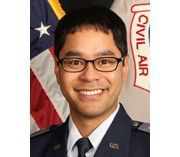
Kenny Loui is a captain in the Civil Air Patrol, U.S. Air Force Auxiliary. Captain Loui serves as the public affairs officer and assistant emergency services officer for a CAP cadet training squadron in San Francisco, and is qualified as an aircrew mission commander and ground search-and-rescue team leader. He previously worked in Korea as a professor of police administration at the Catholic University of Daegu and as an advisor and student mentor for several U.S. Embassy-sponsored youth leadership programs. Write to kenny.loui@fulbrightmail.org.